Chinese, Azerbaijanis, Georgians, Albanians, all of them were caught on the border of Bosnia and Herzegovina with Croatia in May. But not because they were trying to cross it, but because they are suspected of smuggling migrants to the territory of the European Union.
They were arrested in the southwest of Bosnia and Herzegovina, in the area of Ljubuški, Posušje and Grud.
According to the data of the Prosecutor’s Office of Bosnia and Herzegovina, there is an increasing share of foreign citizens in the smuggling of migrants through Bosnia and Herzegovina. Although a smaller number of cases were recorded in 2025 compared to the previous year, at the same time the number of foreigners involved in this form of crime is increasing.
Among those arrested suspected of smuggling migrants are citizens of Turkey, Egypt, Moldova, Ukraine, Bulgaria and Afghanistan, according to the competent authorities.
The Criminal Code of Bosnia and Herzegovina prescribes a possible maximum prison sentence of up to 15 years for this criminal offense.
“Smuggling of migrants in Bosnia and Herzegovina is mostly driven by mixed transnational networks, not by a single nationality,” Anesa Agović Đozo, analyst of the Global Initiative against Transnational Organized Crime (GI-TOC), told Radio Free Europe.
This international non-governmental organization based in Geneva investigates and analyzes global and regional organized crime networks.
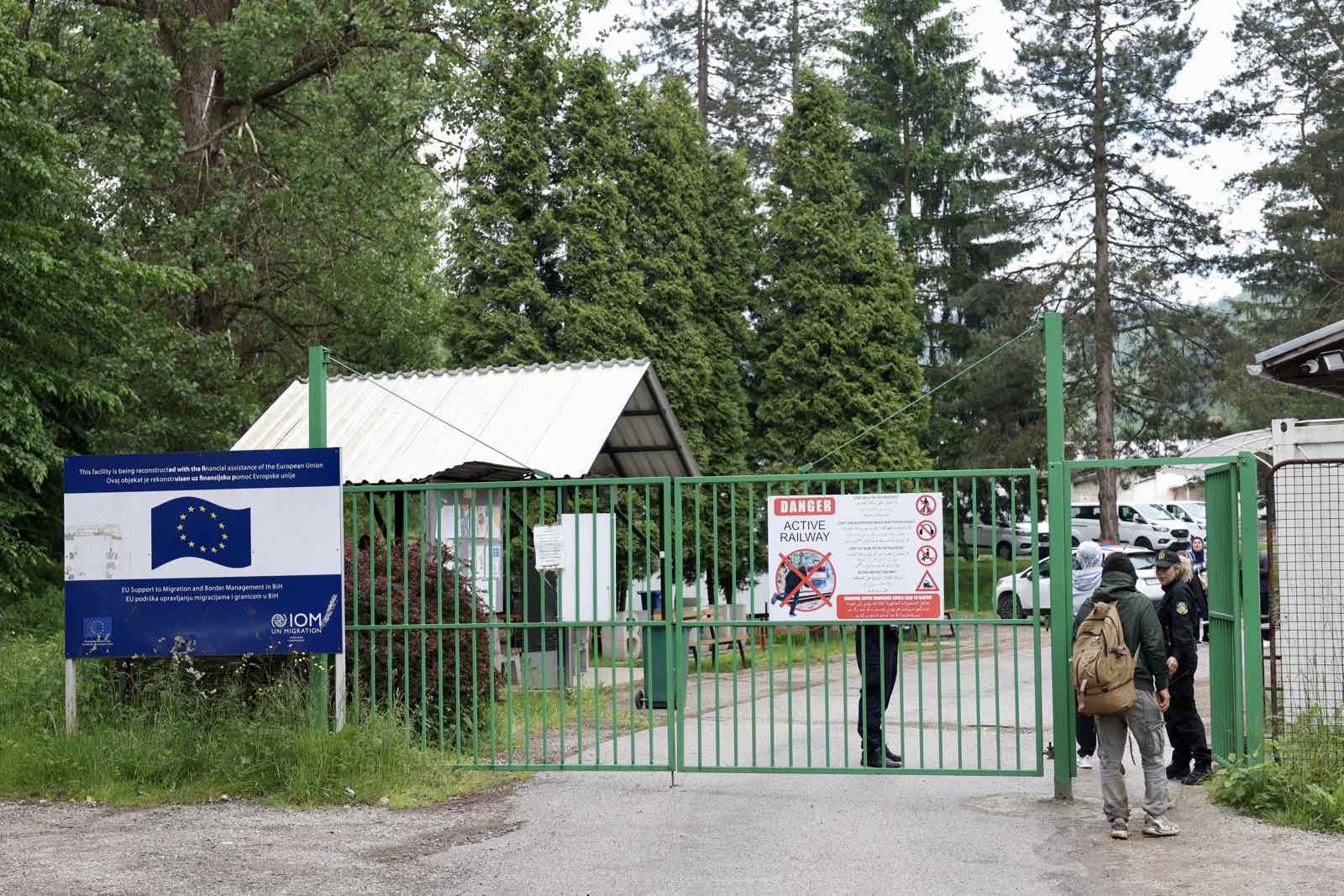
Due to its geographical position and proximity to the European Union, Bosnia and Herzegovina is still a key transit country on the Western Balkan migrant route, although the numbers are not even close to those of a few years ago, when more than 34,000 migrants passed through Bosnia and Herzegovina annually.
According to data from the International Organization for Migration (IOM), during 2025, a total of about 14 thousand migrants entered BiH.
Almost half of the surveyed migrants confirmed that they used intermediaries on their way to Bosnia and Herzegovina, according to an IOM survey conducted in April on a sample of 441 people, while 29 percent of respondents did not want to answer that question.
Organizations smuggle, rarely individuals
The Service for Affairs with Foreigners of BiH, as well as the state Border Police, did not answer RSE’s questions about how often in practice foreigners are involved in migrant smuggling until the end of the text.
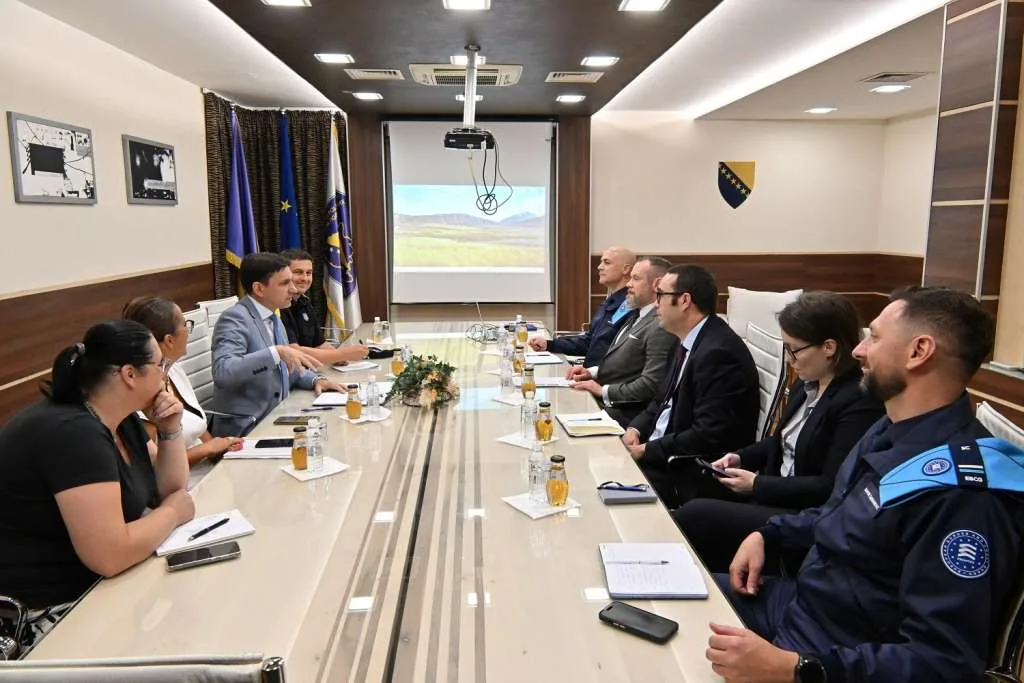
The mission of the Organization for European Security and Cooperation (OSCE) in Bosnia and Herzegovina, in its response to RSE, states that according to official assessments and monitoring of the work of Bosnia and Herzegovina. institution, organized groups deal with smuggling much more often.
“These networks can have a different shape and character, and vary from highly organized criminal groups to flexible agreements between individuals in different countries,” the OSCE states.
They point out that this is done together by locals and foreigners.
“While local actors take care of transport, accommodation, logistics or contribute based on their knowledge of the local terrain, foreign nationals can be in charge of recruitment, communication with migrants or coordination along migration routes,” says the OSCE.
This organization monitors court proceedings in this area, and according to their database, proceedings are currently being conducted against 61 accused persons, of whom 49 are BiH citizens, while 12 are foreigners.
Anesa Agović Đozo from GI-TOC emphasizes that there is a visible increase in “hybrid smuggling”.
“Migrants enter the Western Balkans legally, using visa-free travel, work permits, study visas or tourist visas, and then rely on smuggling networks to move further into the EU,” she explains.
He adds that this trend is becoming a key feature of migration in the region, and that it is particularly prevalent among Turks and Chinese.
She points out that the investigations show a clear division of tasks.
“International coordinators, regional organizers and local intermediaries manage transport, accommodation, forged or borrowed documents and border crossing assistance. Meanwhile, regional and local criminal groups perform basic operational roles such as transport, accommodation, tracking migrants and organizing border crossings,” he adds.
He also warns that violent groups led by migrants “such as the Afghan network BWK and the Al-Sarawi group linked to Syria” have appeared in the northwest of Bosnia and Herzegovina, and that they combine smuggling, extortion and kidnapping in their activities.
How does the state treat foreign migrant smugglers?
According to the Criminal Code of BiH, smuggling of migrants is a serious crime, which is punishable by up to 15 years in prison, in the case of serious forms when their lives are threatened.
Smugglers are generally arrested by members of the BiH Border Police, who then hand them over to the BiH Prosecutor’s Office.
Foreign nationals are most often detained due to fear of possible escape.
If there is an indictment, they will be tried before the Court of Bosnia and Herzegovina, and they will serve their sentence in Bosnia and Herzegovina. prisons.
Bosnia and Herzegovina has bilateral agreements on the serving of prison sentences with the countries of the region (Serbia, Croatia, Montenegro, North Macedonia), and they or the convict can submit a request to serve the sentence in the country of origin.
At the end of the sentence, the person is transferred to the jurisdiction of the Service for Affairs with Foreigners, a decision on expulsion is made and a ban on entry is issued, which lasts a maximum of five years, but in special cases – if the person is declared a threat to national security – it can be permanent.
What can the state do?
According to the data of the Prosecutor’s Office of BiH for the year 2025, 35 indictments were brought against 43 persons for human smuggling, while there were five indictments against 30 persons for organizing the smuggling of migrants.
The OSCE states that international cooperation is an important component for solving the problem of illegal migration.
“Effective measures to combat this phenomenon include improvements in the sharing of information between police agencies, joint investigations, improved border management, financial investigations that focus on profits made from the commission of criminal offenses and cooperation with countries of origin and transit,” the OSCE states.
They also warn that it is necessary to “work on improving the mechanisms of early identification and protection of victims of human trafficking”.
They remind that work should be done to eliminate the reasons that lead to the demand for smuggling, including “limited opportunities for legal migration and vulnerability resulting from the humanitarian crisis”.
Agović Đozo from “Global Initiative” believes that the authorities should prioritize this problem.
“This includes increasing the capacity of employees and technical personnel within the BiH Border Police, especially along key entry and exit corridors, strengthening digital forensic and financial investigations, and targeting the organizers and intermediaries who profit most from human trafficking, not just drivers and low-level operatives,” she said.
He adds that the exchange of intelligence throughout the Western Balkans and with partners from the EU must be improved, as well as cooperation with actors “on the front line”.
“Including non-governmental organizations, humanitarian organizations, reception center staff and cultural mediators, who often discover new routes, recruitment methods and new criminal groups before law enforcement agencies do,” she pointed out.
From the Prosecutor’s Office of BiH in response to RSE they state that the Task Force for the fight against human trafficking and illegal migration, a body made up of representatives of several institutions, including BiH, is also focused on this issue. civil sector.
It is also noted that last year BiH signed an agreement on a joint investigation team with France for human trafficking, and the implementation of the previously signed agreement in the same area with Germany continued.