The change in climate in Bosnia and Herzegovina has been evident in recent years.
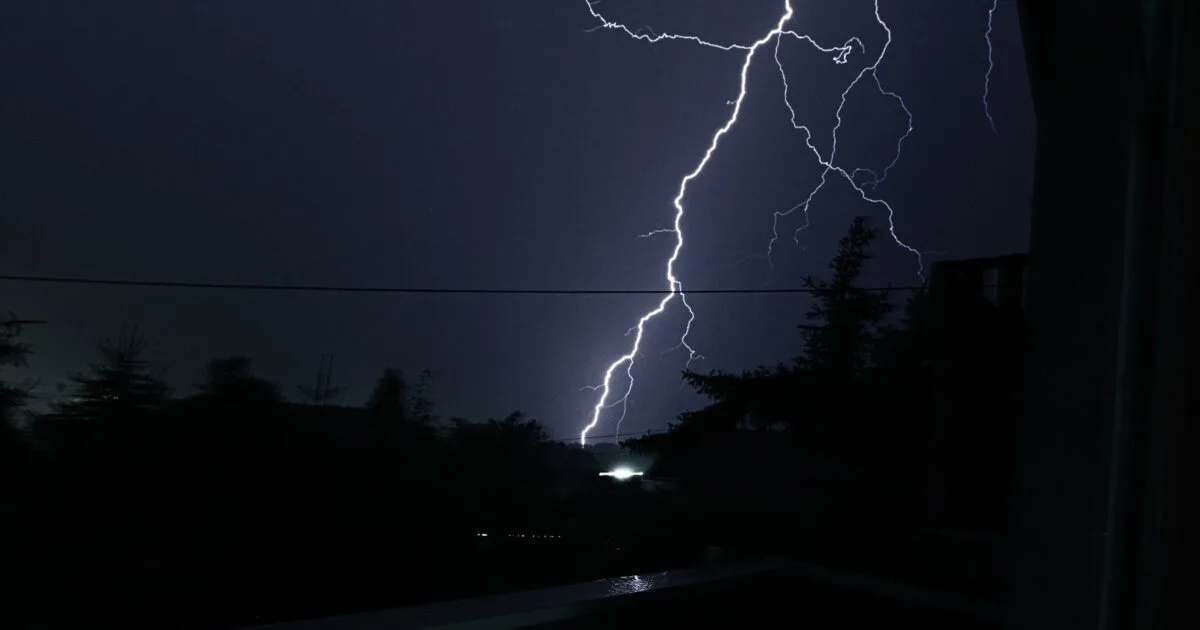
Extremely high temperatures, sweltering temperatures, “severe weather”, sudden rains, showers, thunderstorms, hail, storms, floods, have become commonplace.
We witness that our country is often hit by a big storm, which has consequences for agriculture, crops, livestock and the entire economy.
Winters are milder, there are no too many minuses, but neither is there snow. But that’s why it happens that snow falls in April or May, which causes a collapse in the whole country.
Older generations don’t remember this. Sometimes four seasons change in one day. All of this has a negative impact on the health of the population, as evidenced by data from emergency medical facilities throughout Bosnia and Herzegovina, where patients come with ailments caused precisely by sudden changes in the weather.
Climate change is current all over the world. The fact is that they are very much felt in our country as well. However, we are interested in whether BiH can still be classified as an area with a moderate continental climate, or whether a different classification has occurred. Have floods, storms and tropical temperatures become the “new normal”.
Those questions were answered by meteorologists from the well-known website BHMETEO.ba, who almost always give the most accurate forecasts or, as our people would say, “guess” what the weather will be like.
They are Marko Bogdanić and Sanel Avdic.
Is there still a moderately continental climate in Bosnia and Herzegovina?
All our lives, we learned in school geography lessons that BiH has a dominantly moderate continental climate. But considering the fact that the weather is no longer moderate, we were interested in whether there have been changes in the climate classification.
Formally, according to our interlocutors, the climate classification of Bosnia and Herzegovina has not changed – the country still has a moderate continental climate in the northern part of the Pannonian Plain, an alpine climate in the mountainous regions and a Mediterranean climate in the coastal area and low Herzegovina in the south.
– However, what has changed significantly in the last few decades are the characteristics of that climate. The average annual temperature in Bosnia and Herzegovina increased by more than one degree compared to the second half of the last century, and the increase in summer temperatures was especially pronounced. This means that today we have a climate that is warmer than thirty or forty years ago, although it is still under the same climate category – meteorologist Sanel Avdić from BHMETEO.ba tells Faktor.
In other words, he adds, we have not entered a completely new climate zone, but we have entered a period in which the climate is rapidly changing and taking on characteristics that were once typical for areas south of Bosnia and Herzegovina.
Changing climate characteristics
Our advocates point out that it is important to distinguish climate classification from climate characteristics. Climatic classification is determined on the basis of long-term averages of temperature and precipitation and their seasonal distribution. Such changes occur slowly and it takes decades for an area to officially transition from one climate zone to another.
– What we see today is much more pronounced through the change in climate characteristics. Summers are significantly hotter, heat waves last longer, winters are milder and with less snow in the lower regions, and the distribution of precipitation is becoming more and more irregular. There are studies that show that certain parts of southern Europe are already showing a shift towards warmer climate types. There has still not been an official change in climate classification in Bosnia and Herzegovina, but if the current warming trend continues over the next decades, it is not excluded that certain parts of the country will show characteristics of a different climate type than today – meteorologist Marko Bogdanić from the BHMETEO.ba website tells Faktor.
In which parts of BiH is the change most pronounced?
Today, changes are visible in almost all meteorological parameters and throughout the country.
– The temperature rise is most noticeable, especially during the summer. There are more and more days with temperatures above 35 degrees Celsius, and tropical nights, when the temperature does not drop below 20 degrees, are becoming more frequent, especially in Herzegovina. At the same time, the number of icy days and days with snow cover in the lowlands is gradually decreasing. More and more often, snow remains only in higher mountain areas – says Sanel Avdić.
The precipitation regime has also changed. As our interlocutor says, the total annual amount of precipitation in many places is not significantly lower than before, but their distribution is completely different. More and more often we have long dry periods interrupted by very intense showers for a short time. Such precipitation often fails to compensate for the lack of moisture in the soil, but instead causes flash floods.
– The most pronounced changes are observed in Herzegovina, where summers have become significantly hotter and drier, but also in the northern parts of Bosnia, where long-term heat waves are being recorded more and more often. Mountainous areas also feel the consequences through a shorter duration of snow cover and earlier melting of snow – adds Avdić.
Senior citizens don’t remember a time like this
We were interested in why citizens today notice these changes the most compared to the period 30 or 40 years ago. What the middle-aged generation remembers is that in the summer, even though the day was warm, you couldn’t go out in the evening without a jacket. Also, if the mercury on the thermometer reached 32 or 33 degrees Celsius, it was considered unbearable heat.
– Citizens notice changes most easily through everyday life. First of all, summers are noticeably longer and warmer than before. What was an exception thirty years ago is becoming almost a common occurrence today. Many older citizens often point out that summer nights used to be cooler and you could easily cool off with open windows. Today, warm nights are much more common, especially during multi-day heat waves – says Bogdanić.
Another big change, adds our interlocutor, is related to the snow. In many cities of central and northern Bosnia, winters with abundant snow have become much rarer than a few decades ago.
– Farmers are also among the first to notice changes through earlier flowering of plants, more frequent spring frosts after warm periods, longer droughts and increased need for irrigation. More and more citizens notice that storms are becoming more intense. They don’t have to be more than before, but when they develop, they often bring very heavy rainfall, strong wind and ice – emphasizes Bogdanić.
Have extreme heat, drought and intense rainfall become the “new normal”?
Considering the increasingly frequent changes, the question arises whether we should get used to this situation and simply accept it.
– Unfortunately, it can be said that they are becoming an increasingly common part of our climate. This does not mean that every year will be extreme, but the probability of such events has increased significantly. A warmer atmosphere can hold more water vapor. When conditions are favorable for the development of thunderclouds, that extra moisture can result in very heavy downpours in a short period of time. This is precisely why in recent years we have been witnessing torrential floods more and more often, although the total amount of precipitation during the year is not much higher than before – says Avdić.
Therefore, extremes become more frequent, more intense and longer lasting. The increase in the frequency of weather extremes is one of the most important consequences of climate change.
What can we expect in the future?
We were interested in what the future generations expect, that is, how climate change will look in BiH in ten or twenty years if the current trend continues.
– If the current trend continues, Bosnia and Herzegovina can expect continued gradual warming. Summers are likely to be even hotter, and the number of days with temperatures above 35 degrees Celsius will continue to increase. In some parts of the country, even more frequent occurrence of temperatures above 40 degrees is not excluded.
Winters will be milder on average, with less snow in the lowlands, while mountainous areas will often have a shorter season of snow cover. This can have a significant impact on water resources, hydropower and winter tourism.
At the same time, a continuation of the increase in weather extremes is expected. Longer dry periods are likely to alternate with intense rainfall, which increases the risk of flash floods and landslides, but also possibly increasingly powerful storms in the form of larger ice and strong winds – Marko Bogdanić tells Faktor.
This does not mean, however, that each year will be hotter or drier than the last. The climate naturally oscillates from year to year. We will have colder and rainier seasons, but the long-term warming trend remains very clear and is confirmed by almost all relevant climate research, he writes. Factor.