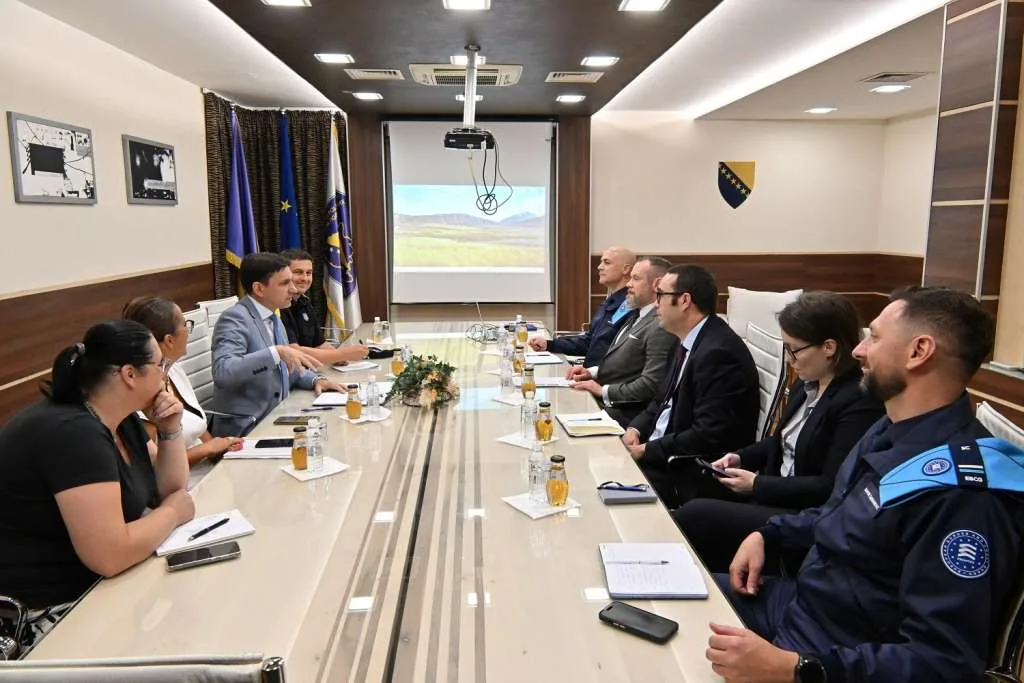
Judges of the Supreme Court of the Federation of Bosnia and Herzegovina (FBiH) are participating in the XXIV Consultation in the field of criminal law entitled “Contemporary challenges of criminal justice in Bosnia and Herzegovina”, which is being held from June 3 to 6 in Neum.
At the plenary session, they spoke about the practice of the Supreme Court of FBiH in cases related to issues of co-perpetration, temporary measures to ensure confiscation of property benefit obtained by a criminal offense, confiscation of property benefit obtained by a criminal offense, and informing the suspect or the accused about the crime, the criminal offense and the grounds for suspicion.
On the first day of the consultation, on June 4, 2026, the panelists at the 1st session were judges of the Criminal Division of the Supreme Court of FBiH, namely: judge M.Sc. Božidarka Dugonjić – president of the court, judge Ph.D. Ljiljana Filipović – president of the Criminal Division, and judges Emir Neradin and Ph.D. Mirza Hukeljić, as well as the judge of the Criminal Division of the Supreme Court of Republika Srpska, judge Svjetlana Marić.
Judges, prosecutors, representatives of judicial institutions, professional associations, the academic community, and institutions involved in the work of the judicial system from all over Bosnia and Herzegovina participate in the consultation from the criminal law field.
The organizers of this event are the Centers for the Education of Judges and Prosecutors in the Federation of Bosnia and Herzegovina and the Republic of Srpska, professional associations of judges and prosecutors from all levels of government in Bosnia and Herzegovina, the Bar Association of the Federation of Bosnia and Herzegovina and the Republic of Srpska, the Judicial Commission of the Brčko District of Bosnia and Herzegovina, with the support of the Ministry of Justice of Bosnia and Herzegovina, the US Embassy in Bosnia and Herzegovina – the Bureau for International Narcotics and Law Enforcement Affairs (INL), the United Nations Office on Drugs and Crime (UNDOC) and the Academy of European Law (ERA), writes Klix.