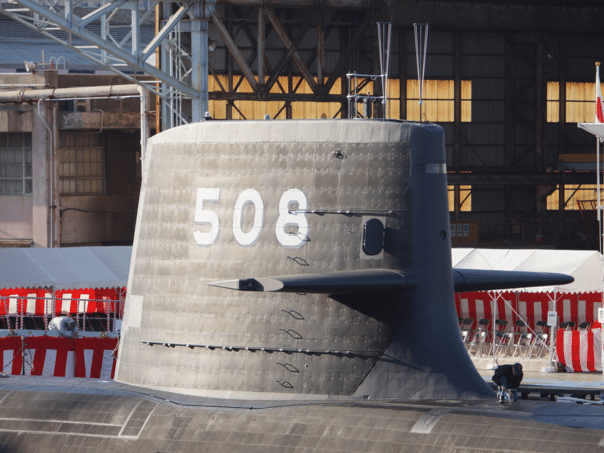
The ruling coalition, made up of the Liberal Democratic Party and the Japan Innovation Party, plans to develop new-generation nuclear-powered submarines equipped with a vertical launch system for long-range missiles. The new doctrine also includes counterattack activities, allowing the transition from passive to active defense.
The change began back in December 2022, when the government of Prime Minister Fumio Kishida adopted three new strategies that redefine Japan’s security and military policy. Attacking enemy bases in the event of an immediate threat, increasing the military budget from one to two percent of GDP by 2027, acquiring long-range weapons and lifting the ban on the export of lethal weapons have been made possible.
Although Article 9 of the Japanese constitution still formally prohibits waging war, its interpretation has been changed through the concept of the “collective right to self-defense.” Japan can now act even if they are not directly attacked, but if their allies, primarily the USA, are attacked.
Minister Koizumi emphasizes that international circumstances require adaptation: “Japan is at a turning point. We must move away from established practices and create a society that fits the new age. When threats become a reality, can our self-defense force fully protect the country? The current capability is not enough.”
The main threats are North Korea, China’s military strengthening, ongoing tensions over Taiwan and the East China Sea, and Russia’s increased presence in the Far East after the invasion of Ukraine. The support of US President Donald Trump further encourages Japan to modernize and strengthen its military capabilities.
Japan’s defense forces are already among the most advanced militaries in the world, ranked 8th in the Global Firepower Index 2025, and the second strongest force in Asia. Active personnel is 247,150 soldiers, with 56,000 in reserve. Military service is currently not compulsory, but its introduction is under consideration.
Prime Minister Sanae Takaichi announced the acceleration of the entire process due to fear of a possible Chinese blockade of the Taiwan Strait, which, in her words, would threaten Japan’s survival.
China reacted harshly, accusing Japan of “exaggerating and creating baseless stories” and recalling the history of Japanese aggression.
Analysts such as Christopher B. Johnstone of the Center for International Studies in Washington say the biggest geostrategic shift since World War II is taking place in the shadow of the wars in Ukraine and the Middle East, as Japan redefines its military and security policy and plans to take a bigger role in the Indo-Pacific.
Despite the criticism, the Japanese government refuses to call its path militaristic, but wants to keep all options open, including the integration of economic and technological components of security and stronger cooperation with democracies in the region. Interestingly, opposition to nuclear weapons among the population has fallen – now 40 percent of Japanese people think the country should have nuclear weapons.
(Vijesti.ba)