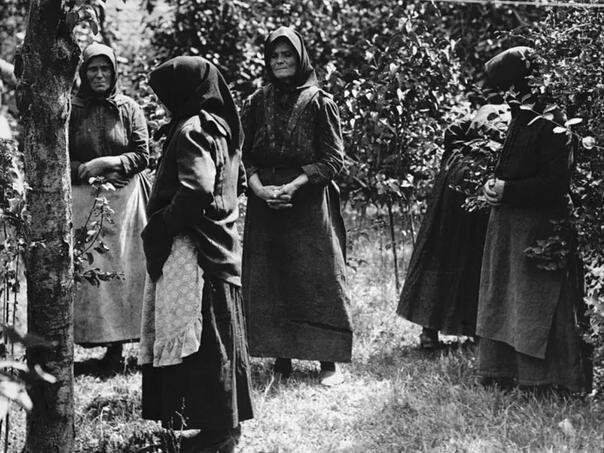
The case referred to the nearby village of Nagyrév, where dozens of women were charged with intentionally poisoning their husbands.
The American diary of The New York Times then reported that almost 50 women were charged with poisoning men in that community.
According to the diary, in Nagyrév, an agricultural settlement about 130 kilometers south of Budapest, from 1911. until 1929. More than 50 men were killed by Arseno poisoning.
Accused women became known as “Nagyréva trovels”. During the trial, one name was mentioned several times – Zsuzsanna Fazekas, a rural midwife.
Nagyrév was a small agricultural community on the Tisz River, Kunság, the largest viticultural region in Hungary.
In that area, marriages were often contracted, so very young girls were married to much older men. Such arrangements usually meant land, inheritance and obligatory relations agreements, and the divorce was not possible.
At that time, the village was still under the rule of the Austro-Hungarian Empire. Since Nagyrév was not a doctor or priest, Fazekas, thanks to knowledge about medicinal plants and chemical substances, she did not only work as a midwife, but also as a village doctor.
“Because of her knowledge, people were addressing her and they were trusted,” she told BBC in 2004. Maria Gunja.
Gunja was a girl when her father, local clerk, police asked to help investigate a series of unexplained deaths in the village. The midwife lived in a typical ground house watching the street.
Gunja said that her women in the village often confided and talked about their problems.
“[Ona] She started learning what was happening in the houses: Men were beaten by women, raped them, many were unfaithful. There was a lot of abuse, “Gunja said.
She said that if women complained about their drunk or violent husbands, Fazekas would answer them, “If you have a problem with him, I have a simple solution.” That solution was Arsen, who received the midwife with soaking in the water of the paper with a stickier for flies.
Later, according to the writing of the British leaf the Times, buried bottles of poison were found in her garden. In time, a rural cemetery in Nagyrév was filled.
Since 1911. until 1929. About 50 men were buried in the cemetery, many of whom were husbands and fathers. The authorities finally suspected that something unusual and ordered the exhumation of the body. Of the 50 exhumed bodies, Arsen was found, which confirmed the suspicions of poisoning.
Everything pointed to Fazekas. Police was 19. July 1929. came in front of her house to arrest her.
“When she saw the gendarmes coming, she realized it was her end. Before they reached the house, she was already dead,” she was drunk. “She told him.
Police reports indicate that the first killings took place in 1911, the same year when Fazekas moved to the village.
That year, the poisonings began, which lasted for almost two decades. However, the midwife seems to be the only trivailer. In the nearby Szolnok, since 1929, 26 women were performed before the Court.
Eight were sentenced to death, and others were sentenced to a prison, seven of whom got a lifelong slave. Few women admitted guilt, and their motives were never fully clarified.
However, there are numerous theories. Poverty, greed and boredom often mentioned. Some reports claim that women had lovers among Russian war prisoners who were arranged to work on estates, while their husbands were on the front during the First World War.
When the husbands returned home, women were desperate for losing freedom and so one by one decided to take something.
It seems that women in Nagyrév were not the only ones who troved husbands. In the nearby Tiszacurt, the exhumed bodies also showed traces of arsenic, but for the death of these people, no one was ever convicted.
According to some estimates, the total number of dead in that area was up to 300. They deleted most of the painful memories of Nagyrév. The name of this village no longer causes discomfort between men in that area.
However, Gunja ironically noticed that after these poisonings, the behavior of men toward women “significantly improved.”
(Vijesti.ba)