
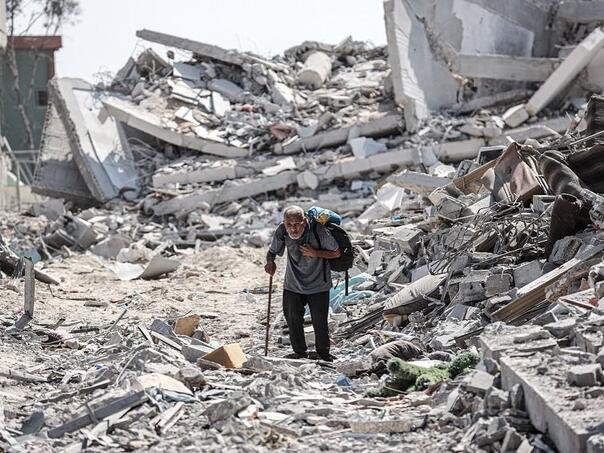
As you can see the photos of truck with humanitarian aids that are waiting for Rafah, one UNICEF worker spoke for BBC’s 5 Live Breakfast about the current situation in northern Gaza.
Tess Ingram says she had just arrived in Gaza city, where thousands of Palestinians return since the truce came into force on Friday. She states that she is there to assess people’s needs and establishes routes to access aid.
– Help enters the gauze belt. The challenge will be to ensure that we can expand that assistance and increase the volume urgently, because the quantities that came during this conflict were too low – she said.
He hopes that today’s “be the first to see that wave of help” and emphasized that the help must reach people throughout the gauze.
I also talked to an Israeli military official on the preparations that are up to date of Israeli hostages. The official said that the transfer of hostages would follow the same procedure before this year, which has been taken by the International Unit of Israeli in the southern Defense forces, family members are waiting for hostages on admission points and travel to hospitals with hospitals where they will receive further medical attention.
– In case of emergency medical needs, evacuation will be done directly to the hospital, without stopping at the entrance point – the official said.
This morning, Israeli public radio reported that Israeli officials expect hostages to be released tomorrow morning, and the assessment further confirmed the interview that last night by Osama Hamdan, a senior Hamas official. Public service Israel also announced that Gal Hirsch, government coordinator for the hostage issues, sent a letter to the hostage families.
The report states that Hirsch informed the families that the international working group would begin to act as soon as the hostages are released, with the aim of finding all the deceased hostages whose remains returned to Israel until tomorrow at noon and will return them to the country.
(Vijesti.ba/fena)


