
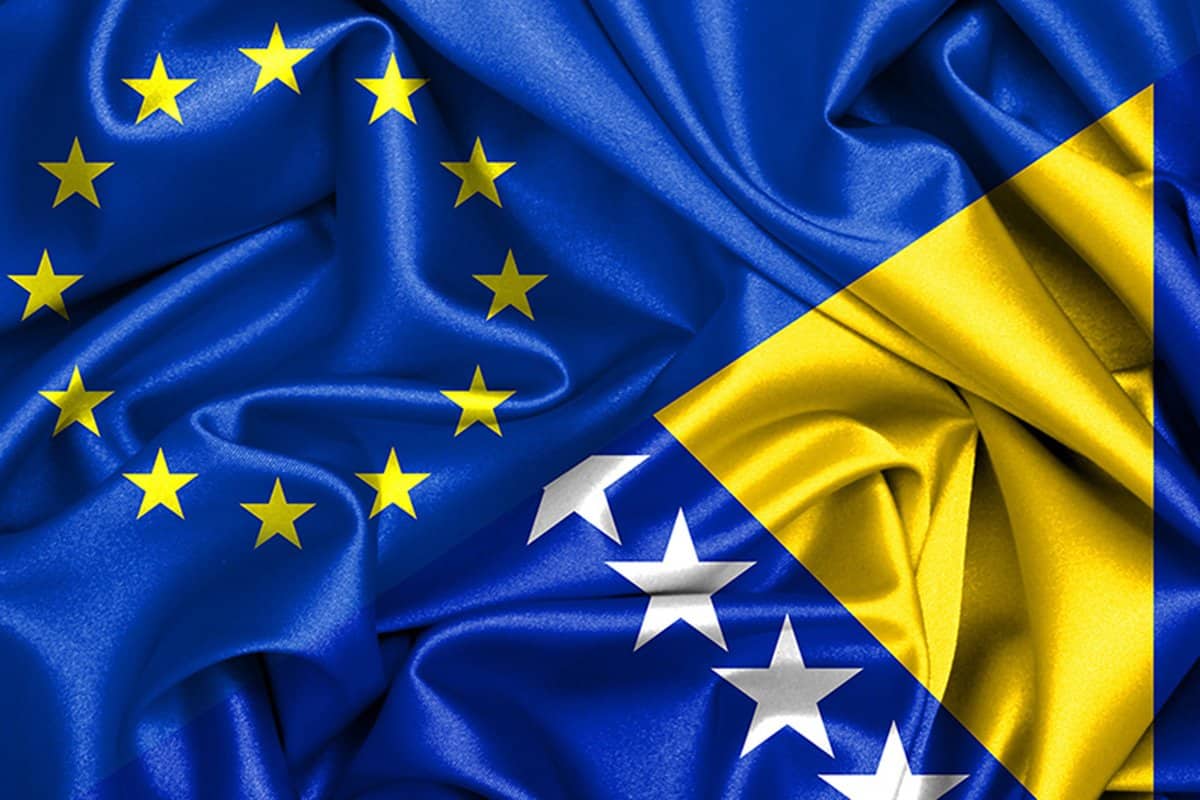
BiH is still practical from the EU accession process in 2001. year, when it was definitely decided to assign European perspectives to the Western Balkans.
EU membership cannot be “deserved”, but it must be granted by the Member States, ie they must want to receive new members.
EU members have decided to open the European perspective to the Western Balkans and prescribed the conditions – countries must respect the basic human rights and the rule of law, must be ready to integrate into the European market and must be readiness to work in reconciliation in the region.
BiH is currently a candidate country, which means that the next step should be initiating negotiations, ie adoption of the negotiation framework.
Unofficially in conversation with journalists, European Commission officials recognize that the term “negotiations” does not fully reflect what will happen.
It is more about accepting the conditions set by Member States, but about negotiation.
In a recent conversation with the Croatian Diplomatic, which has been shared by Croatian experiences, we were told that special conditions, especially in sectors that are politically, and the main knowledge of European integration, but also excellent personal contacts in Brussels and European metropolises.
The negotiation process is probably the most complex political-administrative process through which any country must pass and requires great coordination within the country. Given that BiH is “stuck” at the selection of the main negotiator, it is now certain that it will be a very difficult process for BiH. The fact that in the election of the main negotiator is exclusively viewed through the ethnic prism and belonging to the political group that is noticed that person, it does not promise to show a skill when the process begins.
Membership negotiations cannot begin until all EU governments are agreed, in the form of a unanimous decision of the EU Council, on the framework for negotiations with the candidate country. Negotiations take place between the Ministers and the Ambassador Government of the EU and the candidate countries on the intergovernmental conference.
After that first step, screening must be carried out, which will show what the situation is in.
Given that BiH, as well as other Western Balkans, in the Stabilization and Association Process (SAA), and in Sarajevo there is an office of the EU Special Representative, the situation in the country is well known, so that screening could be carried out faster. So far, the EU delegation has often taken a proactive role in Brussels and tried to help domestic officials to implement the necessary steps towards European integration.
Before the beginning of the negotiations, the candidate country must submit its position, and the EU must adopt a joint position. For most chapters, the EU will set the closure criteria in this position that the candidate country must meet before negotiations in the policy in question can be closed.
Negotiations can last for many years, not only because of the volume of the job, which should be carried out by changing their own laws and regulations in accordance with the Legal Bankruptcy of the EU, but also because of the internal procedures in Brussels, such as the opening and closing of the chapter, the consent of all Member States.
After signing the contract, the candidate becomes a country of access order, which means that it is expected to become a full EU member on the date determined by the contract, provided that the contract was ratified. Meanwhile, in the status of “active observers”, benefits from special arrangements, such as the possibility of commenting on draft proposals, communication, recommendations or EU initiatives.
Given that BiH has a signed SAA with the EU, the technical process will be much easier, because BiH has already implemented some of the major obligations that are not yet to be in the Western Balkans, and also want to become members, write Independent newspapers.


