
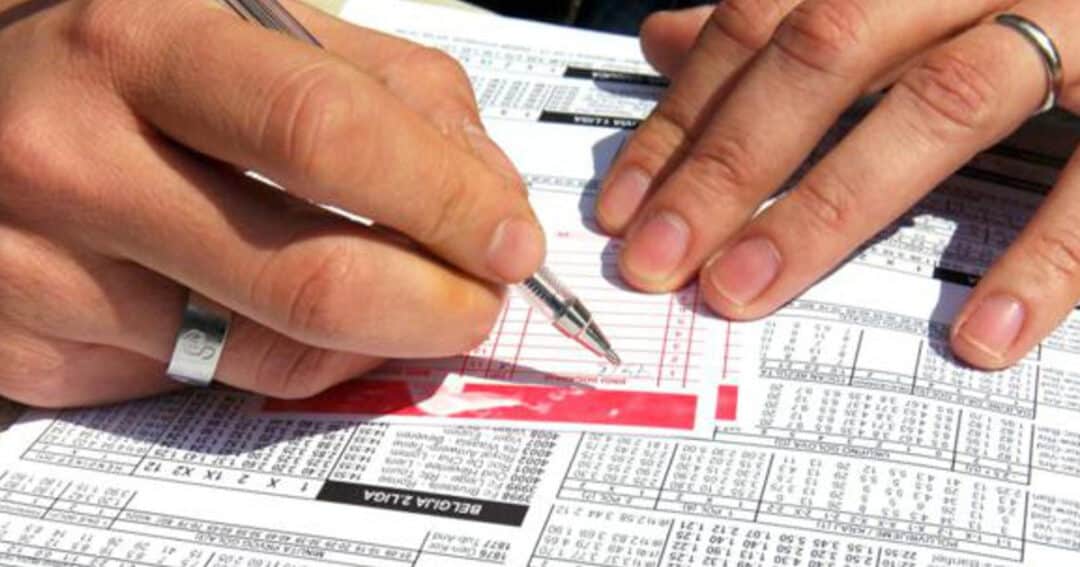
Citizens of Bosnia and Herzegovina leave billions in betting shops and slot machines every year.
Data from the Tax Administration of the Federation of Bosnia and Herzegovina show that the turnover of betting shops and automatic clubs exceeded 1.8 billion convertible marks in ten months of this year.
“I think the bookmakers in Bosnia and Herzegovina literally run the country. You are in another world. You absolutely do not live there. You avoid your friends, you avoid your family, you are constantly nervous…” said one interviewee of TRT Balkan.
However, some cities have found a way to put a stop to an industry that has been growing unchecked for decades.
“Quiet revolution” in Bihać. This city in the northwest of our homeland is trying to put an end to an industry that takes in billions annually.
“Bosnia and Herzegovina has the largest number of bookmakers per capita in Europe,” says Aida Kauković, producer of TRT Balkan.
Last year, citizens of Bosnia and Herzegovina left more than two billion KM in betting shops and slot machines. However, the state of BiH collected 345.8 million KM in taxes. The Federation of BiH collected 188, the RS collected 155, and the Brčko District 2.8 million KM.
“Two billion KM is enough for the construction of dozens of factories that would have annual sales of millions,” claims Kauković.
The Una-Sana Canton is among the significant consumers of this industry. By October, citizens left more than 113 million KM in betting shops. That’s why Bihać introduced a rare local tax – a tax on business premises for games of chance.
“In the street in Bihać, where the largest number of primary and secondary schools are located, there is a large number of betting shops and slot machines,” Kauković points out.
“It is impossible for a local community to have nothing from that industry and suffer the consequences. I can confirm the fact that compared to last year, this year there are 12 fewer business units of different organizers of games of chance. Is this now a consequence of our decision or is something else the reason for their withdrawal? What is important for us is that all those who want to do business in the area of the city of Bihać should comply with the rules of this local community. All those who think that they should not do so or that they can avoid the rules of this local communities, they are grossly deceived”, points out Elvedin Sedić, the mayor of the city of Bihać, and adds that he will demand that the decision on communal taxes be respected, that it be fully implemented, which the court ultimately confirmed.
“All those who don’t like it can look for their success in another local community, but not in Bihać”, Sedić is clear.
This move by the government did not go without reactions. Some of the bookmakers initiated administrative disputes before the cantonal and then before the Supreme Court of FBiH. However, the Supreme Court decided that no law or regulation was violated.
The reasons for this step also lie in non-compliance with the law by certain companies. Namely, facilities for games of chance must not be closer than 100 meters from schools and religious buildings, which is not respected in Bihać.
“Definitely the right decision because people complain that we don’t have money and the betting shops are always full. I don’t know a person who came out positive at the betting shops, everyone ended up in the red after all,” said a young man from Bihać.
His elderly fellow citizen says that there are “too many of them and that young children of 12 and 13 go to bookies before they get rich.”
“All the best. Let it be known – if it is done in the state, taxes should also be paid, the necessary contributions should be paid. The fewer betting shops, the healthier the society,” said one citizen of Bihać.
While politicians, courts and companies deal with the law, the reality looks grim.
“Personally, as a minor, I first of all started doing it and it was made possible for me, so I had no problem approaching it. You create problems where there are none, instead of having an orderly life as a normal person, you have all these problems. First of all, I am an academically educated citizen. I honestly did not feel the problem until I was married, until I had a wife and a child. It was all somehow solved, it was covered up, but it was never approached as a problem. The cube is a disease,” he pointed out. anonymous interlocutor for TRT Balkan who is a member of the therapy group Klok from Mostar.
Pathological gambling destroys the family. It is estimated that 500,000 people gamble every day in BiH, of which 50,000 are pathological gamblers.
“They do not appear to the extent that it is expressed in society and to the extent that this addiction is widespread. We have witnessed the destruction of families several times, all because of pathological gambling and other addictions, but I would say that the family is under attack as a result of excessive gambling,” said Dr. Edin Bašagić, specialist in neuropsychiatry at the Cantonal Hospital in Bihać.
The example of Bihać shows that despite industry resistance, local communities can try to shape their own rules. Whether this model of the city of Bihać will force other cities to take action will depend on subsequent court decisions and the political will to finally fix the regulation of games of chance.


