
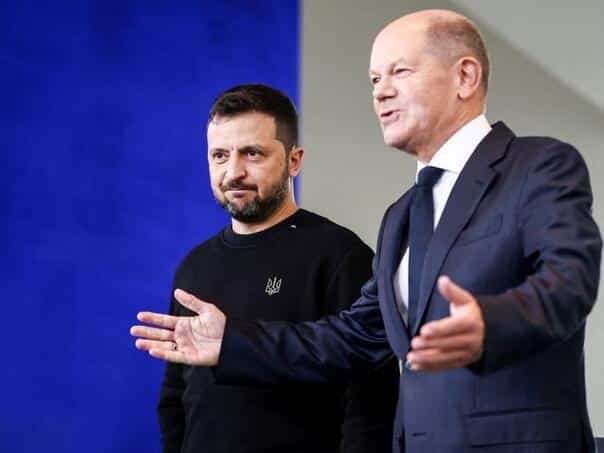
The plan, revealed by Spiegel, was presented by Foreign Minister Annalena Baerbock of the Greens and Defense Minister Boris Pistorius of Scholz’s Social Democratic Party. The two sought to supply Ukraine with critical weapons systems, including three additional Iris-T air defense batteries, 10 howitzers and more artillery ammunition.
According to the report, preparation of the aid package began immediately after the fall of the coalition government in November, with Baerbock and Pistorius aiming to secure parliamentary approval for the funding before snap elections in February.
Their ministries justified the request by citing the worsening military situation in Ukraine, heightened by doubts about further US support after Donald Trump’s election victory. Baerbock and Pistorius framed the proposal as key evidence of Germany’s unwavering support.
Despite their efforts, Scholz opposed the plan, according to Spiegel. The current chancellor has reportedly argued that existing military aid allocations – €4bn for 2025, along with funds from a $50bn G7 loan funded by frozen Russian assets – are sufficient. He expressed his concern about the assumption of large financial obligations by the new government after the elections.
Political calculations also play an important role. Rumor has it that the SPD leader fears he will lose votes by sending more weapons in the middle of the election campaign.
(Vijesti.ba)


