
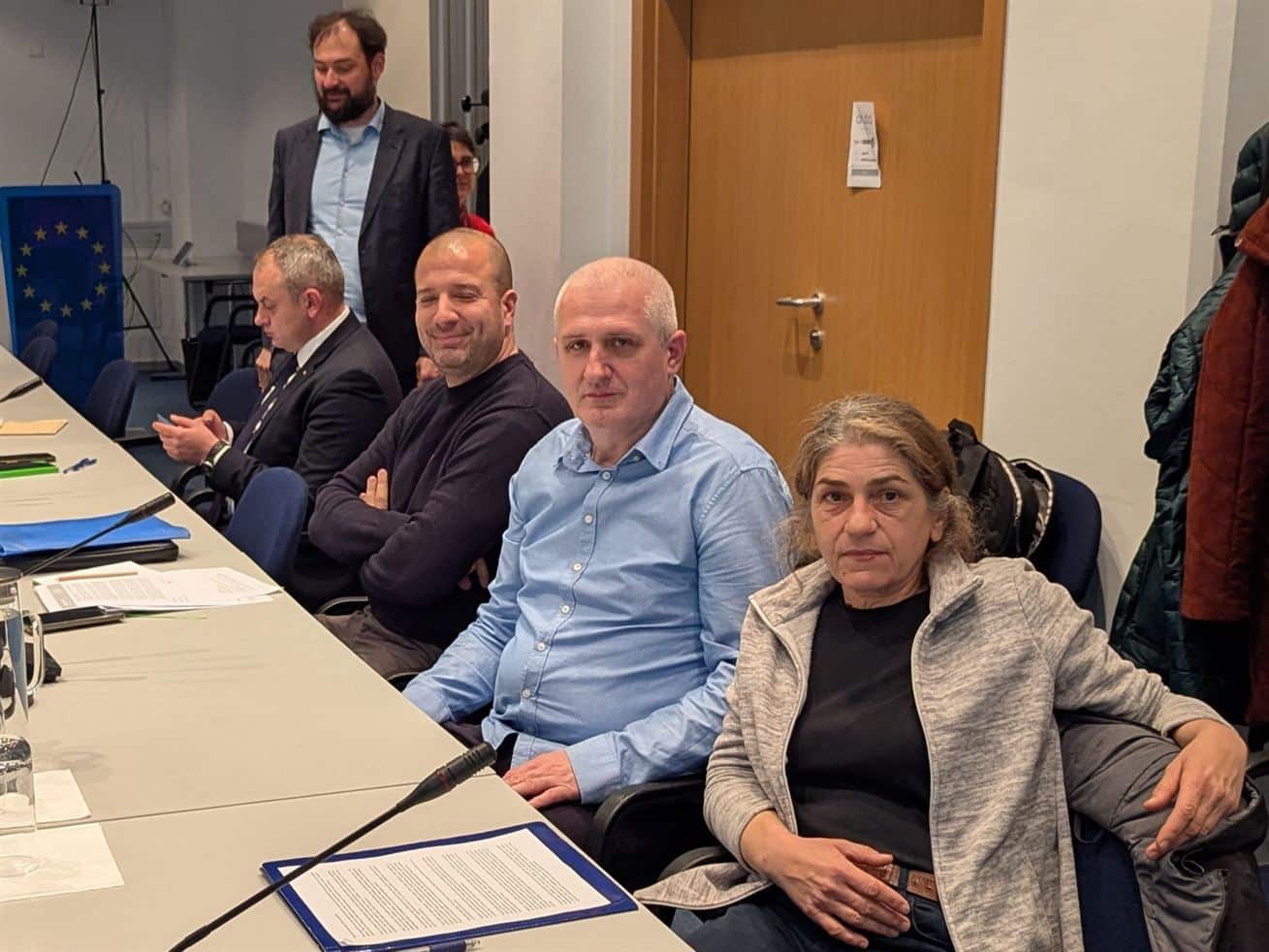
At a meeting in Sarajevo, with representatives of 11 member states of the European Union, including Germany, Italy and France, which was focused on the implications of the EU Critical Raw Materials Act, civil society organizations from Bosnia and Herzegovina sent a clear and urgent call for harmonization of nature protection in BiH with European standards.
Zoran Poljašević from the Ecological Association “Ozrenski studenac” Doboj and Snežana Jagodić Vujuć from the Ecological Association “Eko put” Bijeljina spoke about the planned projects for the exploitation of nickel and cobalt in Ozren and lithium in Majevica. Davor Šupuković from the Association of Citizens “Fojničani” Maglaj and Tihomir Dakić from the Center for the Environment of Banjaluka also presented their observations. The representatives of the European Union presented the Critical Raw Materials Act, emphasizing that the exploitation of critical minerals in Bosnia and Herzegovina should be carried out in accordance with the same standards and practices that apply in the member states of the European Union.
However, the present environmental activists pointed out that they do not see the same enthusiasm of the European Union when it comes to nature protection standards. While the European average of protected territory is 26%, in BiH that share is only 3%, which the activists assessed as alarming and completely unacceptable.
Environmental associations emphasized that they understand the EU’s global priorities in securing alternative sources of critical mineral raw materials, but they cannot accept a passive attitude towards the achievement of nature protection standards in BiH. Therefore, they requested a decisive partnership with the European Union in the harmonization of environmental protection standards, because they do not expect any support from the domestic corrupt authorities.
Environmental activists also emphasized that the issuing of permits for mining projects in Bosnia and Herzegovina is not based on European standards, but on domestic laws that are obviously changed according to the interests of investors. This is best seen in the change to the Law on Detailed Geological Surveys of the Republika Srpska, where the local community is excluded from decision-making, which is a direct violation of the Aarhus Convention. Activists pointed out that this problem went completely unnoticed in EU circles, further undermining citizens’ trust in European institutions.
The example of the mine in Vareš, owned by a British-Australian company, vividly illustrates how the mining of critical minerals in BiH currently looks. For only a quarter and a half of mining silver, copper, zinc and other metals, the company will generate income of around 41 million KM, while the concession fee paid to the Zenica-Doboj Canton will amount to only 276,900 KM, or 0.68%. Activists asked a clear question: is there anywhere in the world such a low concession fee? Why has the EU never expressed concern about such fees, which are below all standards, especially those of Europe?
Civil society organizations that fight for nature protection pointed out that they have been leading a rarely seen example of inter-entity cooperation for years. However, although the European Union declaratively encourages this kind of cooperation, this positive example did not find significant support. On the contrary, they point out that the only support that CSOs had through the OSCE Mission was abruptly terminated at the beginning of this year by the closure of the field office in Maglaj.
What further worries environmental organizations is that foreign companies in Bosnia and Herzegovina act in a similar way as the local authorities, using divisions and inciting hatred to achieve their interests. This behavior creates new security risks and threatens the efforts of environmental organizations that have been building bridges of cooperation and togetherness for years.
Due to all of the above, the citizens of Bosnia and Herzegovina increasingly perceive the situation as a collective conspiracy, in which domestic authorities, foreign companies, foreign ambassadors and high representatives are connected – all on one side, while on the other side are the citizens themselves, left to their own struggle for protection environment, human rights and dignity, CSO representatives concluded at a meeting in Sarajevo.


