
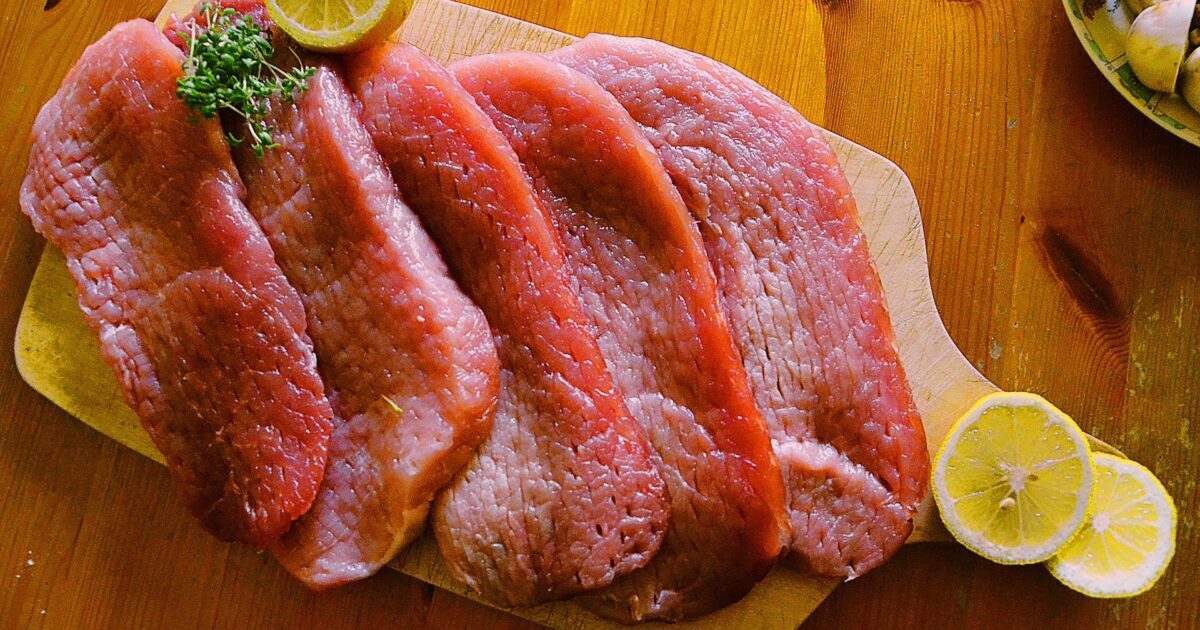
For many citizens of Bosnia and Herzegovina, meat is an increasing luxury, so when buying it today, the price is often more important than the origin. At the same time, domestic producers warn that due to cheaper imports and weak purchase prices, it is increasingly difficult for them to survive on the market.
Just a few kilometers from the center of Vogošće, in the settlement of Kremeš, Nenad Damjanović has been engaged in animal husbandry and food production for almost two decades. On the family farm, with the help of his wife and sons, he raises more than a hundred sheep, about twenty cattle and goats, and poultry. Although citizens’ interest in domestic products exists, he says that it is increasingly difficult to survive on the market. Of particular concern are the large quantities of imported meat on the market.
“The purchase prices are weak, to tell you honestly. If they buy june from you for 7 or 8 marks, and in the city sell a kilogram for 23-24 marks, then something can’t be three times more expensive! I don’t go into butchers, let them make money, let them import meat, but I guarantee that 90 percent of that imported meat can’t come close to our meat”, says meat producer Nenad Damjanović.
Data show that Bosnia and Herzegovina still imports significantly more meat and meat products than it exports. During the last year, meat worth almost 720 million marks was imported, while exports amounted to about 140 million. Most of the meat was imported from the Netherlands, Italy, Serbia, Croatia and Germany.
Citizens, they say, would rather choose local meat. However, in a time of constant price increases, the decision about what will end up on the table is often made by — the price.
“Now we look at the price, there is no more origin, nothing,” says a citizen of Sarajevo.
“I’m looking at both. But the prices have gone up,” adds another citizen.
“God bless me at today’s meal,” says another interlocutor.
The problem of domestic consumers is how to provide a kilogram of meat for their family today, warns Gordana Bulić from the TK Consumer Association.
“To not look too much at the origin of meat in a milieu of high prices, but to, when we choose meat in front of the fridge, actually calculate how much it will cost us. Over 90 percent of them do not pay attention to the label on which the origin of the meat is highlighted”, adds Bulić.
While citizens choose what their budget can handle, local livestock farmers warn that it is becoming increasingly difficult for them to survive on the market. Production costs are rising, earnings are decreasing, and villages where once almost every family engaged in animal husbandry are becoming more and more empty.
“Hundreds of dulums were extinguished in this area alone. Every house had at least three, four cows, two bulls… Even then, before the war, the locals from here mostly worked in Pretis in Vogošća, but they also raised cattle,” says Damjanović.
While the domestic market is increasingly dependent on imports, producers warn that animal husbandry in Bosnia and Herzegovina is slowly losing the battle. Without serious moves by the authorities and long-term support for domestic production, they say, the question is not what we will buy — but who will produce domestic meat in the first place, writes N1 BiH.


