Although statistical data show that there is still a significant number of members of the middle class in Bosnia and Herzegovina, an increasing number of households in practice live without a realistic possibility of saving or supporting themselves and the slightest financial shock. The rise in the prices of housing, food and basic living expenses has largely eaten up the effects of wage growth, so the middle class, the former bearer of economic stability, is increasingly reduced to living from month to month.
Economist Igor Gavran points out in his analysis that it is precisely in this relationship that the weakening of the middle class in BiH is best seen, because even average salaries do not ensure a standard of living that could be called middle class in European contexts. According to him, the growth of nominal incomes loses its effect due to the rise in the prices of basic living expenses.
Theory and practice
In economic theory, the middle class is most often defined as a group of households that earn between 75 and 200 percent of the median income. However, in reality, that term depends much less on the formal amount of income, and much more on the ability to ensure savings, a safety reserve and long-term financial stability after basic expenses, he writes. Voice of Srpska
According to estimates based on the structure of salaries and consumption, around 30 to 40 percent of households formally fall into this category, but the number of those who truly live the standards of the classic middle class – stable savings, ability to plan, resistance to crises – is significantly smaller. Most of them move in the zone of current consumption, without a financial cushion and with limited space for any unplanned expenses.
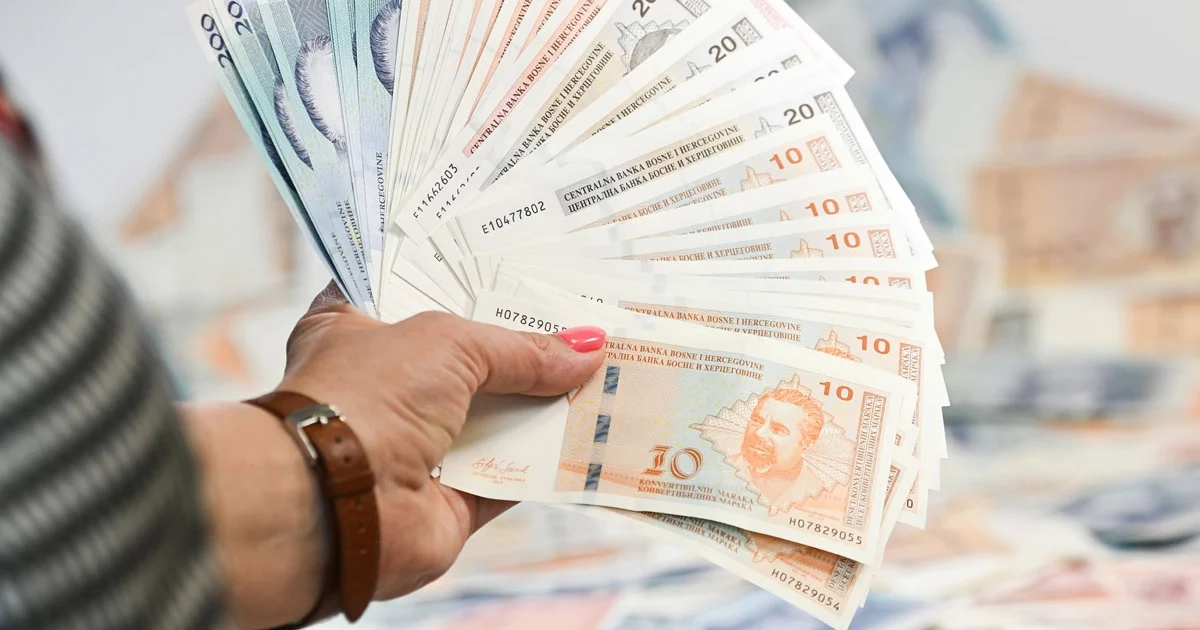
Gavran believes that the middle class in BiH is increasingly disappearing and becoming an almost endemic category. He also states that a significant part of the population that can formally be classified in that layer in practice lives without financial security, in a permanent mode of covering current expenses. Income analyzes show that the “real” middle class amounts to about 15 to 20 percent of households. The lower limit consists of families that barely cover basic expenses with incomes of 2,500 to 3,500 marks, while the “classic” middle class means incomes of 4,000 to 6,500 KM.
Life on the frontier
Concrete examples from everyday life show that the line between statistics and reality is getting thinner and thinner. A family from Banja Luka, in which the spouses are employed as a nurse and a teacher, with two children and a total income of around 3,600 marks, is formally located in the zone of the lower middle class. However, their financial reality shows something completely different.
– After paying off the housing loan, food costs, transportation, children’s education and utilities, the budget practically comes down to current survival. In such conditions, there is no room for savings or for unforeseen expenses without borrowing. Even going to the sea, which should be normal, becomes questionable – says Stefan P. (39), adding that, despite the university education, the family can hardly afford any comfort beyond basic needs.
The monthly expenses of a four-member family in larger cities today exceed 3,000 KM on average. Housing, whether through a loan or rent, amounts to 700 to 1,000 KM, food 1,000 to 1,300, utilities more than 300, while transportation, education and other expenses raise the total amount to 3,000 to 3,500 KM per month. In practice, this means that an entire income level of the household is spent on the bare reproduction of life, he writes NOISE.