The process of education in the past underwent numerous changes that were a reflection of the needs of the social community of that era. It is realistic to expect that changes occur due to its progress, but it is evident that once upon a time, education reforms brought a regression to it.
Given that it is the basis of society, it also led to regression in all spheres of society. Thus, the Byzantine Emperor Justinian, known for building the Hagia Sophia, banned all philosophical schools in 529 and opened the door to the scientific “darkness” of the Middle Ages in Europe, which lasted until the Renaissance.
This was evidently a “reform” of education, and its consequences were felt for a long time in Europe at that time. The prohibition of the “logos” of the Stoic school caused a long-term regress of society from which the civilization of the old continent took a long time to recover.
How the blackboard, chalk and sponge were created
Education, and thus its potential progress, includes numerous elements. In addition to changes in the methodology and didactics of activity, technological progress also had a significant impact on education. He certainly had an impact on all segments of society, and therefore also on what forms its basis – education.
In particular, such progress is present in the development and application of school education, which experienced its modification and accommodation throughout the past.
The biggest reform of school teaching in the classical classroom took place at the beginning of the 19th century. Then Professor James Pillans from Edinburgh joined the tiles of all the students on the wall and made the first “school board”.
Back then, students used slate tiles [vrsta stijene] to write down the teaching material, and this geography professor wanted to make his lectures more visible for all students. Back then, students wrote with slates on tiles, and what was written was wiped off with rags.
Secondly, chalk (limestone) began to be used, which is water-soluble, so records could be erased with a sponge. This is how the school curriculum was created, which every classroom has for the last two centuries.
Five segments
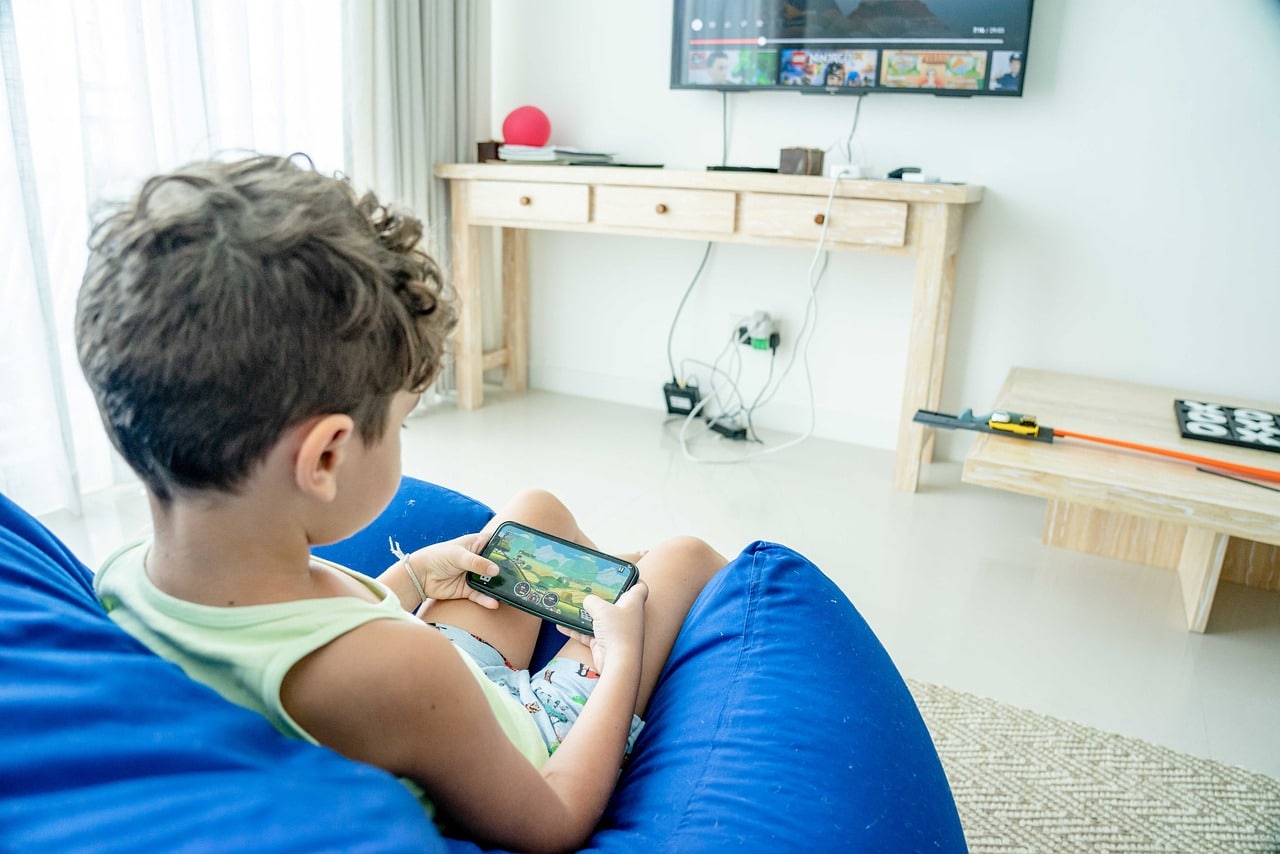
Today, there are often discussions about the use of cell phones in class. Modern technology has offered widespread use of devices that could hardly have been imagined half a century ago. Its excessive use has led to numerous problems that are not only related to the educational process. It is mainly about five basic segments that lead to excessive use of it, and they relate to the physical and psychological state of the child.
The first problem is mental health and the appearance of depression and anxiety, followed by impaired vision, sleep disorders, slouching and lack of concentration. All these elements have a negative effect on children’s development, and the primary task of the school is to “produce” a healthy child in all its forms.
When talking about education, special attention is focused on the lack of concentration in classes and learning the teaching material. Studies have shown that children who use cell phones too much have lower success, very poor concentration in class, and modest productivity and attention.
These facts support the idea that it is best to ban the use of cell phones in schools. A number of European countries have already implemented such activities since this school year. In France, a “digital break” is being implemented experimentally for 50,000 students, and next year it will be on a national level.
It is considered that children up to the age of 11 should not use the phone at all, from 11 to 13 they should have a phone without internet (dumbphone), and up to the age of 15 they should have limited access to the internet. In schools, children must hand in their phone upon entry and spend the school day without it.
In Spain, as of this school year, the National School Council has vetoed the use of cell phones in primary schools, and there are major restrictions on their use in secondary schools. Italy has banned cell phones in schools, and computers can be used with strict teacher control.
Students in Greece must keep their phones in their school bags, and it is being considered from next year to ban them altogether in schools. The Walloon part of Belgium passed a strict ban, and Flanders left the permission to carry mobile phones in schools “at will”. The Netherlands passed the ban in September of this year, and Slovenia left such a decision to each school at its own discretion.
Positive sides of use
The results that were conducted in Slovenia are interesting, where 60 percent of students stated that they had experienced some form of violence on the Internet. Given that their access to the Internet is mainly through mobile phones, the primary thought can be the following – banning the use of mobile phones will prevent violence on the Internet.
But there is an obvious problem here. If you ban the use of mobile phones in schools, you have not banned the (mis)use of them in the lives of children. Here it can even be stated that the lack of education, including that in schools, is one of the culprits of violence on the Internet.
What should definitely be prohibited is the inadequate and uncontrolled use of mobile phones. It has its positive segments in the educational process. The first is that students can use it to access information, research numerous topics and expand their knowledge beyond textbooks.
The second segment of the positive side of mobile phones is the acquisition of digital skills, the third is the use of numerous applications for learning and exercise, and the fourth is safety because the student can quickly get in touch with parents and other people from whom he can ask for help. It is evident from this that the controlled use of mobile phones brings benefits to the teaching process.
What if Egypt had banned papyrus?
On the other hand, distraction, social isolation, health risks and potential loss of critical thinking brought about by an excess of information are the main reasons why the use of mobile phones should be banned.
If we add to this the educational component in which it is very bad to allow anything without control, but also to prohibit what is an integral part of today’s life, it is evident that every decision should be analyzed and some “golden mean” should be found that would not allow prohibit potentially useful school teaching, but certainly prevent its misuse.
When the Sumerians developed the original school system 4,000 years ago, they wrote on “tablets” and developed the first library catalog. They could have potentially banned the tables because they could be misused with different content. Ancient Egypt could have banned papyrus because anything could be written on it, and even school blackboards and chalk could have been banned because students could get hurt.
In such an observation, the use of books is also questionable because many writers misused “paper” and wrote inadequate content – especially for children.
What is a problem is the fact that there is no access to education. Cell phones can certainly be banned in schools for a short time, but they are an integral part of the lives of most people on the planet. If we are talking about mobile phones and social networks as media, then we could also talk about banning the use of radio or television in life – because they can bring negative content. In the past, mothers covered their children’s eyes with their hands when “love content” appeared on television, but the question is whether this ban on viewing brought positivity in the child’s upbringing.
‘A multi-edged sword’
Every technological progress is a benefit for the social community. You cannot ban nuclear energy because some misused it and made a nuclear bomb. Educational institutions serve education, but also respond to problems in society.
Banning the use of cell phones in schools is a “multi-edged sword” because it can currently bring benefits from the aspect of potentially better concentration of students, but on the other hand, it will leave them uneducated about its misuse.
In ecology, prohibitions and punishments achieve a lot, but through education, the purity of nature enters the human DNA from a young age. If you haven’t educated people but only threaten punishments, the one who litters will just wait for the opportunity to do it where there is no control and punishment. Can you imagine a society where cell phones and the Internet will be used without control because they are banned where they can only potentially be controlled?
Mobile phones and the Internet are school tools like chalk, a blackboard, a pen and a notebook. You can’t ban chalk because kids can shoot with it, or ban pencils because kids can draw with it. The goal of education is education, and a special segment of it is learning about the (mis)use of different things and content.
The essence of the story is the development of (self) control, and banning something that can be useful for the educational process and which, once you leave the school building, is an integral part of life is very wrong and brings uncontrolled consequences, he writes Al Jazeera.