
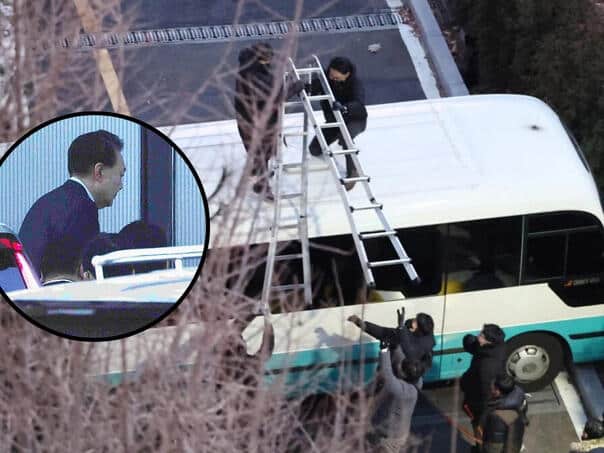
Yoon said he agreed to cooperate with the investigation to avoid “bloodshed,” ending a weeks-long political standoff.
Since parliament voted last month to impeach Yoon over a stunning but short-lived declaration of emergency on Dec. 3, Yoon has holed up in his residence, guarded by a small army of private security that blocked a previous arrest attempt.
His arrest, the first ever for a sitting president, is the latest twist for one of Asia’s most vibrant democracies, although the country has a history of prosecuting and imprisoning former leaders.
Yoon said he surrendered for questioning to avoid any violence after more than 3,000 police officers marched on his residence to arrest him in the early hours of Wednesday.
“When I saw them breaking in today using firefighting equipment, I decided to respond to the investigation, despite it being illegal, to prevent embarrassing bloodshed,” Yoon said.
On Wednesday morning, Yoon was seen arriving in a motorcade to the offices of the anti-corruption agency that is leading the investigation.
Authorities now have 48 hours to question Yoon, after which they must seek a warrant to detain him for up to 20 days or release him.
Yoon’s lawyers argue that the attempts to detain Yoon are illegal and designed to publicly humiliate him.
After local media announced that Yoon’s arrest could soon follow, there were minor clashes near the residence between crying protesters who support him and the police, according to Reuters, according to a witness at the scene.
Yoon’s declaration of emergency stunned South Koreans, rocked Asia’s fourth-largest economy and ushered in an unprecedented period of political turmoil. On December 14, deputies voted to impeach him, and he has been suspended from office ever since.
In the meantime, the Constitutional Court is considering whether to confirm that impeachment and remove him permanently or restore his presidential powers.
(Vijesti.ba)