
While they are on duty patriots counted who scored a goal, Olivera showed what it means to be a citizen of this country
Written by: Hajrudin Redžović
Gentlemen, we live in an age where blood cell counts are more profitable than bitcoins. In this Dayton courtyard of ours, nationalism is no longer an ideology. It’s a business. And the dirtiest one at that.
And then, in the midst of that public mud, where an ordinary, masterful goal turns into a training ground for frustrated keyboard warriors, Olivera appears.
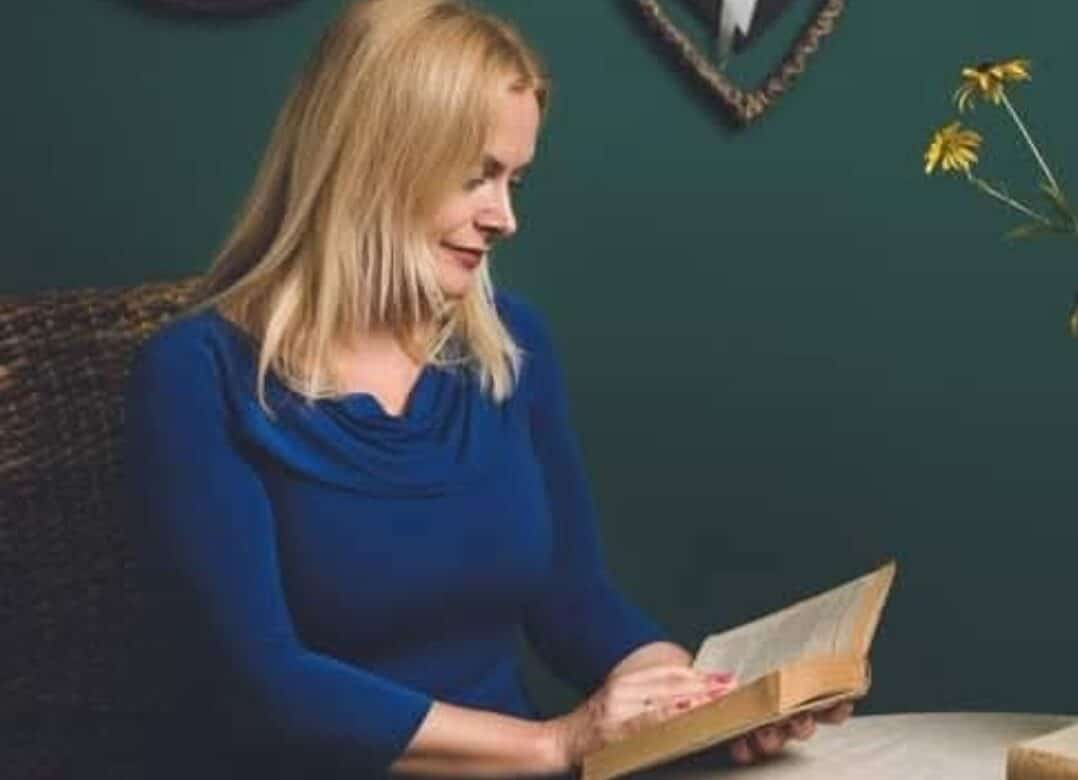
Who is Olivera Đeorđić Nedić? Professor. Mother of five children. Independent politician with an address between Doboj and Derventa. A woman who, unlike many professional patriots in two-thousand-mark suits, decided to write what she thought. And to sign it with his name, surname and his own image.
Her Facebook status after the match of the national team is not just an ordinary post on social networks. It is a brutal deconstruction of our collective madness.
Professor Olivera opens her status with a quote from a football player, and then immediately takes off her gloves:
“I can’t describe how I felt. It was as if we were playing in Bosnia and Herzegovina. I only heard our fans, not theirs at all,” he said.Jovo Lukić after the match.
And the orangutans from all over say: “It’s good who it’s from, a Chetnik goal.” “There would be nothing without the Serbs, rather they listened.” “Let the Serb score, these others don’t know.” “It’s a shame that he didn’t give Croatian.” “They are theirs again.” “Who still supports a national team made up of these and those.” “Their go, not ours.” “I’m not rooting for them.” “It’s not my national team.”
Watch what a woman does. She doesn’t calculate. She takes the mirror and turns it directly to what she herself calls “orangutans from all sides” — to that mental misery that pollutes sports with its sick counts. Their problem is who scored the goal. It bothers them that the child on the field does not fit into their ethnic Excel. The representation is acceptable to them only if it passes the customs of their tribal madness.
And Olivera? Olivera does not look at them. She looks at those kids on the field. We bequeathed backpacks full of our traumas, other people’s wars and failed policies to the children. And so he tells them what any normal adult would have to tell them:
“Dear children, you grew up among stories about “Chetniks and Balis”, “Ustasha and theirs”. You inherited a burden that you did not choose. You grew up surrounded by divisions, memories, censuses and other people’s wars.”
That’s not pathetic. That’s the diagnosis. And a precise, cold, professorial diagnosis of a country where children are often more normal than adults, and the stadium is sometimes healthier than the parliament.
Identity is not customs
What makes this statement of hers masterful is not just bare empathy. That is the courage of identity. Oliver very clearly, without a hint of complex, underlines:
“I am a Serbian woman. I love Serbia and support Serbia with all my heart when it plays. But I am also a woman born in Bosnia and Herzegovina. Bosnia and Herzegovina is also my country. I am not a Martian. Why would I give up a part of myself, the history of my ancestors and the area to which I belong?”
Boom. Knockout in the first round.
Why does the matrix constantly force us to choose between identities that naturally coexist within us? Because the system survives solely on that division. But this mother of five children from Doboj just hacked that system, in front of thousands of followers. She refused to give up the history of her ancestors, but also the space she belongs to.
And when, of course, they immediately threw the old Balkan mine about the ‘war flag with lilies’, Olivera didn’t escape into a phrase. She answered coldly, like a professor, like someone who knows that facts are not defended with noise, but with precision:
“The lily is known in the Orthodox tradition as the Flower of the Mother of God, a symbol of purity and dignity, and as a heraldic sign in these areas it has existed for centuries before the war of the nineties. The flag that can be seen among the supporters today is not the flag of the BiH Army, but the flag with the coat of arms of Kotromanić, under which BiH was admitted to the UN in 1992. It is a good idea to distinguish historical facts from political interpretations.”
In other words: not all history is war propaganda just because someone later decided to hate it. And not every symbol is dangerous because someone, decades later, shoved it into a fear mill.
But there is an even more important civilizational cut for Olivera. He doesn’t run away from other people’s trauma, he doesn’t make fun of it and he doesn’t cancel it. On the contrary, he admits that he understands why the flag can remind someone of the war, but refuses to let the facts be thrown into the trash because of it:
“I understand your comment, I can understand that it reminds people of the war and this flag that is not associated with it. But I don’t think it should be the priority now in the glorious moment of the game of those young people.”
That’s the difference between a thinking man and a reacting mob. One of the flags makes a trench. Others derive a historical fact from the symbol, but do not forget that children are on the field, not battalions.
And here we come to the most important sentence of her status:
“Why do we constantly have to choose between the identities we carry together?”
This is a question that in this country sounds more dangerous than all announcements, declarations and pre-election speeches. Because it is not looking for an enemy. It exposes the mechanism. And the mechanism is simple: as long as they force us to choose only one thing, someone else calmly counts votes, budgets, tenders and mandates.
After 40 years in this journalistic business, I have seen everything. I analyzed some tricky business and political operations of various calibers. But I assure you responsibly: in these few paragraphs of Olivera Đeorđić Nedic, there is more statesmanship, more civic courage and more sound logic than in all those barren, recycled announcements that have been served to us like a broken record for years from Sarajevo, Banja Luka and Mostar.
Olivera had her say and showed how to defend common sense. And you blood cell counters on duty, feel free to keep scratching your heads. Your time is slowly but surely running out.
To these children on the field, and to these mothers in the stands, you have long since become extras.
End of story.
Hajrudin Redžović is the author of the book “Operation Cardiff – The Story of a Country They Said Didn’t Exist”, which follows the placement of the BiH National Team at the 2026 World Cup.


