
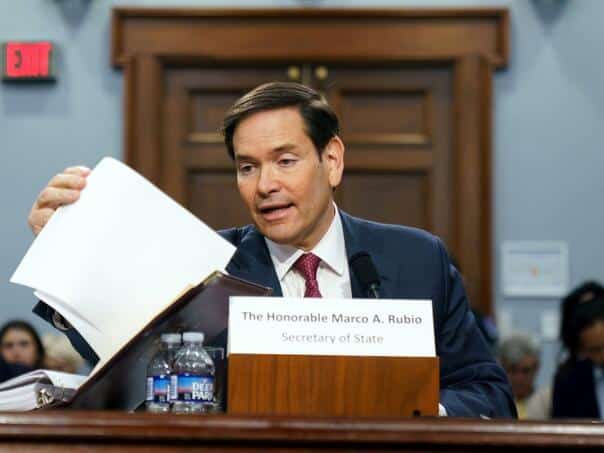
U.S. authorities do not know who is behind the trial of false representation, but believes that the culprit is likely to manipulate state officials “with the aim of accessing information or accounts,” according to the RUBI’s office to the State Department employees.
Using SMS messages and an application for encrypted communication signal, which is treated intensively, the fraud is “contacted at least five persons outside the State Department, one of the American governors and one congressman,” Document dated 3. July.
The fake representation campaign began in mid-June when the fraud was created by a user account on the name signal “[email protected]”In order to contact foreign and domestic diplomats and politicians who did not doubt anything, it is in the document. This name is not its right e-mail address.
“The perpetrator has left voice messages on the signal for at least two people, and in one case he sent an SMS to call a person to communicate via the signal,” says in the document. It is also stated that the other employees of the State Department were targeted by false representation by e-mails.
When asked about this document, the State Department replied that “to implement a thorough investigation and continue to apply protection measures to prevent repetition of such cases in the future.” Officials refused to discuss the content of messages or diplomats and names of diplomats and officials who were the target.
The incident with Marco Rubi occurred after several recent attempts of false representation within the Trump Administration. In May, someone broke into the cell phone head of the Bijela House Susie Wiles.
Then he started sending calls and messages to senators, governors and business leaders, pretending that she was reported by Wall Street Journal. The event initiated an investigation of the White House and the FBI, although President Donald Trump reduced his significance.
Hany Farid, professor at California in Berkeley, Digital Forensics Expert, said that the operation of this kind does not require a sophisticated perpetrator, but often succeeds because state officials can be negligence to data security.
“This is exactly why you should not use a signal or other insecure channels for official state affairs,” Farid said.
In March, the then Bijela House Advisor for National Security Michael Waltz unintentionally added a journalist in a group discussion in the signal in which very sensitive American attack plans in Yemen. This incident contributed to Waltz shift and limited the use of the application in national security issues.
Rubio, meanwhile, appointed Trump’s national security counselor. However, at the individual level, state officials in the United States and elsewhere are still using the application for personal and professional communication due to its reliable end-to-end encryption.
When malicious actors receive telephone numbers associated with a signal account of an official, false representation becomes simple, Farid explained:
“It only takes 20 seconds of the audio butcher, which is easily accessible in the case of Marca Rubija, clicking any of the many available services, clicking the permission to use the voice of that person and then type what you want that person to say”.
It is unclear whether some officials responded to the fraud. The State Department document called U.S. diplomats to report “every attempt to false representation”, which investigates the case, and other state employees to warn the FBI complaints to the Internet crime (internet crime Complaint Center).
(Vijesti.ba)


