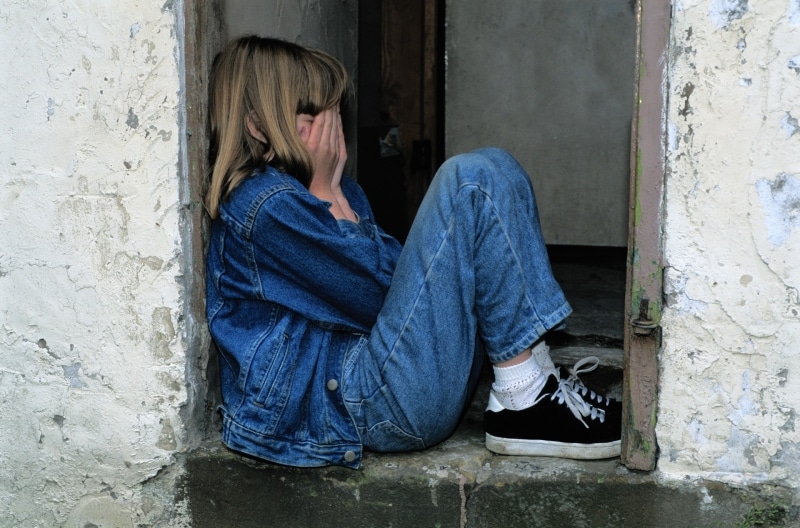
“A close person to whom I entrusted my daughter, trusted without limits and was a coach to my minor daughter took advantage of this and sexually abused her.” This is how the story begins for Radio Free Europe by the mother of a then 14-year-old girl who was a victim of sexual violence.
The shock and disbelief were all the greater, because it was about a person who was a family friend, a former policeman and an influential sports worker. “We were shocked when we faced the facts and evidence. He is more than 50 years older than her,” says the mother, whose identity is known to Radio Free Europe.
Shock and disbelief. Those words could also explain the case discovered 24 hours ago, when it was discovered that several fifteen-year-old girls were induced into prostitution. In this case, in the wider area of Tuzla, four high-ranking policemen, a professor and a former state representative, and three other people participated.
For more than a year, police officers recruited girls, led them, transported them to different locations, and handed them over to other people for the purpose of exploitation through prostitution and other forms of sexual exploitation. According to the Tuzla Cantonal Prosecutor’s Office, they also used their sexual services. And not only that. The professor and the others detained, even though they knew they were minors, paid for sexual services, and one of the arrested policemen took part of the money.
The girls are former residents of the Home for neglected children in Tuzla. According to the knowledge of Radio Free Europe (RSE), they are additionally vulnerable, because they have been exposed to violence before and were placed in the shelter of the Home several times.
“The first time they were brought to us as vagrants, because their parents reported their departure from home for a few days. They were found as such and brought to us. The second time this one was brought as a victim of domestic violence, and the other was again a vagrant. One was sometime in 2023 for the first time, and then she was brought again sometime in April this year. And the other was, I think, twice, the same this year and last year,” Amir Muharemović, assistant director of the Home, told RSE.
Both were returned to their families.
Since 2015, there have been between 15 and 20 children in the home who were taken off the streets as victims of human trafficking. Their stories are similar, Muharemović says, and boil down to a difficult financial situation. “In those cases, we come across horrible stories — from incest, sexual violence in the family, to organized abuse. Unfortunately, we’ve seen it all before,” he explains.
This was also confirmed by the Tuzla Cantonal Prosecutor’s Office, stating that the girls, whose development was hampered by difficult family circumstances, had been exploited for more than a year. In 2024, 37 victims of human trafficking were registered, of which 25 were minors.
According to statistics published by the BiH Council of Ministers, 69 percent of victims of human trafficking are children, and 17 percent of victims are sexually exploited.
Most of the human trafficking is not detected. The safe house of the “Lara” Foundation from Bijeljina has provided shelter for 12 potential victims of human trafficking since the beginning of the year until today. 11 of them are minors.
The Tuzla case, emphasizes Dragana Petrić, program coordinator of the Foundation, shook her and the employees of this foundation in many ways.
“One of the reasons is that the main suspects are actually members of the protection services, the ones they are supposed to protect. On the other hand, the shocking fact is that these are girls who are doubly vulnerable and marginalized,” says Petrić.
She also points out how this case has further destroyed trust in the institutions that are supposed to protect these children. Experts, on the other hand, warn that a large number of those involved in human trafficking are not revealed.
“And from before, it was somehow indicated and pointed out that officials, police, judicial employees, etc. are often involved in human trafficking. And when you look, in the specific case, officials were arrested, which shows all, I would say, the gravity of that phenomenon.
On the one hand, you have victims who are exposed to the most severe form of exploitation, which is sexual exploitation, on the other hand, you have corrupt police and other officials who directly participate in it and are direct perpetrators or exploiters,” says Eldan Mujanović, professor at the Faculty of Criminology, Criminology and Security Studies in Sarajevo.
A similar case was discovered in 2007, when three minors from the Derventa area reported that they were forced into prostitution.
At that time, businessmen Milivoje Nović and Čedo Markelić were arrested and sentenced to six years in prison before the Court of Bosnia and Herzegovina. Slaviša Vuković was sentenced to seven years, and Branislav Nović to five and a half years in prison.
In the latest report of the State Department on human trafficking, it was noted that the legal solutions against “inducing prostitution” in BiH allowed law enforcement authorities to treat children aged 14 and older as minors who voluntarily engage in commercial sex, instead of as victims of rape or human trafficking for the purpose of sexual exploitation.
During the trial, the victims met the perpetrators in the corridors of the court. Although the law provides for assistance to victims and witnesses, the lower courts did not possess the necessary technical equipment to organize testimony with adequate protection and confidentiality measures. “There is insufficient sensitization of professionals towards the protection of victims, who often do not have an absolutely correct idea that this is a serious form of crime that includes trampling on human dignity, the most severe forms of human rights violations, and all for the purpose of obtaining property benefits.
And when such people try, unfortunately, to position themselves and act in the right way, they somehow relativize them and often go to such extremes as blaming the victims for the situation they found themselves in,” notes Mujanović. A similar situation to which Mujanović points out was recorded in the Federation of Bosnia and Herzegovina when 13 people were convicted of human trafficking, four of them for human trafficking for the purpose of sexual exploitation, according to a State Department report.
For that crime, the range of sentences was from one year to one and a half years in prison, and several times higher sentences – in the range of five years to ten years in prison for nine human traffickers for the purpose of forced labor. In 2024, the State Court sentenced two perpetrators – one to 11 and the other to 10 years in prison for human trafficking. For the third year in a row, courts in the RS have not issued a single verdict against human traffickers.
According to the OSCE’s assessment, the situation is gradually improving, but there are still disputed points, especially when it comes to cooperation between different institutions and the application of positive practices, says Boris Topić, an officer of the Mission for Combating Human Trafficking.
“So, for example, prosecutors’ offices at all levels have issued special instructions that seek to establish and strengthen that response, including punishing clients, that is, users of human trafficking services. Honestly, we don’t have such cases yet, but these are the developments that are happening,” Topić points out, adding that it is also necessary to help safe houses that are facing financial problems, which ultimately affects effective investigations.
The abuser of the girl from the beginning of the story was sentenced in the first instance to one of the biggest sentences – 12 years in prison. However, he met the verdict on the run, because he was under house arrest. Her mother, an educator, hopes that she will still serve the final sentence.