
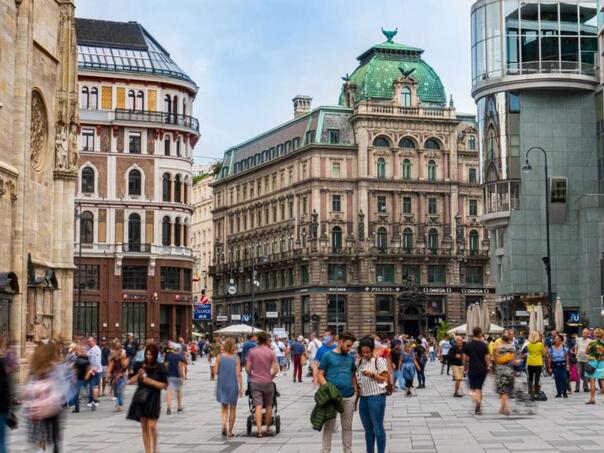
Vienna has become a place of scientists, politicians and social actors from all over Europe these days, who participate in the “Resilient Europe”, the International Event under the auspices of Papal Academies for Science and Social Sciences.
The two-day conference is the question of how cities can become more resistant to climate, social and economic challenges that affect Europe more often.
Vienna Mayor Michael Ludwig reminded that 2024. was the hottest year in the measurement history in the Austrian capital, which is a clear signal of the urgency of action. Although the Viennese strategies are presented as an example, the organizers emphasize that the goal of the conference is much expanding, “create a platform for the exchange of experiences among European cities and encourage joint learning.”
– It is on the first line of climate change. They must ensure safer, fairer and healthy environments for millions of people – it is pointed out during discussions.
These are specially considered models that combine three key pillars reduction of emissions, adaptation to new circumstances and social transformation – access known under the acronym mast (Mitigation, Adaptation, Societal transformation).
Vienna is shown as one of the cities that already implement concrete measures, from investing in public transport and renewable energy sources, to the projects of circular economics and urban “mini-forests” to cool the city.
Similar initiatives also develop other European cities, Milan spreads the green roofing network, Paris transforms traffic nodes, while scandinavian capital sets standards in the use of geothermal energy.
One of the central themes of the summit was the role of young people. The organizers emphasize that new generations must be active participants in the design of climate policies.
– Good about their future. They bring ideas and energy that is too necessary for the changes to really happen – said Ludwig.
The conference in Vienna shows that the resistance of cities is not only the issue of infrastructure or technology. It is also concerned with social justice, health and democratic participation. Only cities who manage to connect science, politics and citizens, they can respond to the challenges of the future, and from them to go stronger, the office of Vienna was announced in Sarajevo.
(Vijesti.ba / Fena)


