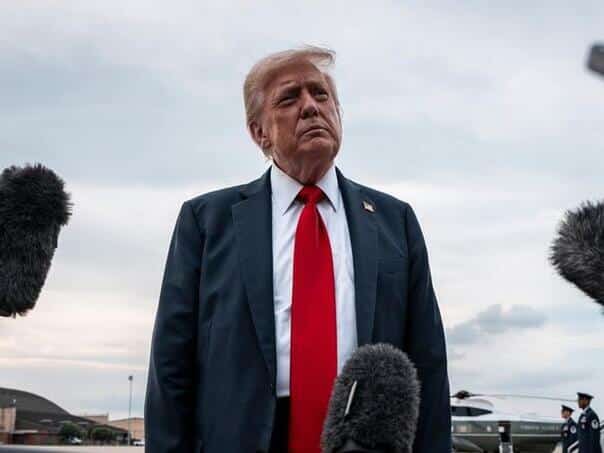
President Trump has sent F-35 fighter jets, warships and a nuclear submarine to the region as part of a military buildup following two months of deadly attacks on ships near Venezuela. This week, the aircraft carrier Gerald Ford moved to Latin America, bringing more than 75 military aircraft and more than 5,000 troops. Trump suggested on Friday that he could soon decide on possible military action against Venezuela, which the US president has accused of having close ties to the illegal drug trade.
“I can’t tell you what it would be, but I’ve kind of already made a decision,” Trump told reporters aboard Air Force One.
Four US officials and a source familiar with the situation, who spoke on condition of anonymity, said Homeland Security Council meetings were held this week, with three officials confirming one of the meetings was on Friday. This council advises the president on matters related to homeland security and is usually chaired by Stephen Miller, Trump’s homeland security adviser.
One of the officials said a smaller group met on Wednesday, while a larger meeting was held on Thursday that included Vice President JD Vance, Miller, Defense Secretary Pete Hegseth and Chairman of the Joint Chiefs of Staff, Gen. Dan Caine, among others.
The White House did not immediately respond to a request for comment. A source familiar with the situation said Trump attended Thursday’s Situation Room meeting and was briefed on several options. Reuters could not confirm what options were presented, but Trump has previously mentioned the possibility of ground attacks on Venezuela. He also repeatedly pointed out that he is not looking for regime change in Venezuela.
Venezuelan President Nicolas Maduro, who has been in power since 2013, has said Trump wants to oust him. In August, Washington increased the reward for information leading to Maduro’s arrest to $50 million, accusing him of ties to drug trafficking and criminal gangs.
US military forces in the region have so far conducted operations against suspected drug vessels. The Pentagon has carried out at least 20 attacks in the Caribbean and Pacific, killing 80 people.
Democratic lawmakers and legal experts have raised questions about the legality of the strikes, while some European allies have criticized the operations. A visual investigation by Reuters showed that the US military is upgrading a former abandoned Cold War-era naval base in the Caribbean, suggesting preparations for a long-term military presence that could support possible actions inside Venezuela.
Venezuela is deploying weapons, including decades-old equipment, and plans to organize guerrilla resistance or cause chaos in the event of a US air or ground attack.
The idea of military action in Latin America is not popular with American voters. According to a Reuters/Ipsos poll released on Friday, only 35 percent of respondents support the use of US military force against Venezuela to reduce the flow of illegal drugs into the United States without the approval of the Venezuelan government.
Tensions between the United States and Venezuela’s neighbor, Colombia, have also risen in recent weeks, with Trump and Colombian President Gustavo Petro exchanging harsh words. Trump called Petro an “illegal drug leader” and imposed sanctions on him, while the leftist Colombian president accused the US of killings with its attacks.
(Vijesti.ba)