
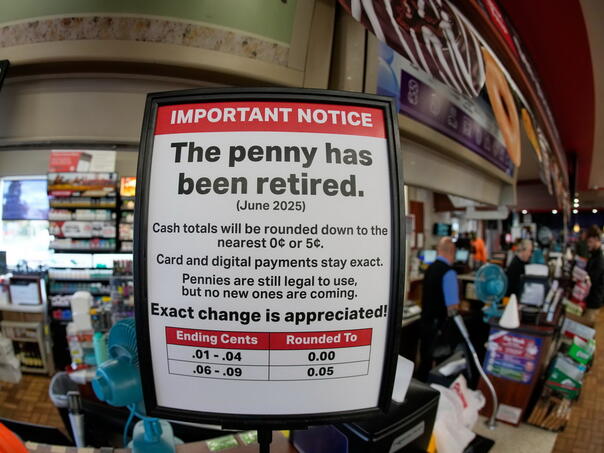
Since the Donald Trump administration stopped minting the coins in early 2025, pennies still in circulation have become increasingly rare, and retailers have been forced to round bills to the nearest five cents.
Dylan Jeon, director of government relations for the National Retail Federation, says this approach adds up quickly and creates big losses for retailers.
“Losing four cents per cash transaction across multiple locations in the country is not sustainable,” Jeon claims.
Why are the pennies gone?
In February 2025, Donald Trump called the production of pennies wasteful and called for ‘removing waste from the budget, even if it’s one cent at a time’. The US Mint officially stopped minting pennies in May. It was estimated that the shortage will only start at the beginning of 2026, but several months ago banks stopped being able to obtain pennies from the federal government, so even stores cannot get enough change for customers, writes the BBC.
Because of the shortage, many stores simply round up bills to the nearest five cents. “Customers are forced to use nickels, the next smallest amount in the US, because we don’t have pennies,” Jeon explains, Tportal reports.
The problem is further complicated by the fact that some states, such as New York, require merchants to give the exact amount of change, while elsewhere cash cannot vary from the price paid by card. To avoid lawsuits and customer complaints, many merchants choose to simply round prices down, losing a few cents per transaction.
Who suffers the most?
The penny shortage is hitting lower-income Americans in particular, who mostly pay in cash and don’t have access to bank accounts. Mark Weller, executive director of Americans for Common Cents, warns that ’rounding of transactions hurts those without access to bank cards and services’.
At the same time, the government’s savings from ceasing pennies could be offset by the need to produce more nickel, which is worth five cents but costs nearly 14 cents to produce.
Many stores encourage customers to pay the exact amount or collect pennies they have at home. Convenience stores in particular are feeling the pinch, and the Kwik Trip chain has already announced it will round its bills to the nickel, which it estimates will cost them up to $3 million this year.
American experts point out that a clear federal guideline on rounding is needed, so that both retailers and customers know how to act during shortages.
‘Pennies will always exist, but they are rarely used. People forget them in their pockets or lose them in the household,’ says Jeon.
(Vijesti.ba)