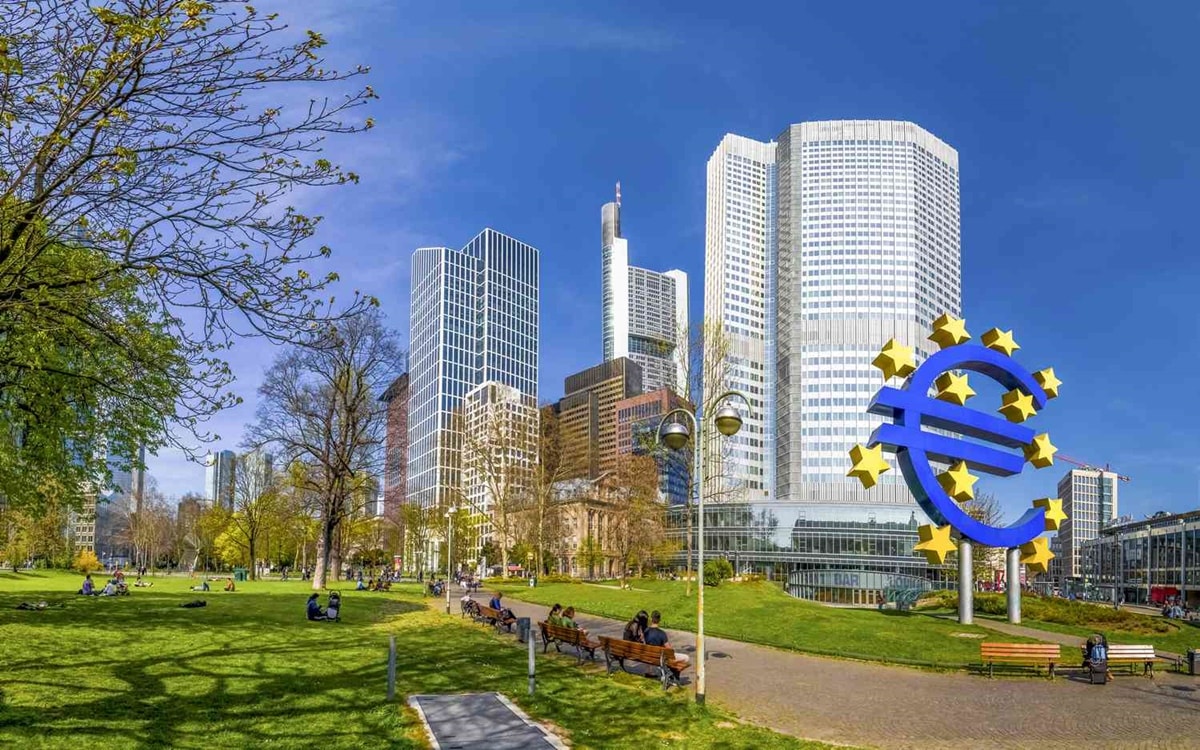
The European Central Bank could raise interest rates at the next meeting in June if inflationary pressures do not subside, the Governor of the German Bundesbank, Joachim Nagel, hinted.
Speaking to German business paper Handelsblatt, Nagel warned that ECB officials cannot ignore rising energy prices linked to the war in Iran and disruptions in global supply chains.
“We cannot ignore high energy prices,” said Nagel, who is also a member of the ECB’s Governing Council.
He added that an increase in interest rates seems increasingly likely if the basic inflation trends do not change. The ECB’s next decision on monetary policy is expected on June 11.
“We may still have to face a number of challenges when it comes to inflation,” Nagel warned.
He did not rule out the possibility of inflation exceeding four percent in certain months.
“Even if the war ends soon, inflation could remain elevated much longer than we expected just a few weeks ago,” he said.
Inflation in the eurozone rose to three percent in April, which is well above the ECB’s medium-term goal of two percent, reports Bankar me.
Still, core inflation, which excludes volatile energy and food prices, remains lower, prompting some central bank officials to call for caution.
Financial markets are increasingly counting on the possibility that the ECB could raise interest rates, especially as there are no clear signs of easing the conflict with Iran, while traffic through the Strait of Hormuz remains difficult.
Higher energy prices further increase the risk that a temporary energy shock spills over into broader prices and inflation expectations.
However, there is still no complete agreement within the ECB.
The governor of the French central bank, Francois Villeroy de Gallo, told France Info that there is still not enough data on the future trend of base inflation to make a final decision.
This means that the ECB’s June meeting could become one of the most sensitive in recent times.
On the one hand, the rise in energy prices pushes overall inflation upwards, while on the other, a premature increase in interest rates risks additional pressure on the European economy, which is already facing weaker growth and heightened geopolitical uncertainty.