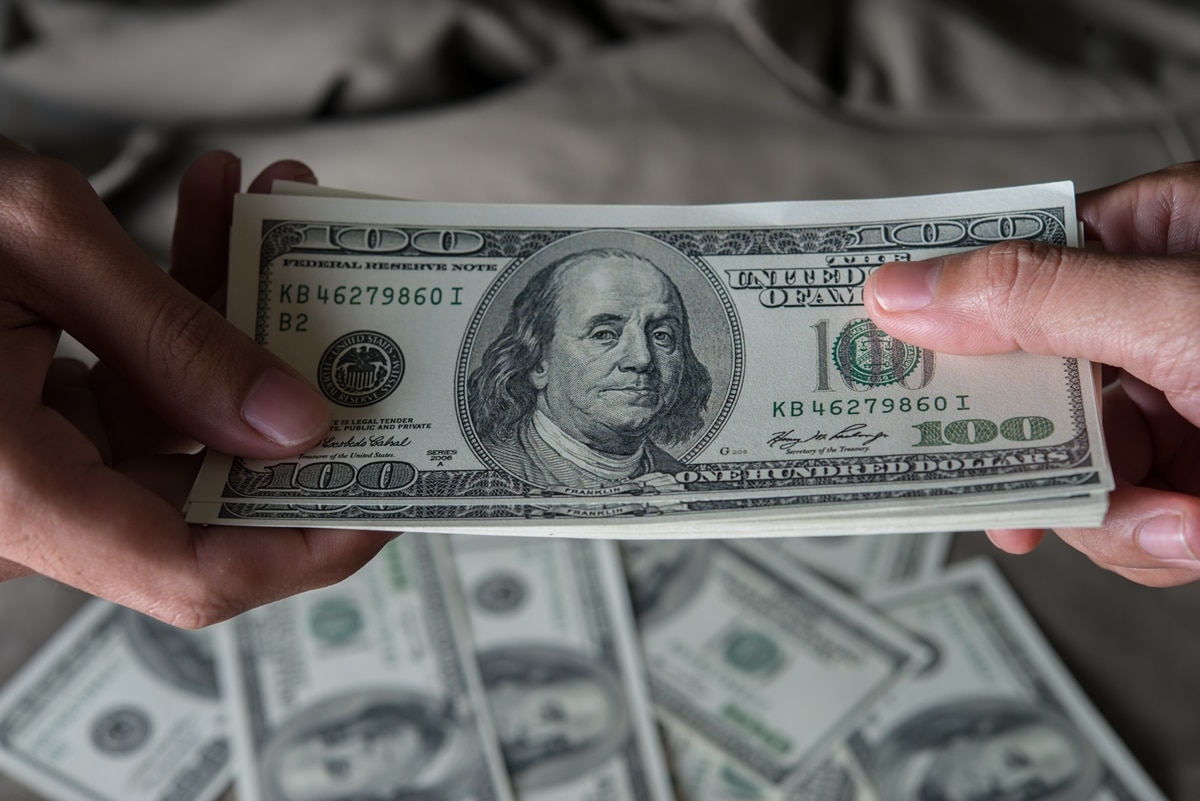
On foreign exchange markets, the value of the dollar weakened for the second week in a row against a basket of the most important global currencies, under the influence of the news that the US and Iran are agreeing to extend the truce and lift restrictions on navigation through the Strait of Hormuz, which reduces investors’ risk aversion.
The dollar index, which shows the value of the US against the six most important world currencies, weakened by 0.44 percent, to 98.81 points, thus falling for the second week in a row.
At the same time, the dollar exchange rate against the euro weakened by 0.63 percent, so the euro stood at $1.1678 at the end of the week. At the same time, the dollar stagnated against the Japanese currency at 159.20 yen, close to the traditionally important level of 160 yen, which has occasionally prompted interventions by the Japanese authorities in the past.
Japan’s finance ministry confirmed on Friday that it spent 11.7 trillion yen ($73.5 billion) last month intervening in currency markets to support the yen and help curb inflation.
On Friday, US President Donald Trump said in a post on the Truth Social network that he was meeting in the situation room “to make a final decision” and insisted that Iran “must agree never to have nuclear weapons” and that the Strait of Hormuz must be “immediately enabled for free navigation”.
The dollar strengthened at the beginning of the US-Iranian conflict, attracting capital flows to safe havens and profiting from the relatively limited exposure of the US economy to inflation due to energy prices. But the US currency has since erased gains as uncertainty over the course of the war weighs on market sentiment.
“We don’t have answers to a lot of questions and that creates different opinions, a lack of consensus or a complete picture, especially for central banks. This is exactly reflected in the US dollar exchange rate which has no clear direction,” said Juan Perez, director of trading at Monex USA.
Data released Thursday showed that US inflation rose at the fastest pace in three years in April, boosted by higher energy prices due to the war with Iran. But the second estimate showed that US gross domestic product (GDP) rose 1.6 percent annually in the first quarter, slower than the first estimate.
“Equity markets are ignoring all questions about economic disruptions, so we’re looking at stagnation in foreign exchange markets. If you look at the potential for interest rate hikes due to strengthening inflation, everything is on the upside. There’s nothing on the horizon but potential interest rate hikes, and yet, you don’t see a higher dollar,” noted Joseph Trevisani, senior analyst at FXStreet.