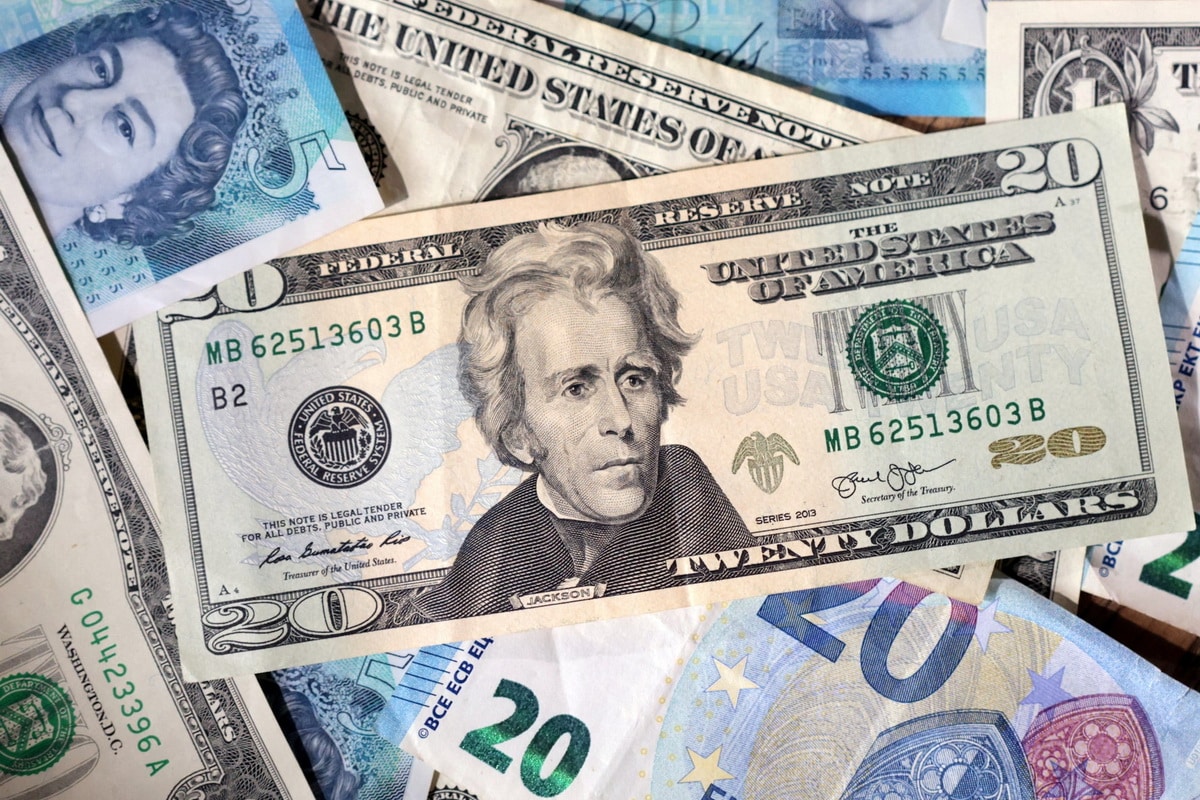
In global markets, the dollar strengthened against a basket of currencies this week as the crisis in the Middle East prompted investors to seek safer havens and the US central bank was unlikely to rush to cut interest rates.
The dollar index, which shows the value of the US against the six most important world currencies, rose 1.2 percent last week, to 98.85 points. At the same time, the dollar strengthened against the European currency by 1.6 percent, so the exchange rate of the euro slipped to 1.1618 dollars.
The American currency also strengthened against the Japanese one, by 1.1 percent, so the price of the dollar reached 157.80 yen. The escalation of the crisis in the Middle East, following the attack by the US and Israel on Iran last weekend, has shaken the world’s financial markets and forced investors to seek safer havens.
And as the dollar is traditionally considered a safer haven for capital in uncertain times, its value rose last week, reports Hina.
Strong rise in oil prices
In addition, due to the crises in the Middle East, oil prices have risen sharply. Last week, the price of a barrel in the US market jumped more than 35 percent to $90.90, its biggest weekly jump since 1983.
The price of a barrel on the London market rose, however, by about 28 percent, the most since 2020.
This fueled investors’ fears of rising inflation, which is already moving above the US central bank’s target levels of around 2 percent. This means that the space for the Fed to reduce interest rates is narrowing, so it is increasingly certain that the central bank will not reduce interest rates before June, and the question is whether it will be able to then.
“The key driver will be the price of oil in the coming days as well. If it rises further and remains at elevated levels, it would support the dollar. In the event of an easing of the crisis in the Middle East and a drop in oil prices, the dollar will weaken,” explains Lee Hardman, currency analyst at MUFG.