
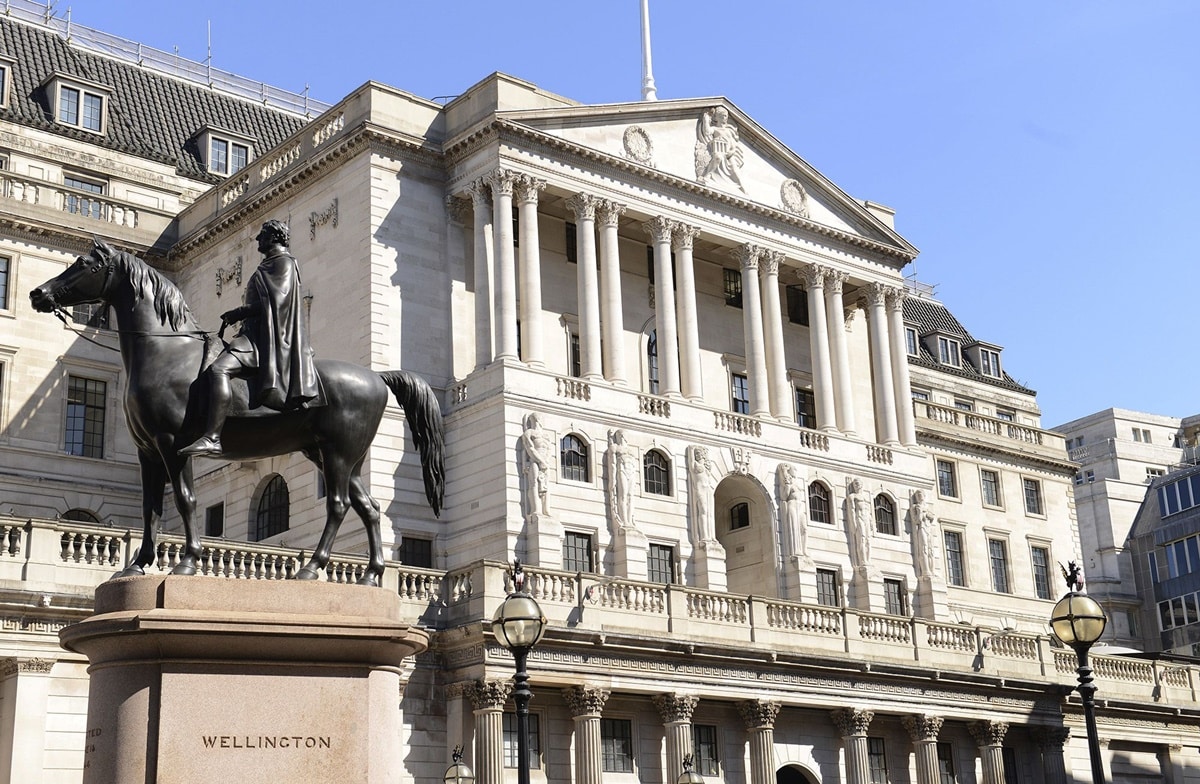
The Bank of England has announced that it will delay the implementation of stricter capital requirements for banks by a year, until January 2027, amid strong opposition to tougher global standards in the United States.
The Bank of England’s statement on the Basel 3.1 regulation was published through its regulatory department, the Prudential Regulation Authority (PRA), after the decision was made in consultation with the British Treasury.
“This allows more time to gain a clearer view of plans for implementation in the United States,” the PRA said, adding that competitive and growth considerations were taken into account.
British bank shares were up modestly in early trade after the Bank of England announcement, with Barclays up 0.8 percent, Lloyds up 0.5 percent and HSBC up 0.1 percent, in compared with the FTSE 100 index’s rise of 0.8 percent.
The standards developed by the global Basel committee were designed as the final set of international reforms for the safety of the banking system after the global financial crisis in 2008, reports Reuters, and must be implemented by member countries. They were met with strong opposition from American banks.
Britain’s Labor Party is pressing British regulators to do more to promote growth, with Chancellor of the Exchequer Rachel Reeves reiterating Thursday that watchdogs are key to that.
The implementation of the reforms in Britain was previously delayed last summer by about six months, until January 2026. Bank of England Deputy Governor Sam Woods said at the beginning of this month that Britain should avoid participating in a “race to the bottom” in financial regulation, reports Financije hr. The regulator has already said it will adapt some of Basel’s proposals to the needs of the domestic banking system, including capital requirements related to lending to small businesses.
As a reminder, the Basel rules are a set of international standards for bank regulation, developed by the Basel Committee on Banking Supervision. The goal of these rules is to ensure the stability and security of the global banking system, preventing banks from becoming too risky and thereby endangering the entire financial system, i.e. the goal is to increase banks’ resistance to financial shocks and reduce the possibility of a new global financial crisis.
These rules focus on minimum capital requirements, more frequent supervision and better regulation and monitoring of market risks such as interest rate risk, currency risk and other market risks that may threaten their solvency.
The Basel rules were gradually implemented in several stages (Basel I, Basel II and Basel III). Basel III, the latest phase of those rules, was introduced after the global financial crisis in 2008 and places greater emphasis on strengthening banks’ capital and reducing their excessive indebtedness, Finance hr reports.
The potential future head of the US banking regulator under incoming President Donald Trump, Travis Hill, has laid out plans for lighter regulations and said he will revisit the capital rules known as “Basel’s end goal”.
In the middle of last year, the European Union announced a similar delay because, as it was stated at the time, the implementation of the rules in the USA was delayed.