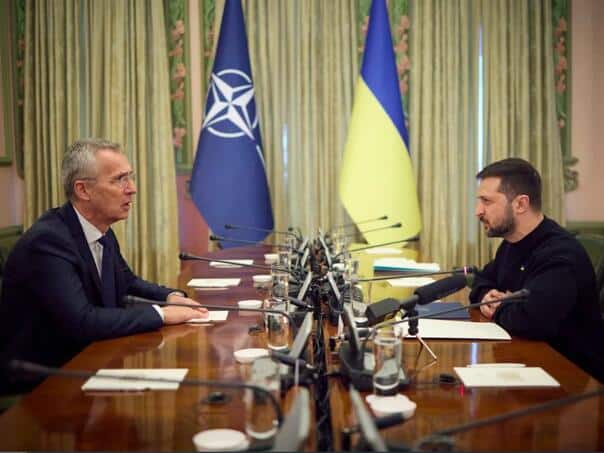
According to Stoltenberg, Zelensky emphasized the urgency of the situation from the bunker next to which Russian tank units were deployed and referred to the example of airspace management during the conflict in the territory of the former Yugoslavia, specifically over Bosnia and Herzegovina.
Stoltenberg explained why NATO did not accept such a request. According to his interpretation, in order to close Ukrainian airspace, it would first be necessary to disable Russian air defense systems located in Belarus and Russia.
This, he stated, would entail shooting down Russian planes or helicopters if they were in that airspace — which would automatically lead to an open conflict between NATO and Russia, and the alliance was not ready to risk that.
Stoltenberg clarified that such an immediate conflict between NATO and Russia is something that should be avoided and that this strategic risk is the decisive factor in the decision not to introduce a no-fly zone over Ukraine.
(Vijesti.ba)