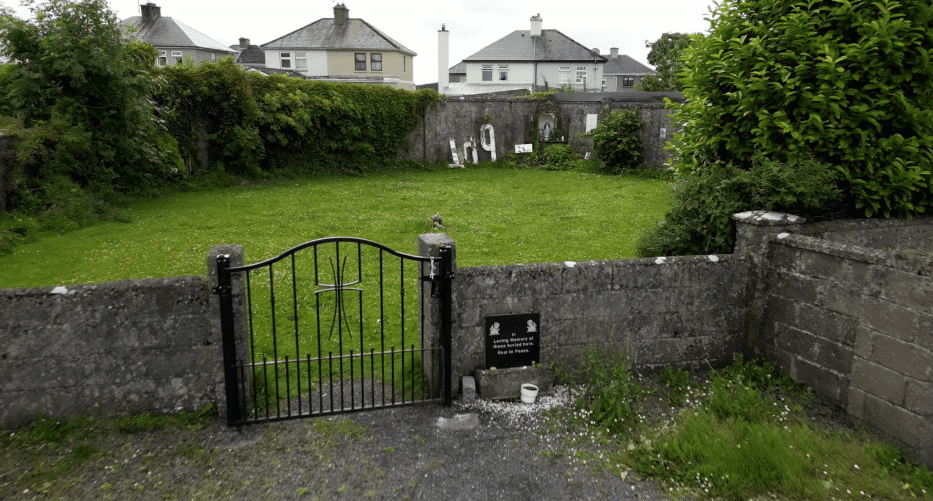
The long-awaited forensic excavation in the former ‘home for mother and child’, where the remains of almost 800 babies and children are bounded, they will begin today in Galway County in Ireland.
The long-awaited forensic excavation in the former ‘home for mother and child’, where the remains of almost 800 babies and children are bounded, they will begin today in Galway County in Ireland.
Many children who have died in the institution in Tuam were thrown into a former wastewater tank, known as “pit”, according to local historian Catherine Corless, writes Sky News.
Her painstaking research revealed 798 children at home for unmarried mothers between 1925. and its closing in 1961. years.
Only two are bound to the nearby cemetery. It is assumed that the remaining 796 is buried in that place.
“I feel great relief,” Corless told Sky News while the excavations began.
“It was a long time, a long journey. I didn’t know what would happen, whether he would just fall apart or it will really happen,” he adds.
The discovery of historians
Corless findings from 2014. They shocked Ireland and reached the covers around the world.
She discovered the dark underworld of Ireland in mid-century, under the strong influence of Catholicism and his cruel attitude towards illegal children and women who were born, often sent to homes for mothers and babies before they would be separated from their children.
Decades later, the investigator’s team led by Daniel Macsweeney begins forensic excavation that could last two years.
The goal is to identify as many remains as possible through DNA testing and allowing everyone to be a dignified burial.
It’s a tractor hope for people like Annette McKay, who now lives in Manchester. Her mother Margaret “Maggie” O’Connor gave birth to a girl in the house of the Tuam family in 1942. years after he was raped at 17.
A girl, named Mary Margaret, she died six months later. Annette remembers her mother recalling how she was “washed her washing, and her nurse approached her from behind and said ‘the child of your sin is dead.’”.
Annette now hopes that the remains of her sister will be exhumed in Tuam and laid with Maggie. Margaret O’Connor met with his child again.
For Annette, which now is 71 years, TUAM is a symbol of a different time in Ireland.
“We closed the victims of rape, we closed the victims, we closed the victims of violence, we placed them in the laundry, we took them children and simply teaching them to do what they wanted,” she said.
“My mother worked in advanced pregnancy, she cleaned the floors, and the honorable sister she was hit by my mother with his foot in his stomach. And when that place is opened, the dirty, ugly secret,” she is no longer a secret, “he recalls.
The Ireland Government sent an official state apology in 2021. year after the investigation found the “frightening level of infant mortality” in Irish homes for mothers and babies, concluding that about 9,000 children died in 18 investigations.
Taoiseach Michael Martin then said that “we have a completely distorted attitude towards sexuality and intimacy, and young mothers and their sons and daughters were forced to pay a terrible price for that dysfunction.”
Sisters Bon Secours, who led home TUAM, offered their “deep apologies”, acknowledging that the children “buried in a disrespectful and unacceptable way” and offered financial compensation.
While excavation – which could last up to two years – starts at the Bon Secours site, Tuama residents are still struggling with contempt and neglects that occurred in their city.
“I’m still trying to figure it out,” Corless said.
“The Church has preached to the care of vulnerable, old and orphans, but never for some reason did not involve illegal children in their psyche,” he added.
(Type / Source: N1/ Photo: News.sky.com)