Serbia is the worst-ranked country in the Western Balkans according to the Global Organized Crime Index for 2025.
It is in fourth place, out of 44 European countries that were analyzed.
Only Russia, Ukraine and Italy are ranked worse.
Annual reports on the Organized Crime Index are published by the Global Initiative to Combat Transnational Organized Crime (GI-TOC), a Geneva-based civil society organization.
According to this year’s report for 2025, Bosnia and Herzegovina (BiH) is in sixth place, while Montenegro is in 10th place. Data for Kosovo have not been published.
The Global Organized Crime Index assesses the level of crime and resistance to organized crime in 193 countries around the world.
The executive director of GI-TOC, Mark Shaw pointed out that organized crime “undermines democracy, the sovereignty of states, and even international peace and security.”
“The Global Index of Organized Crime is not just a tool for measuring crime: it is a mirror that reflects what is happening within countries and the international system,” he said.
‘Key state actors in Serbia’
According to the level of crime at the top, according to resistance to crime at the bottom of the list – in the 35th position out of 44 analyzed European countries of the Global Index.
In Serbia, “state actors play a key role in the landscape of organized crime,” the authors of the report concluded, indicating that political elites allegedly influence key criminal markets.
They add that corruption within state institutions facilitates illegal financial transactions and protects criminal affairs, and that “high-ranking state officials are connected to notorious figures from the world of organized crime.”
“Serbia remains one of the main hubs of smuggling in the Western Balkans,” it noted.
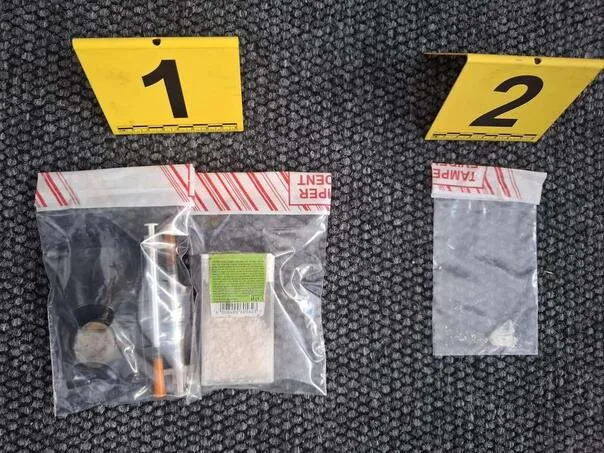
Also, according to the report, Serbia is an integral part of the heroin smuggling route to Western Europe, while Serbian criminal networks play a significant role in global cocaine smuggling.
The report also underlines that this country is “home to several mafia groups” which, despite the arrests of key members, continue to dominate various segments of the European drug trade.
“Football club fan groups are also involved in criminal activities, providing logistical support for smuggling operations and participating in paramilitary activities,” they added.
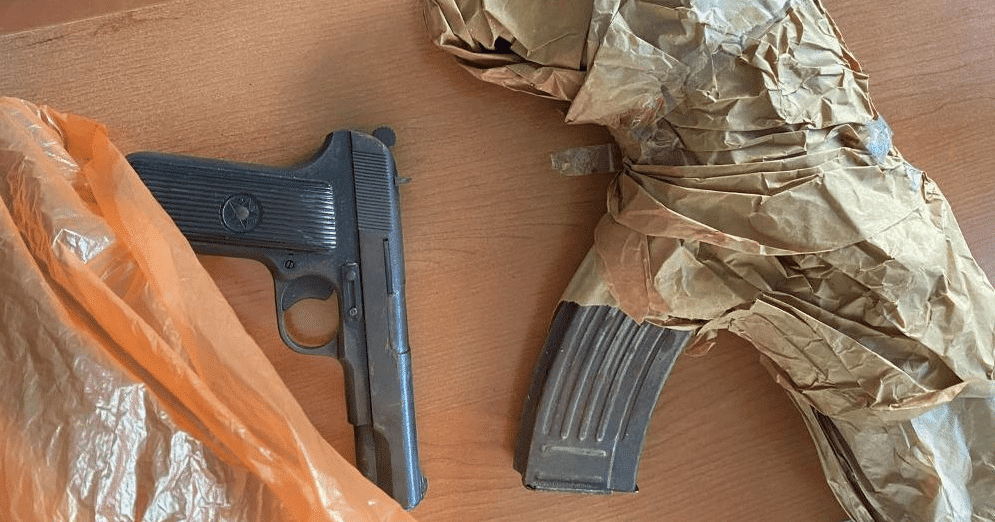
It is also mentioned in the context of arms trade.
According to them, Serbia is a transit country in this trade, where weapons originating from wars in the former Yugoslavia, as well as from Turkey, Bosnia and Herzegovina, Montenegro, Kosovo, North Macedonia and potentially Ukraine, pass through Serbia to Western Europe.
“Criminal networks from Kosovo, Albania and Serbia facilitate this trade, while corrupt state officials were allegedly involved in illegal arms shipments.”
It is added that in the last few years there has been an “increase in the smuggling of weapons from Serbia to Kosovo, including military-type weapons.”
The authors of the Global Index also deal with the role of Serbia in human trafficking.
“Reports indicate that individuals from the government and the police are involved in forced labor, human trafficking for the purpose of sexual exploitation, and large-scale arms smuggling, with minimal accountability,” it said.
It also mentions the growing ties with Russia, China and the Gulf states, which “raise concerns about the non-transparency of foreign investments and infrastructure projects”. This, as pointed out, encourages suspicions of corruption.
Financial crime in Serbia is very deep-rooted, he says, adding that “high government officials are often involved”.
According to the report, the private sector in Serbia is deeply intertwined with organized crime – “a large number of companies operate under the influence of high political officials”, which is why they “receive preferential treatment in tenders and investments, often serving as intermediaries for illegal money flows”.
On the other hand, they note, companies that are not connected to political circles suffer constant pressure and inspections.
They also point out that the ruling Serbian Progressive Party (SNS) has significant influence on public institutions, the media and the electoral process, which contributes to doubts about democratic governance.
In the Global Index of Organized Crime for 2025, they also state that organized criminal groups in Serbia are used to intimidate political opponents and manipulate election processes.
In addition, it is added that the political elite possesses almost unlimited power, and that the public, on the other hand, has a low level of trust in democratic institutions.
In this context, it is also concluded that “widespread protests reflect dissatisfaction with governance”.
The global index also deals with the use of security services for political purposes in Serbia.
Such use, “together with reports of connections between members of the law enforcement agencies and organized crime groups”, additionally, they say, “reduced public confidence”.
“Although Serbia has established anti-corruption agencies and introduced measures to improve accountability, their effectiveness is weakened by weak enforcement, lack of resources and institutional independence”, is one of the conclusions.
It is also noted that cases of corruption and organized crime often do not lead to convictions.
‘Corruption present at all levels of government in Bosnia and Herzegovina’
When it comes to resistance to crime, BiH is among the lowest-ranked countries – in 42nd place.
State actors involved in crime play a key role in enabling organized crime in Bosnia and Herzegovina, the report says.
“Corruption is present at all levels of government, and high-ranking officials are linked to drug trafficking, financial crime and illegal exploitation of natural resources.”
They remind that international sanctions have been imposed on some of the leading political figures due to their contribution to corruption and undermining state institutions.
The authors of the report also indicate that some police officers were arrested for direct participation in smuggling operations, while politicians used their influence to protect criminal networks.
Human trafficking is highlighted as a special problem. The authors of the report note that women and girls are exposed to sexual exploitation, while Roma children are often victims of forced begging, sex trafficking and domestic slavery.
They also add that smuggling of migrants is deeply rooted, that BiH is a key transit point along the Balkan migrant route, and that corruption among members of the border police further aggravates the problem.
“This market is closely linked to arms smuggling, with reports indicating that criminal organizations sell weapons to migrants involved in smuggling networks,” it noted.
The war in Ukraine, it added, has led to an increase in arms trade, with arms from BiH, despite regulatory restrictions, reportedly reaching conflict zones.
They also note that the country functions as a transit center for cocaine from South America destined for the Western European market.
The report also assesses that foreign actors have a significant influence on organized crime in the country, taking advantage of weak border control and a divided political system.
“Regional criminal organizations from Serbia, Montenegro, Croatia and Albania have a strong presence, cooperating with local actors in drug and arms smuggling”.
In addition, Turkish, Saudi and West Asian actors are involved in illegal financial schemes, while Russian-backed groups take advantage of BiH’s political closeness. entities of Republika Srpska with Moscow, to strengthen influence.
It is emphasized that financial crime is widespread in Bosnia and Herzegovina, that many private companies serve as intermediaries in money laundering and financial fraud, and that companies owned by politically connected persons have a privileged position in public procurement procedures.
One of the widespread problems is illegal logging, in which, as they state, political elites and local officials are often involved.
They add that the illegal exploitation of coal and wood is also carried out with the support of political figures who issue fake permits in exchange for bribes.
It is concluded that BiH faces constant challenges in the field of political governance, especially in the fight against organized crime and corruption, and that the divided political landscape of the country, especially the secessionist politics of the RS and its refusal to respect institutions at the state level, further complicate governance.
Also in the report of the Global Index of Organized Crime, it was stated that the judicial system in Bosnia and Herzegovina faces inefficiency, political interference and uneven application of the law, which makes it difficult to efficiently process organized crime and corruption.
“Kavački and Škaljarski clan – a key influence on the criminal landscape of Montenegro”
When it comes to the level of resistance to crime, Montenegro is in 37th place.
The report underlines that Montenegro is home to two dominant mafia groups – the Kavački and Škaljarski clans, which have a significant influence on the criminal landscape of the country.
They note that their operations extend throughout Montenegro, but also to other countries.
“Despite increased police efforts, including arrests of key members, these groups continue to control criminal markets through recruitment of new members, even in prisons,” the report said.
The clans’ main sources of income are cocaine trade and money laundering, with Europol estimating that they control at least 30 percent of the cocaine that arrives in Europe from South America, it is stated.
The clans, it added, maintain strong ties with criminal organizations in the EU, Latin America and the Western Balkans, while the ports of Bar and Kotor are key entry points for cocaine smuggling.
“In addition, they engage in extortion and racketeering, using violence and intimidation to preserve their criminal activities, which has led to an escalation of conflicts and an increase in the number of murders between clans,” the report says, noting that Montenegro is among the countries with the most incidents involving firearms in the region.
The authors of the report also indicate that the leaked encrypted communications revealed how criminal proceeds are used for political protection and influence on the judiciary and the police.
“State actors maintain deep ties to organized crime, facilitating illegal activities through corruption and regulatory weaknesses.”
They add that senior officials were involved in transnational criminal activities, including drug trafficking, illegal tobacco trade and illegal logging.
“Although investigations and arrests are being carried out, the constant involvement of state officials weakens the effectiveness of law enforcement agencies”, they conclude and point to evidence of interference by criminal groups in the elections in Montenegro.
They also note that the private sector in Montenegro facilitates the operation of organized crime, especially through real estate trading and financial criminal activities.
In addition, it is pointed out that financial crime in Montenegro is deeply rooted and is characterized by poor management of public funds, irregularities in the financing of political activities and large-scale corruption.
“Irregularities in the use of EU funds and fraud in privatization processes additionally highlight systemic weaknesses in the financial sector.”
Also, the report shows that human trafficking is still a problem in Montenegro.
In recent years, there has been a significant increase in the number of Russian citizens among the victims, it was stated.
In addition, Roma children are often forced into begging and illegal marriages, while the authorities often treat such cases as a “cultural practice”.
The conclusion is that border security is a challenge, given that Montenegro serves as a key transit point for various illegal activities.
The authors of the report note that despite commitments to combat organized crime and corruption, political divisions and instability continue to hinder effective governance and the implementation of legislative reforms.
They also point out that high-profile acquittals in money laundering cases raise concerns about the independence of the judiciary and the quality of investigations.
(TYPE/Source: RSE/Photo: Illustration)