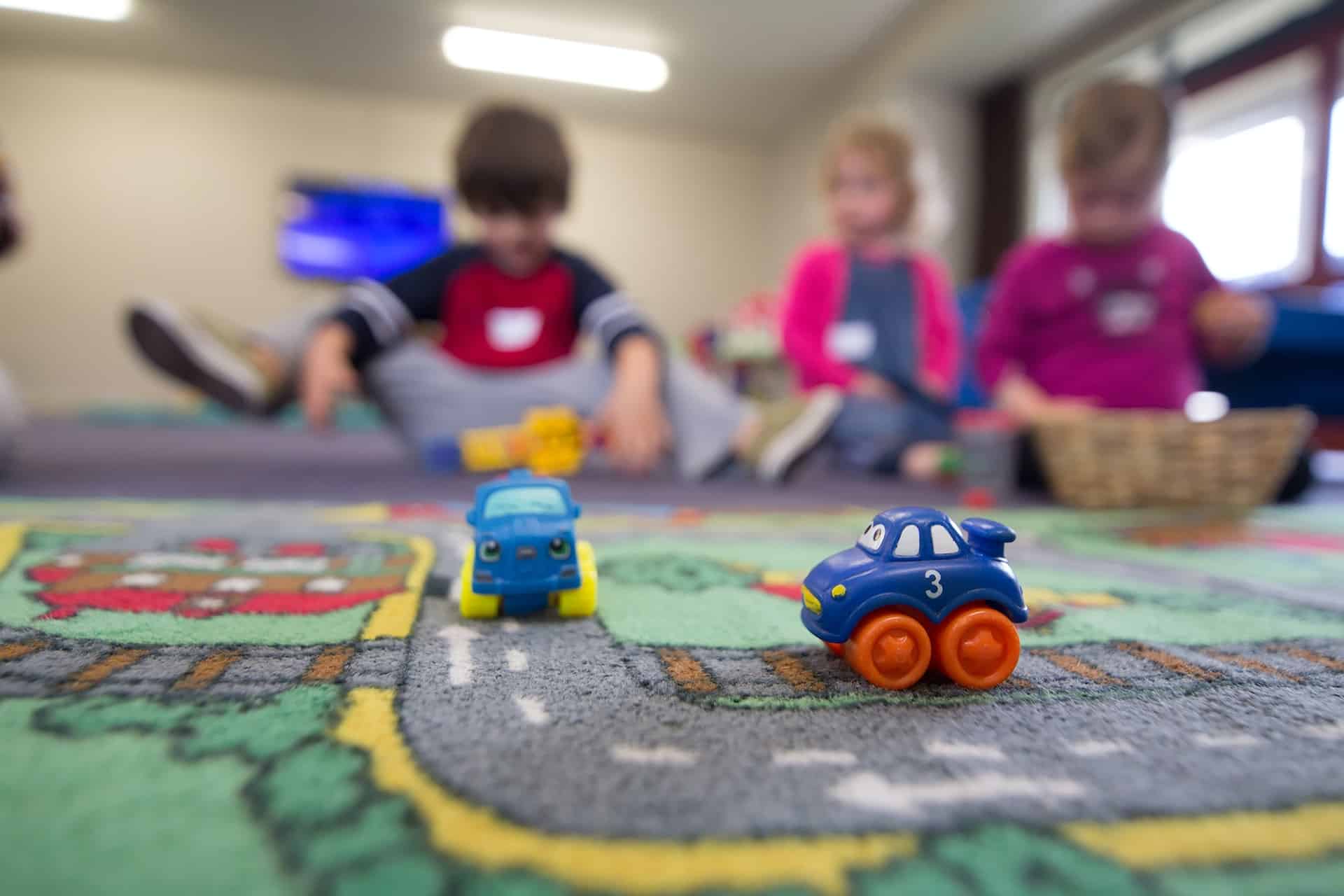
In the European Union, it is almost taken for granted that every child has a place in kindergarten. More than 95 percent of children go through preschool education. In Bosnia and Herzegovina it is called happiness, and it has its price.
What is taken for granted in Europe is a privilege in Bosnia and Herzegovina. The education reform does not stop being talked about, but the least investment is made in its beginning.
“According to statistics, only 13 percent of children between the ages of zero and two attend preschool institutions, while the figure is slightly higher, it seems to me, about 43 percent of children between two and five years of age attend preschool institutions,” said Aida Terzić, deputy director of the BiH Agency for Education.
“We have remained very far from the standard that Bosnia and Herzegovina has committed to comply with until 2030. Not only is this far below the European Union standard, but also below the average of other countries with a similar level of economic development,” warned Alexandra Ilmer, UNICEF representative for Bosnia and Herzegovina.
Part of the answer to this trot also lies in the prices. Thus, the two largest centers in Serbia offer free state kindergartens, in Montenegro, after more than a decade, the price has risen to only one hundred KM, while in Croatia they are completely free in as many as 17 cities and 36 municipalities, writes N1 BiH.
In Banja Luka, which faced a protest from educational workers due to the difficult conditions, that price for a public institution is 165 KM, while in a private institution it reaches up to 600 KM.
Parents in Zenica are also outraged, where the price of accommodation has risen to 260 KM, and many have announced that their children will be discharged as a result.
This year, after the announcement of price increases, Tuzla also faced the problem, which, after the rebellion of parents, managed to keep the price at 200 KM, while private ones are more expensive than 400 KM.
The concern of parents of children in state kindergartens in Sarajevo Canton did not increase, the price of 160 KM was maintained, while it jumped in private ones, some of which cost up to 800 KM.
Nevertheless, the government boasted about the co-financing program and solving the waiting list.
“That number of children in kindergartens was about four thousand, it is now more than 10,000. We are talking here about the great growth that we are recording and that is being recorded by international UN agencies, primarily UNICEF, they follow these trends and advocate increasing the coverage of children in preschool education”, claims Naida Hota-Muminović, KS Minister of Education.
However, this is not the case in most of the country, and the UNICEFF highlighted devastating regional differences at the round table today, so only 0.5 percent of children attend preschool in rural areas of BiH, 30 municipalities do not even have a kindergarten, while this year more than 8,600 children were rejected due to a lack of capacity. It is an irreplaceable experience, emphasizes the profession.
“We can influence with some knowledge and education to prepare him, but it is much more important that when the child enters the first grade, he has certain habits, that he puts on his own shoes, that he has toilet habits, that he looks after himself when he walks down the street”, said Smajila Radovović, an educator with decades of experience.
Which is all an integral part of the preschool period. Although it is under the responsibility of lower levels, this is another test that the state government is also late in passing, so in the late sent Reform Agenda, it asked for money for dozens of much-needed kindergartens.