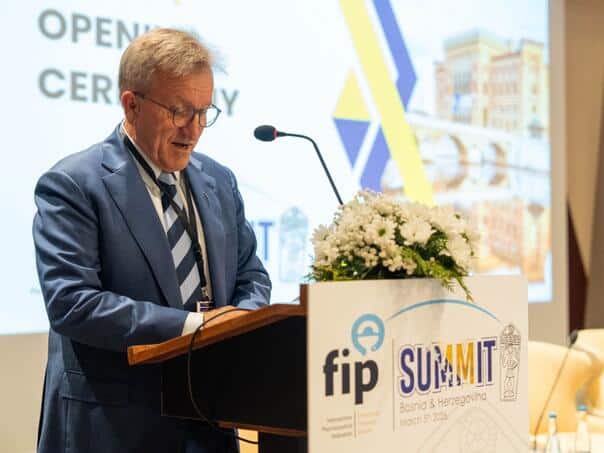
This is one of the conclusions of the International Pharmacy Summit, which was held today in Sarajevo, organized by the Chamber of Masters of Pharmacy of the Federation of Bosnia and Herzegovina.
It was announced at the meeting that without a modern and precisely arranged regulatory framework, harmonized with the practices of the European Union, it is not possible to build a long-term sustainable and financially stable healthcare system.
President of the Chamber, prim. M.Sc. ph. Marin Crnogorac, said that the pharmaceutical profession wants to be an active and responsible partner to the institutions in the upcoming reforms.
“Pharmacies are not just a place to dispense medicines. They are the first line of expert advice, prevention and continuous support for patients. If we want an efficient and financially sustainable healthcare system, we must clearly define and strengthen the role of pharmacists within primary healthcare,” said Crnogorac.
The participants of the summit warned that health systems are under great pressure due to the growth of chronic diseases, aging population and limited budgets. In such circumstances, greater involvement of pharmacists in preventive programs, counseling and therapy monitoring represents a concrete and feasible way to relieve the burden on health centers and family medicine.
The president of the International Pharmaceutical Federation, Paul Sinclair, an organization that brings together more than 5.5 million pharmacists worldwide, pointed out that stronger integration of pharmacists into health policies is already standard in many countries.
“Global trends clearly show that countries that have systematically included pharmacists in preventive and clinical services achieve better health outcomes and greater efficiency in the use of public funds. This is not a theoretical concept, but a practice with measurable results. Pharmacists are the most accessible health professionals and their full potential must be used strategically,” emphasized Sinclair.
In the countries of the European Union, pharmacists already have extended responsibilities – from counseling and monitoring therapy to conducting screening and preventive programs, especially in the area of cardiovascular diseases, which are the leading cause of death both in Europe and in Bosnia and Herzegovina. Such models were the subject of expert analysis and exchange of experiences during the summit.
The meeting was aimed at defining concrete steps for improving the regulatory framework and clearer systemic recognition of pharmacists as part of the solution for strengthening public health in Bosnia and Herzegovina. Special focus is placed on implementable solutions and measurable results, not just declarative messages.
The summit gathered around 100 representatives of the pharmaceutical profession from South America, Canada, Spain, the United Kingdom and the countries of the region – Croatia, Montenegro, Slovenia, North Macedonia, Albania and Kosovo, with the presence of representatives of the executive and legislative authorities.
(Vijesti.ba)