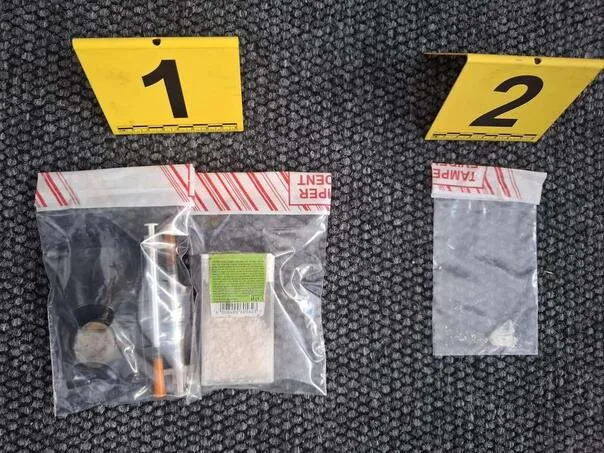
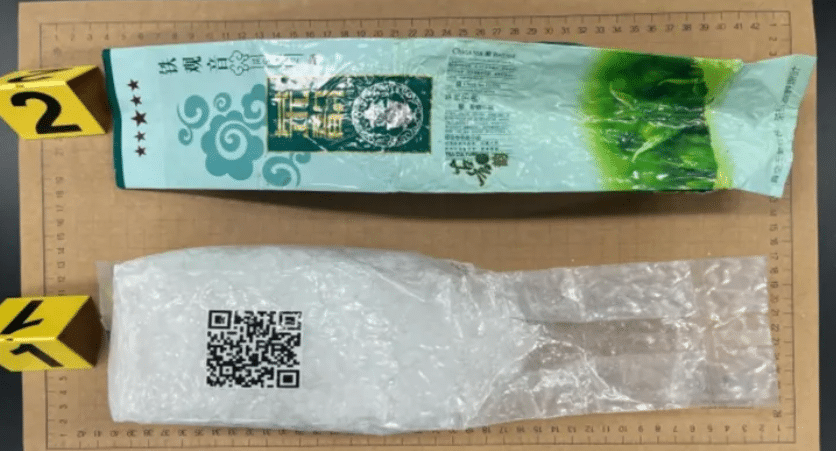
Since September of this year, residents of the popular South Korean island of Jeju have been watching with disbelief an unusual phenomenon on their beaches – small packages resembling Chinese tea bags that regularly wash ashore. However, after police experts examined the contents of these “tea bags”, it was discovered that they contained ketamine, an illegal drug that can seriously harm people’s health.
According to police reports, around 28 kilograms of ketamine, wrapped in aluminum foil and marked with the Chinese character for tea, have been found in eight different locations so far. The largest single seizure, 20 kilograms, was recorded on October 15 when a beach cleaner came across “tea packets” along the coast of Seogwip in the southern part of the island.
Ketamine is used in medicine as an anesthetic, but recreational use of this drug is strictly prohibited in South Korea. Its abuse can cause serious physical and mental consequences, including damage to the heart and lungs.
Huge forces mobilized for the search
In light of the frequent finds, the Jeju Coast Guard formed a special team to investigate possible sea and land routes by which the drugs could have entered the country. Earlier this week, more than 800 soldiers, police and volunteers were deployed to clean Jeju City’s beaches, along the popular tourist island’s northern coast, to prevent further drug dumping. Investigators are currently looking into the possibility that the ketamine packages reached the Jeju coast via ocean currents. Similar packages, as reported by the national daily Korea JoongAng Daily, were previously found in the city of Pohang in the east of South Korea and on the Japanese island of Tsushima.
Residents concerned about children’s safety
The presence of illegal substances on the beaches has caused concern among the local population. “I often bring my children to this beach,” said Kim, a Jeju City resident who witnessed the massive drug search. “Seeing so many people looking for drugs is scary. I would be horrified if kids accidentally touched something like that.”
Another local, Hyun, appealed to the authorities to take measures to prevent further drugs from being washed ashore.
Professor Yoon Heung-hee from Hansung University’s Department of Drug and Alcohol Addiction believes that the ketamine packages could be the result of a larger criminal organization. “Some syndicates use a method called ‘sea bump,’ which involves dropping drug packages into the sea equipped with trackers, in order to collect them later,” Yoon explained.
Professor Yoon also suggests that criminal groups may seek to use Jeju as a transit point to smuggle drugs through South Korea, “taking advantage of weaker controls at airports and ports.”
Warning to the authorities
The Coast Guard and local police are warning residents not to touch or open suspicious packages found on shore, but to report them to the authorities immediately.
Given the frequency of discoveries and the potential danger to public health, authorities plan to increase surveillance of beaches, ports and airports to prevent further illegal shipments of ketamine to the island and the rest of South Korea.
(TIP/Source: federalna.ba/BBC/Photo: Jeju Coast Guard)