
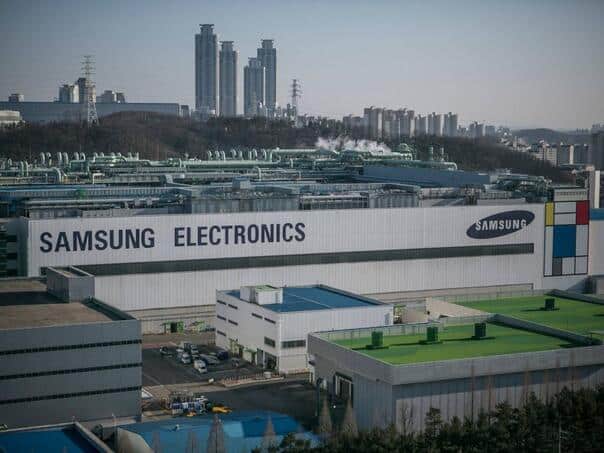
Samsung Electronics concluded a contract worth $ 16.5 billion for Tesli semiconductor, according to the regulatory report of the South Korean company and the publication of the Executive Director of Tesla, Elona Male, online X.
The manufacturer of memory chips, which in the application did not appoint another Contracting Party, stated that the start of the contract was 26. July 2024. – When the order was received – and the end of 31. December 2033.
However, the Musk later on his social network X confirmed that Tesla was the other side in the contract.
He also stated: “Samsung’s huge new factory in Texas will be dedicated to the production of the Tesla chip of the next generation of the following generation can hardly be over. The TSMC will produce AI5, which is just completed in Taiwan, and then in Arizona.”
“Samsung agreed to help maximize production efficiency. I will personally monitor the line of progress,” MUSK added that the value of agreement with Samsung could exceed the announced $ 16.5 billion.
Samsung said the details of the agreement, including the name of the other party, will not be published by the end of 2033. year, referring to the other side for “the Protection Secretary”, on Google’s submission in Korean Language Monday.
“Since the key content content was not detected due to the need for business secret, investors are advised in investment, taking into account the possibility of amendment or termination of the contract,” the company said. Signs of Samsung rose in Monday by 5%, banker reports.
If a difficult customer, Ray Wang, the director of research for semiconductors, supply and new technologies in the Futurum Group, for CNBC, was officially confirmed by the Tesla. Bloomberg News previously reported that the agreement was right with Tesla, referring to the source close to the company.
Samsung foundry produces chips based on the design of other companies. It is the second largest bidder of the ljesto chips in the world, just behind Taiwan Semiconductor Manufacturing Company (TSMC).
In April, the company announced that it plans to launch mass production within its 2-nanometer casting technology and provide large orders for the next generation technology. In the semiconductor industry, minor nanometers mean more compact transistor designs, resulting in higher processing power and efficiency.
(Vijesti.ba)


