
Financial experts point out that quality borrowing implies a loan that does not threaten the basic costs of living, but serves to improve standards, whether through investment in education, real estate or business.
Indebtedness, they say, should be planned, with stable income and a realistic assessment of repayment possibilities.
Living on credit is not new, and in developed countries and in Bosnia and Herzegovina, people buy apartments, cars or equipment “in installments”. But the difference is huge in how and why they get into debt. While citizens of developed countries use loans to improve the quality of life, many in BiH take them to maintain it at all.
Interest and borrowing conditions
In developed countries, loans are favorable in the long term, with low interest rates and clear rules. Consumers are protected, and changing banks or refinancing is often simple and without high costs.
Interest rates are significantly higher in Bosnia and Herzegovina, and additional fees and insurances increase the total price of each loan. Citizens thus pay more, even though they have less at their disposal.
Wages and income security
The amount of income also makes a difference. In countries like Germany, Austria or Sweden, the average salary allows for the orderly repayment of loans, with room for savings and a normal life.
In Bosnia and Herzegovina, many people take out loans because their salary does not even cover their basic needs, so the installments are often equal to a third or even half of their monthly income.
Purpose of the loan
In the West, loans are taken for investments such as buying real estate, cars, education or business development.
In Bosnia and Herzegovina, consumer loans are most often used to “cover the month”. Payment of utilities, school fees, repairs or treatment. While some use credit to build the future, others use credit to extinguish the present.
Psychological pressure
The psychological pressure is also incomparable. In developed societies, credit is a tool for financial planning, and there are programs for assistance, refinancing and protection against eviction.
In BiH, credit is often synonymous with stress. A delay of several days brings warnings, interest and threats from the executor. Many live with a sense of constant insecurity.
Economic environment
A stable economy, low inflation and strong institutions in developed countries make borrowing predictable.
In Bosnia and Herzegovina, any change in the exchange rate, prices or interest rates can disrupt the household budget. In such a system, credit is not only a liability — but also a risk.
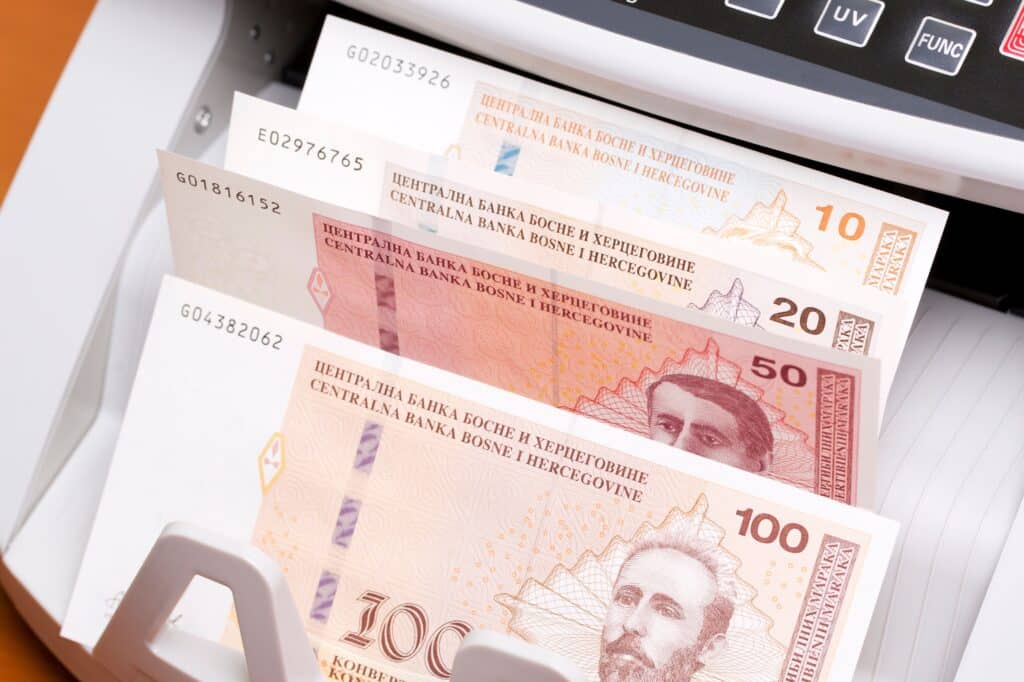
Let’s remind you that according to the latest data from this year, the citizens of Bosnia and Herzegovina are in total debt of around 13.8 billion convertible marks, of which as much as 9.9 billion KM is attributable to non-purposed consumer loans. Report.


