Asia-Pacific markets started the first full trading week of 2026 on a stronger note after the US announced it had invaded Venezuela over the weekend and captured President Nicolas Maduro.
Oil prices fell slightly as markets assessed the potential impact of geopolitical tensions.
US authorities said Maduro and his wife, Cilia Flores, were flown to New York after the operation and charged with narco-terrorism conspiracy and other crimes. The indictment states that the drug trade “enriched and strengthened the Venezuelan political and military elite.”
Oil prices fell after an escalation involving the oil-rich nation. Brent crude futures fell more than 1% before paring losses and last traded 0.3% lower at $60.57, while West Texas Intermediate crude fell 0.4% to $57.09 a barrel.
Venezuela, a founding member of OPEC, holds the largest proven crude oil reserves in the world, with 303 billion barrels, or about 17% of global reserves, according to data from the US Energy Information Administration, SEEbiz reports.
Spot gold prices rose more than 1.8% to $4,409.29.
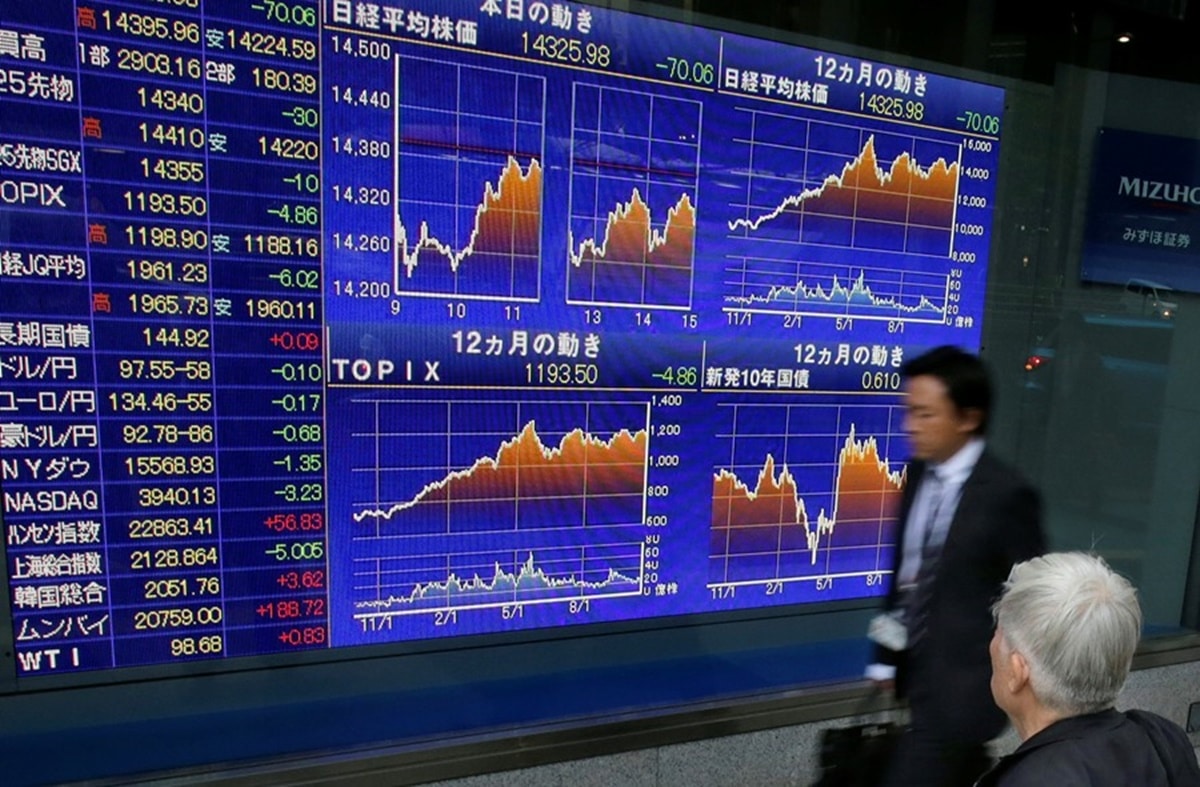
Japan’s benchmark Nikkei 225 jumped 3.13% in its first trading session this year, while the Topix added 2.12% to hit a record high. Defense stocks were among the top gainers on the index, with IHI Corp rising nearly 10%, while Mitsubishi Heavy Industries and Kawasaki Heavy Industries added 9.17% and 6.89% respectively.
South Korea’s Kospi index continued to rise, climbing 3.15% to a new all-time high of 4,448.52, after hitting a new record earlier. Kosdaq, a small-cap stock, added 1.11%.
Samsung Electronics shares rose more than 7% after co-CEO TM Roh told Reuters on Monday that the firm plans to double the number of its mobile devices with AI features powered by Google’s Gemini this year.
Shares in South Korean defense giant Hanwha Aerospace jumped more than 6%, while defense products maker Poongsan traded 2% higher.
Australia’s ASX/S&P 200 was unchanged.
Hong Kong’s Hang Seng Index fell slightly below the resting line, dragged by energy stocks, while the mainland’s CSI 300 rose 1.29%. Shares of China’s largest energy firm, PetroChina, were the biggest losers on the Hong Kong index, falling 4.81%. CNOOC, China’s largest onshore crude oil and natural gas producer, fell 3.93%.