Asia-Pacific markets rose on Friday as investors weighed diplomatic efforts by the US and Iran to reach a peace deal in the Middle East.
Tehran’s intention to keep its stockpile of enriched uranium inside the country, according to Reuters, could complicate negotiations with Washington, as President Donald Trump has made dismantling Iran’s nuclear program a central goal of his military action against Tehran.
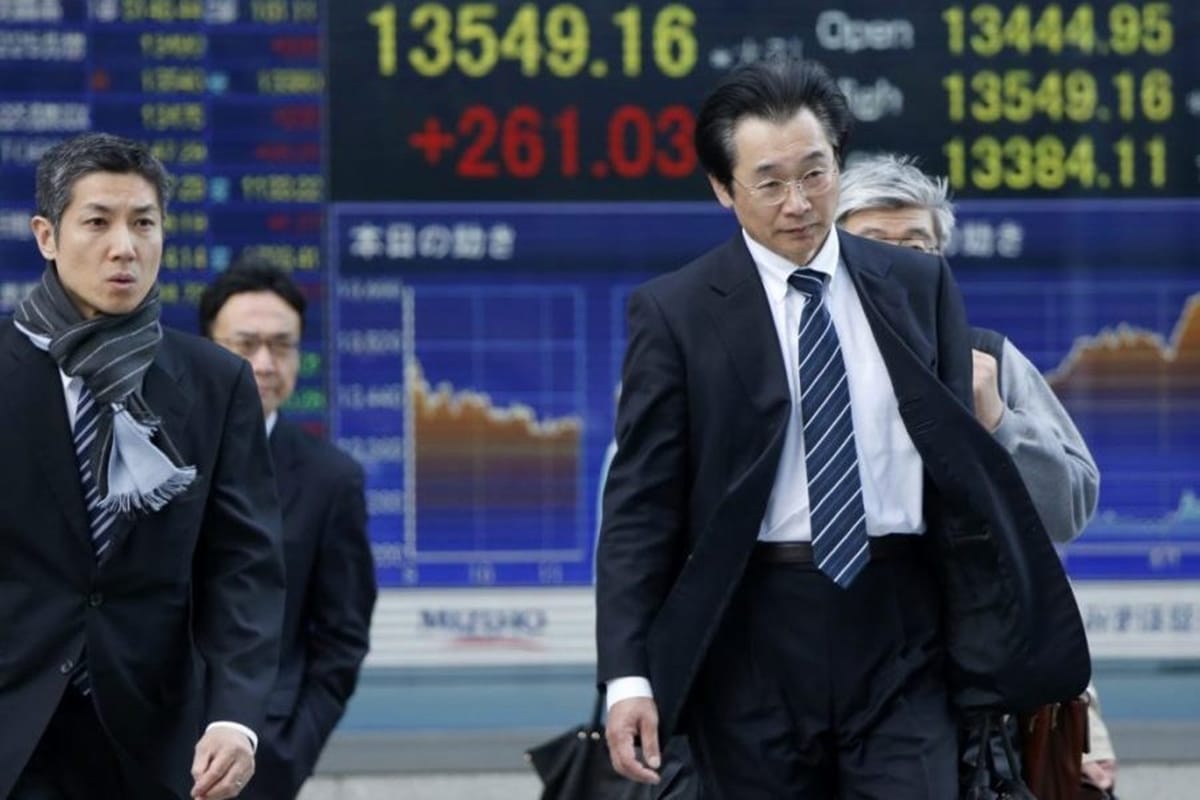
Japan’s Nikkei 225 rose 1.36%, while the Topix added 0.55%. Core inflation in Japan eased more than expected in April to the lowest level since March 2022, weakening the case for an early interest rate hike by the Bank of Japan.
Core inflation – which excludes fresh food prices – was 1.4%, lower than the 1.7% expected by economists polled by Reuters and below the 1.8% reading in March.
South Korea’s Kospi rose 0.59%, while the Kosdaq index jumped more than 5%. Australia’s S&P/ASX 200 rose 0.55%.
Hong Kong’s Hang Seng Index rose by 1.22%, while China’s CSI 300 added 0.70%, SEEbiz reports.
India’s Nifty 50 as well as the BSE Sensex rose more than 0.4%.
Oil prices rose after falling in the previous session. July futures for international benchmark Brent crude rose 1.46% to $104.08 a barrel in Asian trade, while US West Texas Intermediate futures for June rose 0.93% to $97.25 a barrel.
The 10-year U.S. Treasury yield, which has retreated from record highs, last fell more than 1 basis point to 4.57%. The yield on long-term 30-year government bonds, which are more sensitive to political risks, fell 2 basis points to 5.091%.
Moody’s head of global ratings and research, Philipp Lotter, told CNBC that global credit markets are facing longer-term pressure on yield curves and borrowing costs. Governments are grappling with growing spending needs, weaker demographics and high investment demands, he said.
Lotter noted the “significant increase in defense spending needs,” especially in Europe, as well as the “billions and billions” needed to expand artificial intelligence and data centers globally and in Asia.
Those forces are creating “an additional mismatch” between spending and saving, he said, “causing further structural imbalances globally.”