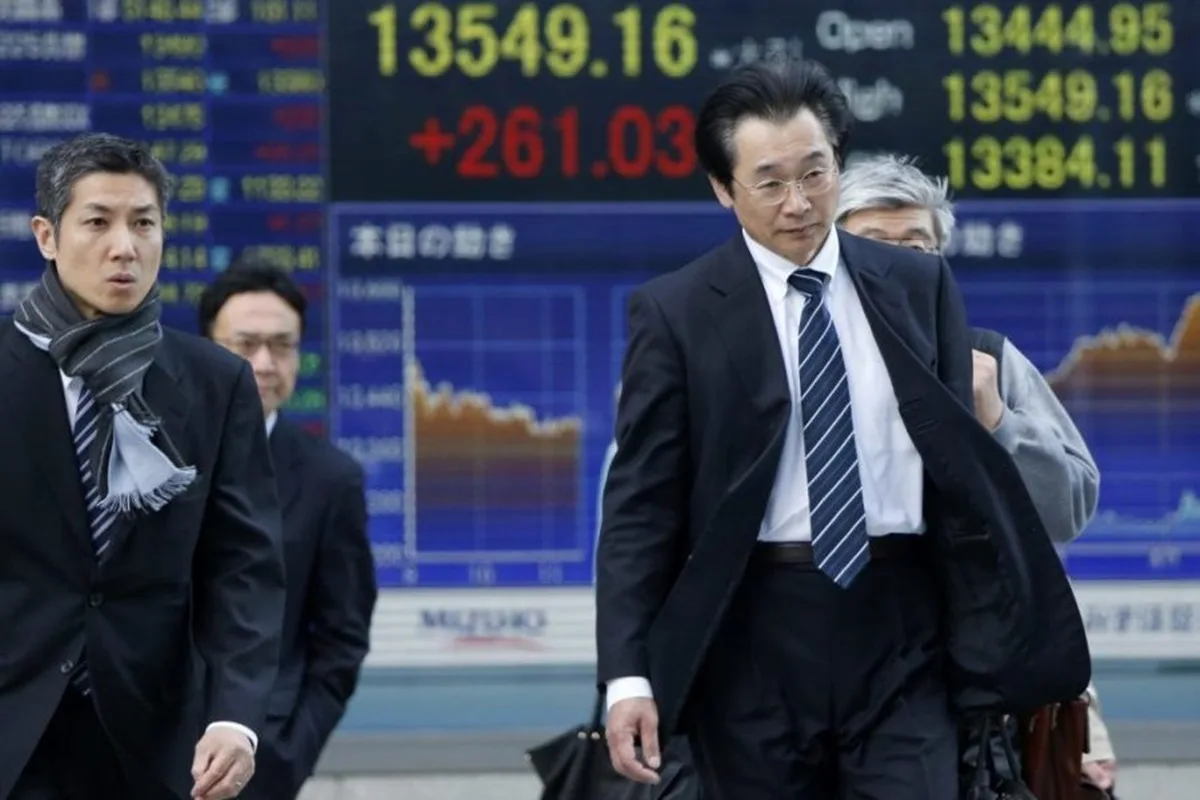
Asian markets were mostly down after losing early trading.
South Korea’s Kospi fell more than 7% to below 7,000, its lowest level since May 4.
Kosdaq, a small-cap stock, fell 1.98%. Japan’s benchmark Nikkei 225 lost 1.57%, while the Topix fell 0.52%. Australia’s S&P/ASX 200 lost 0.35%. China’s CSI 300 fell 0.64%, while Hong Kong’s Hang Seng index rose 0.91%.
The sinking of SK Hynix
Shares of SK Hynix fell more than 12% in Seoul on Monday after the chipmaker’s strong Nasdaq debut on Friday, as investors took profits and weighed whether rising demand for artificial intelligence memory chips justified the stock’s sharp gains.
The South Korean memory chip maker jumped 13% in its Wall Street debut on Friday, reflecting strong appetite from U.S. investors for artificial intelligence-related semiconductor stocks.
Monday’s drop reflected a combination of profit-taking and uncertainty over how US-listed stocks should be valued against Korean stocks, with analysts saying the ADR debut effectively created a new benchmark for investors to gauge the firm’s value, SEEbiz reports.
“Everyone is really confused about what’s going to happen with memory demand and where the fair price is,” Daniel Yoo, global strategist at Yuanta Securities, said on “Squawk Box Asia.” “It’s all about how much demand there is versus how much supply will come in… [i] what multiplier will you get.”
Comparison with TSMC
U.S.-listed Taiwan Semiconductor Manufacturing Co.’s ADRs trade at a premium of about 13% to 14% to domestic shares, Yoo noted, adding that SK Hynix’s sharp move created a discount rate of more than 20% between the U.S. and Korean listings.
Yoo said the sell-off was also driven by the supply mechanism, calling it an “additional share issuance” that increased the supply of shares available to investors. “The market sees this as a correction period for SK Hynix in the domestic market.”
The pullback is likely to be temporary as structural demand for AI continues to outpace supply, he said, adding that the stock is likely to move “in the right direction” over the next six to 12 months despite near-term volatility.
Phillip Wool, chief research officer at Rayliant Global Advisors, also played down recent weakness in Asian AI hardware names, describing it as a portfolio rebalancing exercise rather than a deterioration in the industry’s outlook.
“I think it’s mostly risk management,” Wool said, noting that many investors had accumulated excessive positions in the South Korean and Taiwanese AI chipmakers after their strong gains. “Sane risk management suggests you have to reduce them.”
He added that the sale “doesn’t really speak to any reduction in excitement around AI hardware.” Wool said investment in AI is expanding beyond semiconductors, but it should continue to benefit memory suppliers like SK Hynix.