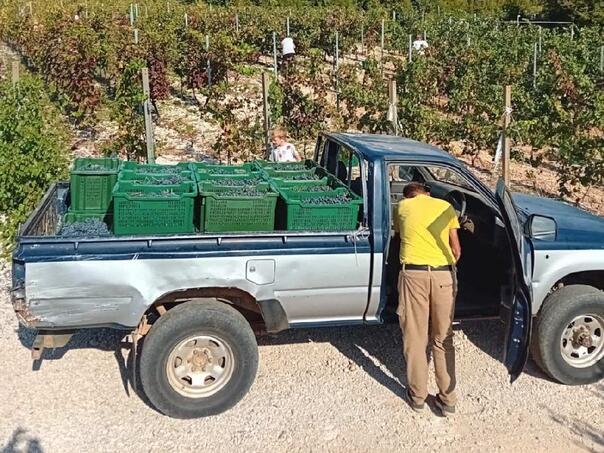
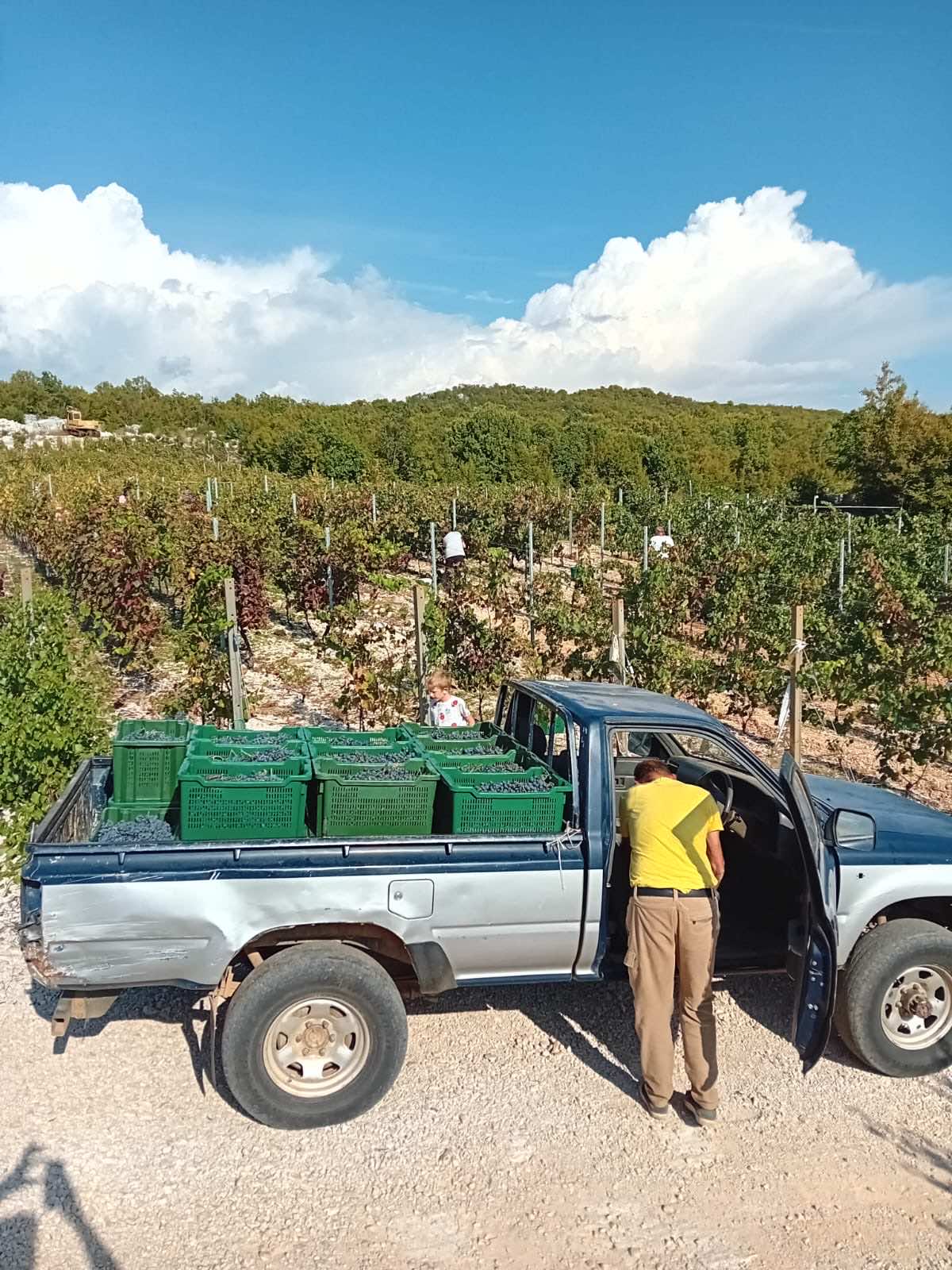
On a family estate that inherits more than a century of winemaking tradition, Bošnjak develops a business that combines inherited experience and modern support models.
The story of his craft begins far before him, at the time when his grandfathers and great-grandfathers planted the first vines in the rugged soil, clearing the land by hand and finding a way to get the best out of it.
It is precisely on this tradition that Podrum Bošnjak rests today, and Radoslav continues it in a systematic and planned manner, relying on institutional mechanisms that help him modernize the business.
“I have a registered trade Podrum Bošnjak, which operates in the sector of primary agricultural production and processing. The key focus of our business is the cultivation of grapes in our own vineyards, the continuous planting of new plantations and the production of high-quality wines from our own grapes,” explains Bošnjak.
He adds that the control of the entire chain – from planting to sale – ensures quality standards and market stability.
In operational terms, Bošnjak is currently the only person with disabilities formally employed in the trade, but he hires additional workers during the season. “During seasonal periods, in accordance with operational needs and work dynamics in the vineyards, we hire an additional number of workers on temporary jobs,” he explains. Such a model allows him to maintain flexibility in his work and effectively respond to the demands of the field.
The turning point in his business development happened in 2016, when he heard about the Fund for the first time. “I learned about the Fund and its support programs for the first time through an acquaintance who already had positive experiences. The information was crucial for making a decision about formally opening a business and planning the development of viticulture and wine production,” says Bošnjak. This knowledge directed him towards the use of available measures and a strategic approach to investing in equipment.
Since then, it has continuously used the Fund’s support, primarily for equipment that is crucial in all stages of the wine-growing cycle.
“The key was support for the acquisition of specialized equipment that is necessary for the establishment of new vineyards, daily work in the field and technological processing and processing of grapes in the winery”, he points out.
The effects were multiple: modernization, standardization and clear professionalization of business.
He especially emphasizes that the results of support are visible in everyday work.
“The Fund’s support had a very positive and measurable impact on the operational efficiency of the trade. It enabled significant relief in daily work thanks to modern equipment that reduces physical load and increases productivity,” he says.
This is extremely important for him, as a person with a disability, but at the same time it creates a safer, more inclusive work environment for everyone who works in the vineyard.
When he talks about the employment of people with disabilities, he approaches it through the prism of experience.
“Engagement of people with disabilities encourages an inclusive organizational culture, contributes to the company’s social responsibility and opens up the possibility of using institutional support”, explains Bošnjak.
He adds that experience in practice shows how people with disabilities bring high motivation, dedication and loyalty – qualities that are invaluable in production activities.
Therefore, his recommendation to other employers is in a clear direction.
“I would recommend that they consider employment opportunities for people with disabilities, because with adequate support from the Fund, this process becomes operationally simpler and more financially sustainable,” says Bošnjak.
He points out that the Fund not only facilitates employment, but also improves work processes, increases the quality of jobs and contributes to the long-term stability of the company.
The story of Radoslav Bošnjak shows that sustainable development in small communities is not only possible, but can also be the driving force of the local economy. When tradition is combined with modern tools and an inclusive approach to employment, the result is a business that grows stably, naturally and in the long term.
The Herzegovina lineage teaches a simple lesson: when we provide opportunities to people, businesses become more resilient and communities become stronger.
(Vijesti.ba)