
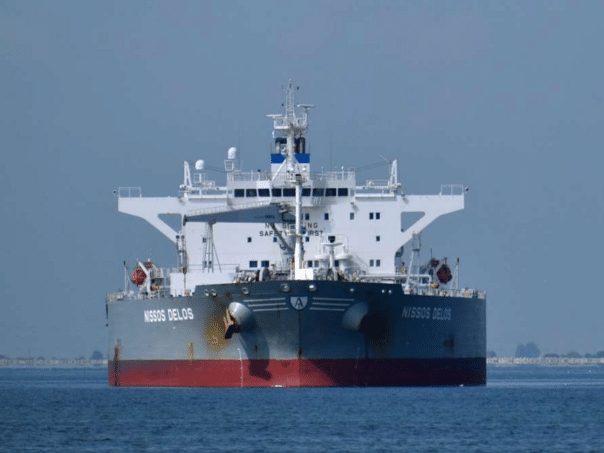
On March 8 of this year, the tanker Torm Agnes entered the port of Ensenada on the Pacific coast of Mexico with almost 120,000 barrels of diesel.
Although the port is mainly a berth for cruise ships, yachts and container ships, an unusual operation took place that day – fuel trucks arrived at intervals and workers filled their tanks overnight, directly from the ship, without the proper infrastructure to safely unload flammable materials.
According to information collected by Reuters, smugglers linked to Mexican drug cartels are behind this risky operation. The diesel was purchased in Canada, and in the documents it was falsely presented as an industrial lubricant, thereby avoiding a tax that would amount to about seven million dollars. A key role in the operation was played by the American company Ikon Midstream from Houston, which organized the transportation and delivery of fuel to an alleged buyer who Mexican authorities claim is a front for one of the country’s most violent cartels.
The Danish company Torm, the owner of the tanker, terminated its cooperation with Ikon Midstream a few weeks after the incident. Meanwhile, Reuters has revealed that Ikon Midstream has arranged at least four additional diesel shipments to Mexico this year using another tanker from the same fleet – the Torm Louise.
US and Mexican authorities warn that fuel smuggling is becoming a major source of income for cartels outside of drug trafficking. Illegal imports of diesel and gasoline are estimated to account for a third of Mexico’s fuel market, with an annual value of more than $20 billion. Mexico’s opposition claims the state has lost up to $10 billion due to IEPS tax evasion, calling it the biggest corruption scandal in Mexican history.
Texas US Senator Juan Hinojosa has warned that cartels have infiltrated numerous legal firms along the border, while the Mexican Navy has launched an internal investigation into port corruption. This story sheds new light on the growing threat fuel smuggling poses to energy security and the rule of law in North America.
The basic logic of fuel smuggling boils down to avoiding high taxes. Mexico levies a special tax known as IEPS on a wide range of products, including imported diesel and gasoline. Although Mexico is a major producer of crude oil, it is forced to import finished fuels due to its outdated refinery infrastructure. Smugglers avoid this tax, which can amount to up to 50 percent of the cargo’s value, by falsely declaring the fuel as other petroleum products that are tax-exempt.
According to US and Mexican officials, smugglers use shell companies, falsified documents and bribes to get past customs controls. Cargo is often unloaded in inadequate locations, outside of official sea terminals, which allows rapid distribution without supervision.
The smuggled diesel is then sold at discounted prices to thousands of unregistered pumps, factories and mines across Mexico. Gasoline ends up at unbranded gas stations. Cartels also steal fuel and crude oil directly from the state oil company Pemex, and some of it even ends up in the US market, with the help of corrupt importers.
According to seven sources, the tanker Torm Agnes was carrying diesel from Canada, but upon arrival in Mexico, the cargo on paper became petrochemicals for the production of industrial lubricants. If the diesel had been properly reported, it would have been taxed at almost seven million dollars. Instead, due to the false declaration, the tax was avoided.
Torm Agnes is just one of several tankers that have used this tactic recently. According to security service documents reviewed by Reuters, the scheme involves multiple ships, companies and state actors. The loss of income for Mexico is estimated at nearly four billion dollars in 2024, while the opposition PAN party claims the figure is closer to $10 billion.
The company Ikon Midstream stated in the declarations that all five shipments are additives for lubricants that are not subject to IEPS tax. On US export bills of lading for two shipments aboard the Torm Louise, the product was also declared as a lubricant, according to Kpler, a Brussels-based marine data service.
In Mexico, the company Intanza of Monterrey was the recipient of cargo from the vessel Torm Agnes. Mexican authorities suspect Intanza of being a front for the Jalisco Nueva Generación (CJNG) cartel, according to three security sources and a document linking the cartel to fuel smuggling. The Intanza name resurfaced after Mexican authorities seized the tanker Challenge Procyon in the port of Tampico on March 21. On March 27, Intanza filed a motion with a Tamaulipas court to release the cargo, claiming it was lubricants, but the judge denied the motion. Security Minister Omar García Harfuch announced on March 31 that 10 million liters of diesel had been found on board.
Last month, García Harfuch called the seizure one of the largest in history and announced the arrest of 14 people, including businessmen, former customs officials and active and retired members of the navy.
Fuel thefts from Pemex have been going on for decades, but as the trade grew, so did the cartels. According to security sources, CJNG has become a leading player in the smuggling of fuel and crude oil. The cartel, which is based in the state of Jalisco, has expanded operations across Mexico, particularly in the northern state of Tamaulipas, across the border from Texas. CJNG is the only cartel currently using tankers, and authorities first discovered this tactic around 2020. The shift from trucks and trains to tankers shows high business sophistication and logistical power, said Marisol Ochoa, an expert on organized crime.
Since September 2024, the US Department of the Treasury (OFAC) has imposed two rounds of sanctions against dozens of Mexican nationals and companies associated with CJNG. Former senior OFAC official Greg Gatgianis said he was stunned by the number of companies involved in the scheme, including gas stations, trucking firms, a 3D printing firm and a bakery.
In February, the Trump administration designated several Mexican cartels, including CJNG, as foreign terrorist organizations, making it easier to prosecute individuals and companies that do business with them. In May, Utah father and son James Lael Jensen and Maxwell Sterling Jensen were charged with money laundering and providing support to a designated terrorist organization. Authorities claim they cooperated with CJNG in smuggling crude oil into the US.
(Vijesti.ba / FENA)