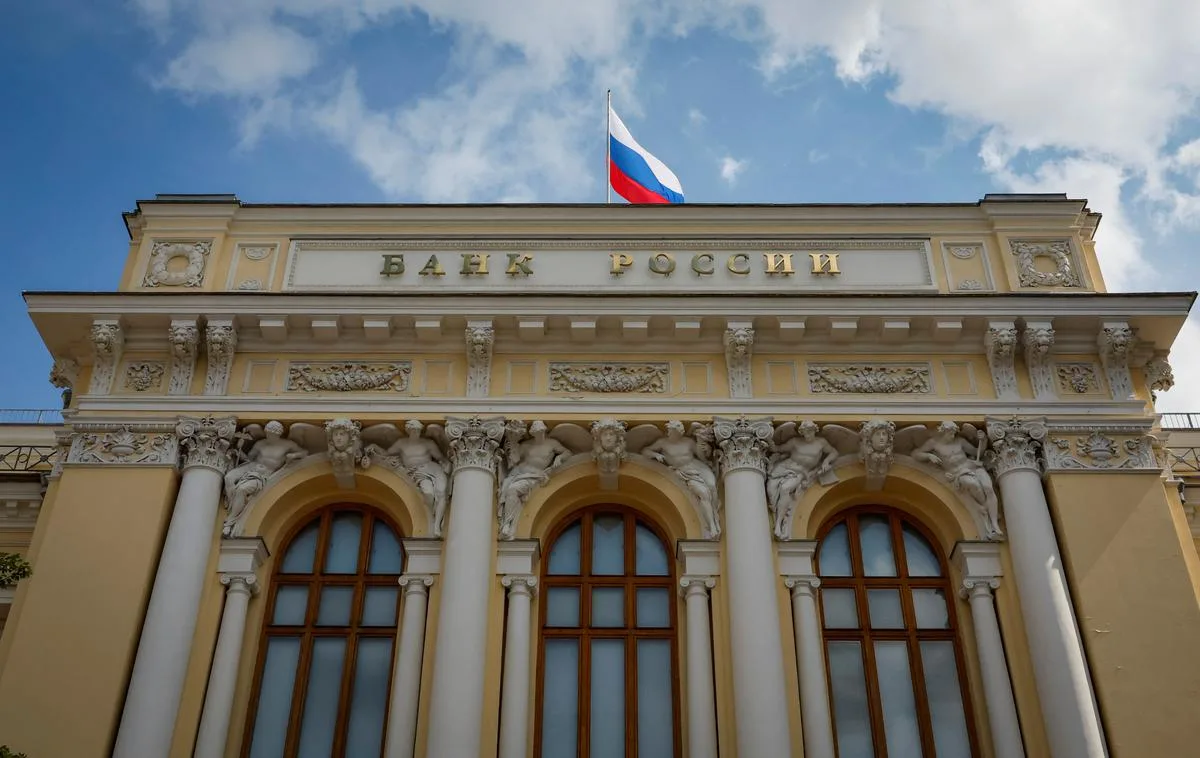
Half a million Russians declared bankruptcy last year, while Russian banks bear the increasing burden of the costs of the war in Ukraine, according to a report by European intelligence services.
According to that report, the growth of household indebtedness is one of the factors that create the conditions for a potentially explosive banking crisis.
However, experts say that although individuals are facing a cost-of-living crisis and increasingly frequent bankruptcies, a full-blown banking crisis in Russia is unlikely for now, reports Al Jazeera.
The Russian Ministry of Economic Development has cut its GDP growth forecast for 2026 from 1.3 to 0.4 percent, as the war in Ukraine enters its fourth year.
The report notes that the Russian government, as it continues to pour large sums of money into the war against Ukraine, is increasingly relying on banks to support businesses and citizens.
In recent years, Russian banks have approved an increasing number of risky loans, which made it possible to maintain the war economy and helped many citizens to survive financially, but at the same time increased the risk of defaulting on debts.
According to estimates from the report, ten percent of corporate loans in Russia are now considered doubtful, which is a significant increase compared to the period two years ago. More than 500,000 Russians declared bankruptcy last year, an increase of almost one-third from the year before.
State credit programs are said to have prompted more than 13 million Russians to take out three or more loans at the same time to cope with rising living costs, Fena reports.
Vladislav Inozemtsev, an associate of the program for Russia and Eurasia of the London think tank Chatham House, said that the due and unpaid corporate loans now amount to about seven trillion rubles, or about 91 billion dollars. This corresponds to approximately three percent of Russia’s GDP or the total profit of the banking system for two years.
However, Inozemtsev believes that more than half of this debt is made up of loans granted to companies from the defense industry or companies related to state defense, which is why he expects the state to eventually cover them or keep interest payments in order so as not to threaten the banks.
Debts of citizens that are late in repayment amount to an additional 1.7 trillion rubles, or about 22 billion dollars. In that segment, according to his assessment, it is possible to expect many bankruptcies, but the banks have already formed reserves for part of those losses.
A European intelligence report claims that Russian banks’ reliance on state support, credit programs and debt restructuring is masking a crisis that could surface in the event of another economic shock.