The European Central Bank wants to close the chapter of emergency measures that have marked the last decade.
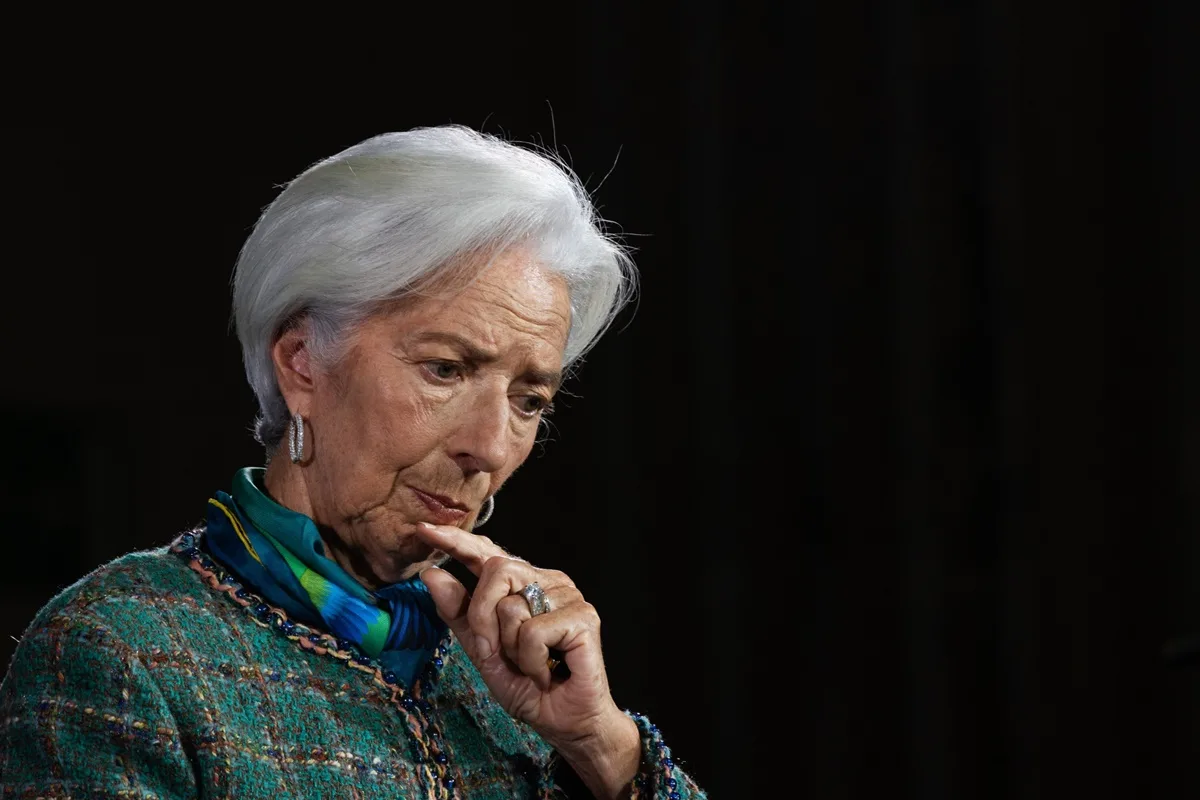
ECB president Christine Lagarde said that monetary policy is returning to its basic instruments, but with one important difference – the world today is much more unpredictable than before the financial crisis, the pandemic and the war in Ukraine.
At the annual meeting of central bankers in Sintra, Portugal, she pointed out that interest rates are once again becoming the main instrument of monetary policy, while extraordinary measures will be used only when the circumstances really require it.
“Monetary policy is returning to basic tools. But this does not mean that we are simultaneously returning to the same idealized past.”
The end of the era of unconventional measures?
Over the past thirteen years, the ECB has used instruments that were almost unimaginable before the global financial crisis. It bought government bonds on a large scale, approved multi-year favorable loans to banks and signaled the future direction of monetary policy to the markets in advance.
Such measures were a response to the eurozone debt crisis, the pandemic and the energy shock caused by the Russian invasion of Ukraine, reports Bankar me.
Today, Frankfurt wants to send a different message – monetary policy can once again rely heavily on interest rates, not emergency programs.
A more resilient eurozone, but not a calmer market
Lagarde believes that the Eurozone is better prepared today than ten years ago. The banking system is subject to stricter supervision, joint financial protection mechanisms such as the European Stabilization Mechanism have been established, and the energy transition is gradually reducing Europe’s dependence on fossil fuels.
This, according to her, allows the ECB to refocus on its main goal – price stability.
But a more resilient economy does not mean a more predictable environment.
Tariffs, wars and oil change the rules of the game
The biggest challenge for central banks is no longer just inflation or economic growth, but the speed with which global conditions are changing.
Lagarde cited US tariffs as an example. Economic models expected the euro to weaken against the dollar, but the opposite happened as investors reassessed the risks associated with US assets.
The situation is similar in the energy market. The conflict in the Middle East has shown how the price of oil can jump to $120 per barrel in just a few months and then drop back down to around $70. Such oscillations directly affect inflation and make it difficult to make decisions on interest rates.
What does the ECB’s new strategy mean for markets?
The most important message from Sintra is not a new level of interest rates, but a change in the way the ECB wants to conduct monetary policy.
The bank no longer wants to give clear signals to the markets in advance about future moves. Instead, any decision will depend on new economic data, inflation, the labor market and the development of geopolitical risks.
For companies, this means that planning financing costs will become more demanding. Investors, on the other hand, will have to pay more attention to macroeconomic indicators, rather than waiting for a predetermined monetary policy path.
The message from Frankfurt is therefore clear – the era of automatic expectations is ending. In a world of increasingly frequent geopolitical and economic shocks, flexibility is becoming as important a tool as interest rates themselves.