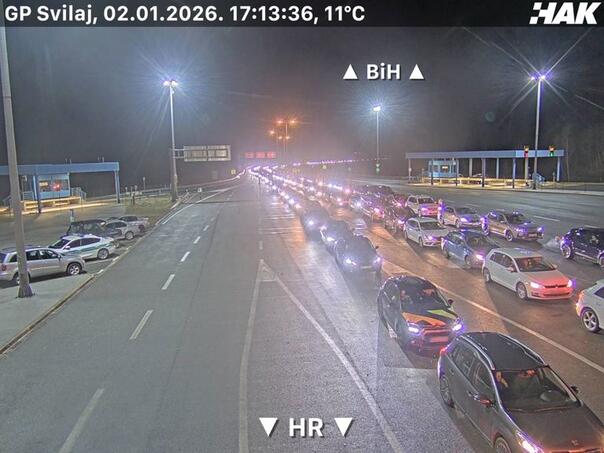
The most critical situation is at the Bajakovo border crossing, where you have to wait up to four hours to enter Croatia. Next comes the Jasenovac border crossing with Bosnia and Herzegovina, where the queues are long and waiting times are around three hours. At most other border crossings from Bosnia and Herzegovina, the waiting time is about two hours, while at the crossings from Serbia, the wait is between 30 minutes and an hour and a half.
When entering Croatia for the first time, third-country nationals have their biometric data taken – four fingerprints and a photo of their face. That data is stored in the EES system and used at all subsequent border crossings, and border officials check and compare live facial images with the data in the system.
The new system does not apply to citizens of the European Union, who still cross the border with a valid travel document or identity card, without the obligation to provide biometric data.
Although the authorities emphasize that the EES was introduced with the aim of increasing security and more efficient border control, in the first days of its application there were significant delays and longer waits at border crossings.
(Vijesti.ba)