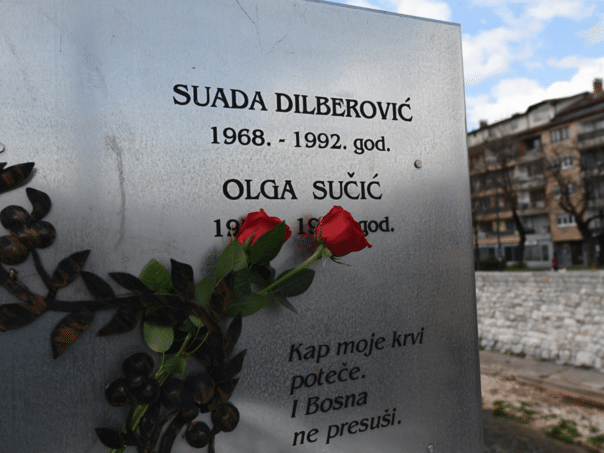
The commemoration program began with the laying of flowers and honoring the martyrs, fallen fighters and civilian victims of the war. The delegation of the Municipality of Novo Sarajevo laid flowers at the Kovača Martyr’s Cemetery, after which tributes were also paid at the Suada Dilberović and Olga Sučić Bridge, a symbol of Sarajevo’s resistance. The commemoration continued at the Gornji Kovačići and Grbavica memorials, then the Vraca memorial park, and the memorial to the camp inmates at Grbavica.
Every flower laid and every moment of silence reminded of the price of freedom and the permanent obligation to preserve truth and memory.
A musical and stage program dedicated to the culture of memory was organized in the Historical Museum of Bosnia and Herzegovina. Through the combination of poetry, music and stage expression, memories of the period of siege and resistance were evoked, and the artists’ performances conveyed strong emotions and universal messages about freedom, dignity and perseverance to the audience.
The central part of the program consisted of two musical numbers that are deeply rooted in the collective memory and identity of Bosnia and Herzegovina. The soloist of the National Theater Opera, Ileš Bečei, accompanied by the guitar of Elvira Solak, performed the song “Stay here”, based on the text of Aleksa Šantić and the music of Dražen Žerić Žera, as well as the composition “Bosna”, based on the text of Abdulah Sidran and the music of Elvira Solak.
Nihad Kreševljaković’s historical-poetic text about Grbavica was interpreted by actors Belma Sakunić and Faruk Hajdarević, whose suggestive performance further emphasized the power of the poetic word and its importance in preserving historical memory.
The program was created by the International Center for Children and Youth in Novo Sarajevo, under the leadership of the director, prominent BiH. by film and theater director Dina Mustafić, with the intention of reminding the importance of reintegration – not only as an important historical moment, but also as a permanent obligation to preserve the values of freedom, community and human dignity.
Through art as a universal language, the event confirmed that memory is not only an act of recollection, but also an active relationship to the past that shapes our present and future.
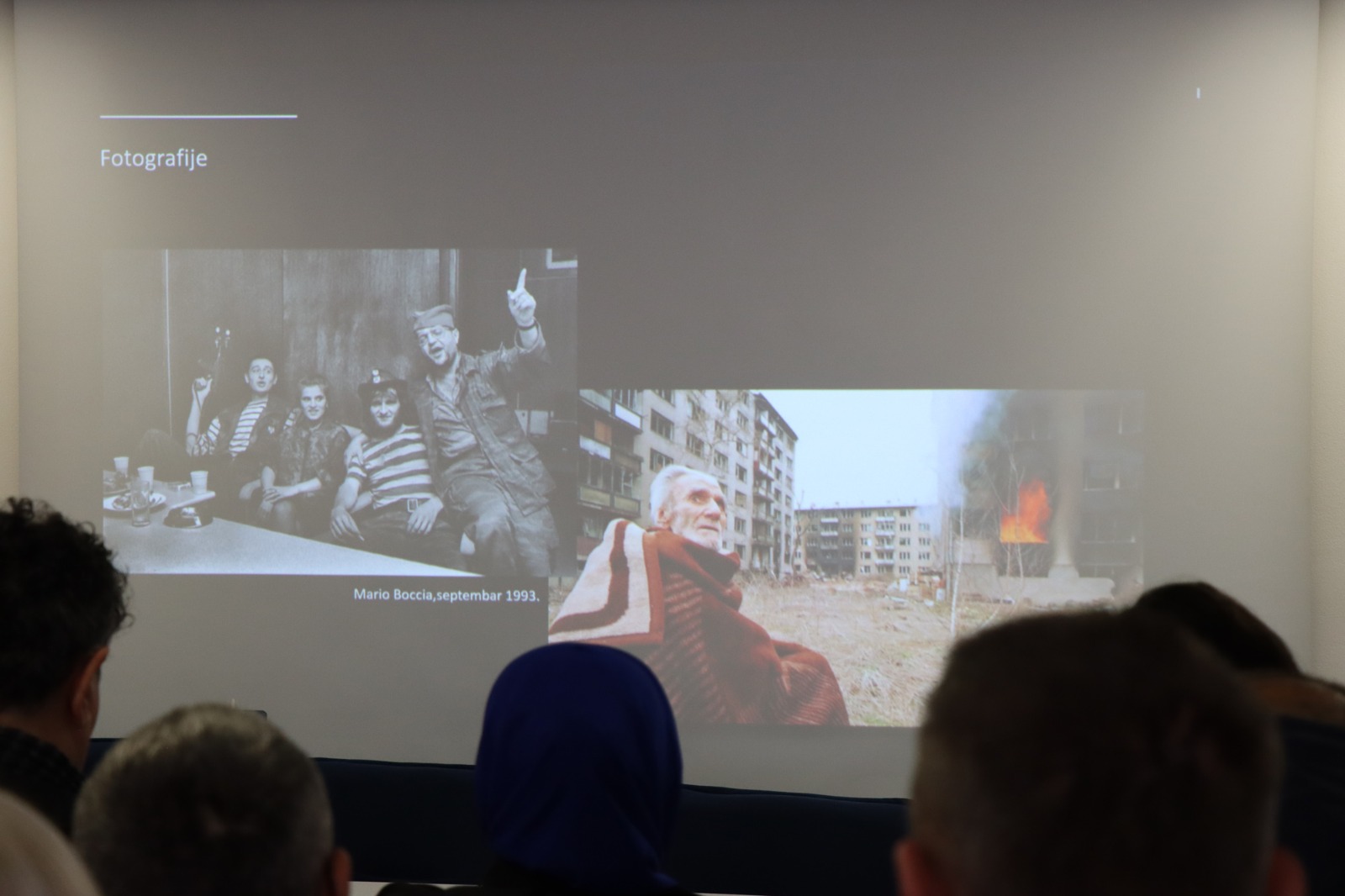
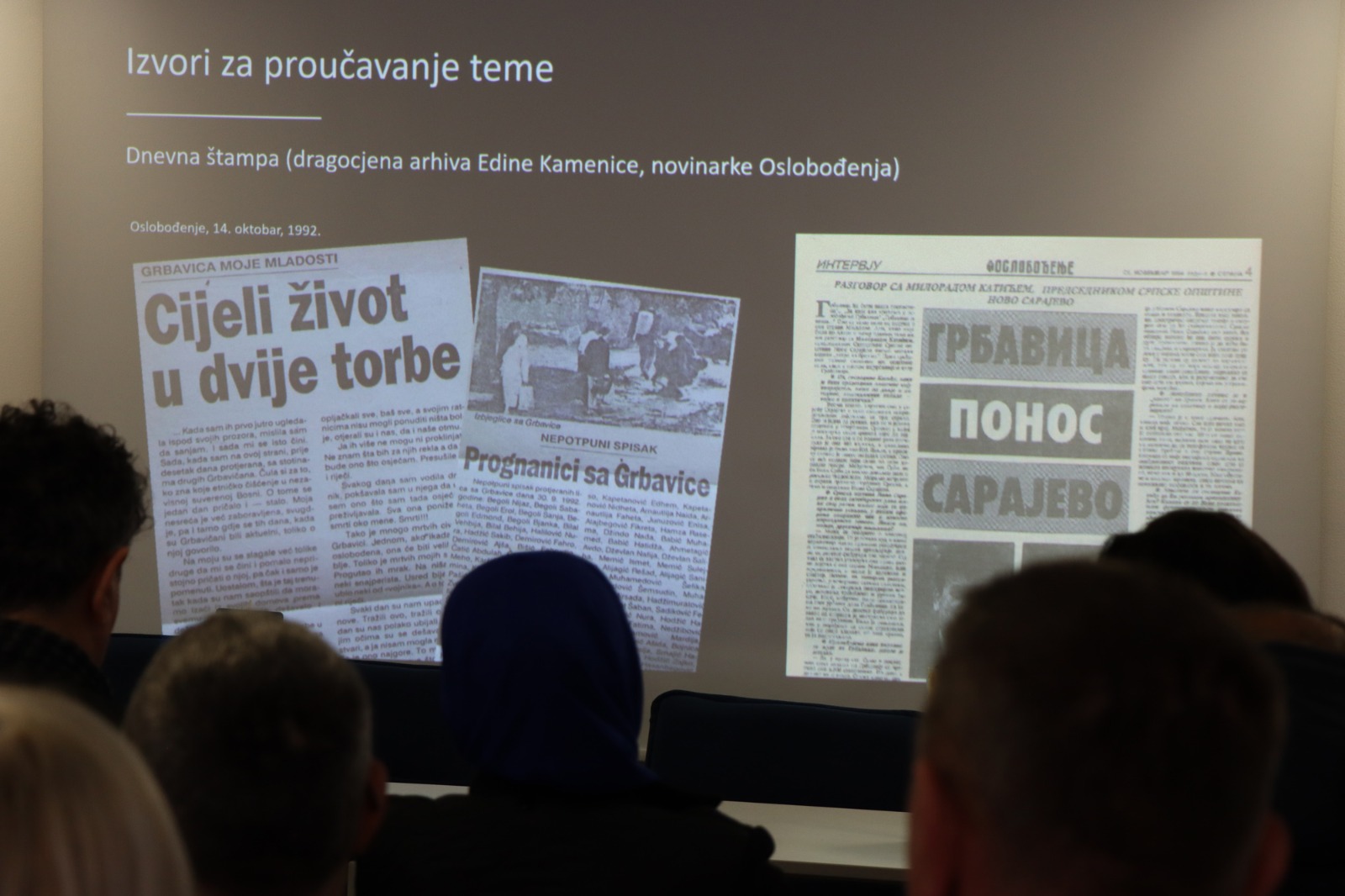
A presentation of historical facts was held in the Novo Sarajevo Memorial Center as an introduction to the exhibition “On the other side of the river – Grbavica 1992-1996”, which will be presented to the public next year. Through expert presentations, the importance of documenting life in occupied settlements, preserving authentic testimonies and the role of institutions in fostering the culture of memory was emphasized.
The commemoration of March 19 – the day of reintegration of the settlements of Grbavica, Kovačići and Vraca reminded once again that memory is not only an act of recollection, but a permanent responsibility towards the past and the future.
Thirty years later, the reintegration of these settlements remains a symbol of the return of life, hope and community, but also a reminder that the victims are never forgotten, and the values of peace and freedom are permanently preserved.
(Vijesti.ba)