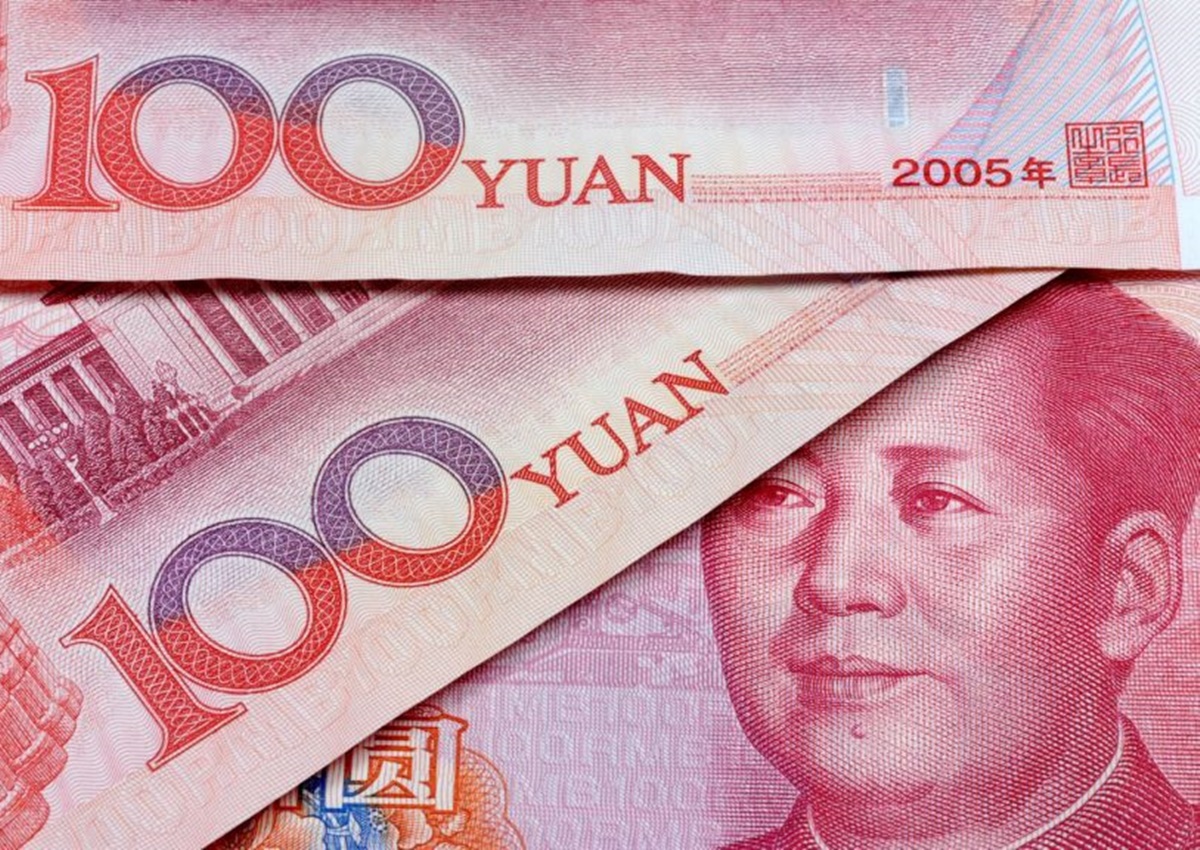
China is accelerating the development of the digital yuan and turning it from an experimental means of payment into a broader financial instrument that, in the long term, could strengthen Beijing’s ambition to reduce reliance on the US dollar in global transactions.
The People’s Bank of China has introduced a new framework for e-CNY, China’s central bank digital currency, which makes the digital yuan more like a bank deposit than ordinary digital cash. The most important change is that funds in digital wallets can earn interest, which makes e-CNY more attractive to users who want to not only spend money, but also keep it in digital form.
With this, the digital yuan leaves its first phase, in which it mainly served as a digital version of cash, and enters a new phase in which it becomes part of the wider banking and payment infrastructure.
According to data from China’s central bank, by the end of November 2025, 3.48 billion transactions were made with digital yuan, with a total value of 16.7 trillion yuan, or about 2.37 trillion dollars. This shows that e-CNY has already processed large amounts in the domestic payment system, although its usage still lags behind dominant Chinese platforms such as Alipay and WeChat Pay.
Beijing is now also expanding the institutional network supporting the digital yuan. Another 12 financial institutions should be included in the system, including Shanghai Pudong Development Bank and China Everbright Bank, reports Investor me. This significantly increases the number of authorized banks, and the goal is to make e-CNY more visible in everyday payments, public spending, trade and cross-border settlements.
What does China really want?
The digital yuan is not just a technology project. It is part of China’s broader strategy to build alternative payment channels in a world where international transactions are still heavily dependent on the dollar, the US financial system and the SWIFT network.
SWIFT, a system based in Belgium, connects more than 11,000 financial institutions worldwide and is one of the key pillars of international payments. Although SWIFT is not an American institution, a large part of the global transactions that take place through it is connected to the dollar, and therefore to the Western financial infrastructure.
China has been trying for years to develop mechanisms that could move trade payments beyond the traditional system of correspondent banking. One of the most important projects in this direction is mBridge, a platform that connects multiple digital currencies of central banks and enables faster and cheaper cross-border payments.
In theory, such systems would allow participating countries to settle part of their trade without relying on dollar channels. In practice, however, the road to mass use is long and politically sensitive.
Interest in alternative payment systems has further increased after the US and its allies froze about $300 billion in foreign currency reserves of the Russian central bank following Russia’s invasion of Ukraine in 2022. The move showed many countries how exposed they are to Western financial infrastructure if they find themselves targeted by sanctions.
Two different models: China pushes digital state money, US stablecoin
The Chinese approach differs sharply from the American one. While Beijing is developing a digital central bank currency, the US is increasingly relying on private stablecoins pegged to the dollar.
In recent years, American politicians and regulators have favored private digital dollars, i.e. stablecoins issued by regulated companies, while the idea of an official central bank digital dollar has been politically suppressed. Washington sees such an approach as a way for the dollar to maintain its dominant role in the digital economy as well, without creating a state CBDC system similar to China’s.
This is why two competing models of digital money are now taking shape. The Chinese model relies on a central bank, state infrastructure and controlled integration into the banking system. The US model relies on private stablecoin issuers, capital markets and global demand for the dollar.
Could the digital yuan threaten the dollar?
For now — hard.
The digital yuan gives China a more powerful payment tool, but does not address the main obstacles to the internationalization of the renminbi. China’s currency is still not fully convertible, capital controls restrict the free movement of money, and foreign investors do not have the same level of confidence in China’s financial market as they do in America’s.
The dollar’s particular strength is given by the depth of the US government bond market, liquidity, legal predictability and the fact that central banks, companies and investors around the world use it as a safe haven. China’s bond market is large, but it can’t yet match the global role of US Treasuries.
That’s why the digital yuan, at least at this stage, looks more like a strategic addition to China’s financial power than a direct threat to the dollar. It can help China reduce its dependence on Western infrastructure for trade, especially with countries that are politically or economically close to Beijing. But to become a real rival to the dollar, e-CNY must move out of controlled pilot projects and become a regular instrument of international trade.
The most important signal will be whether cross-border digital yuan payments will move from test arrangements to everyday commercial practice. Only then will it be seen whether China is only building a more advanced domestic payment system — or a real alternative to a financial order in which the dollar still has the upper hand.