
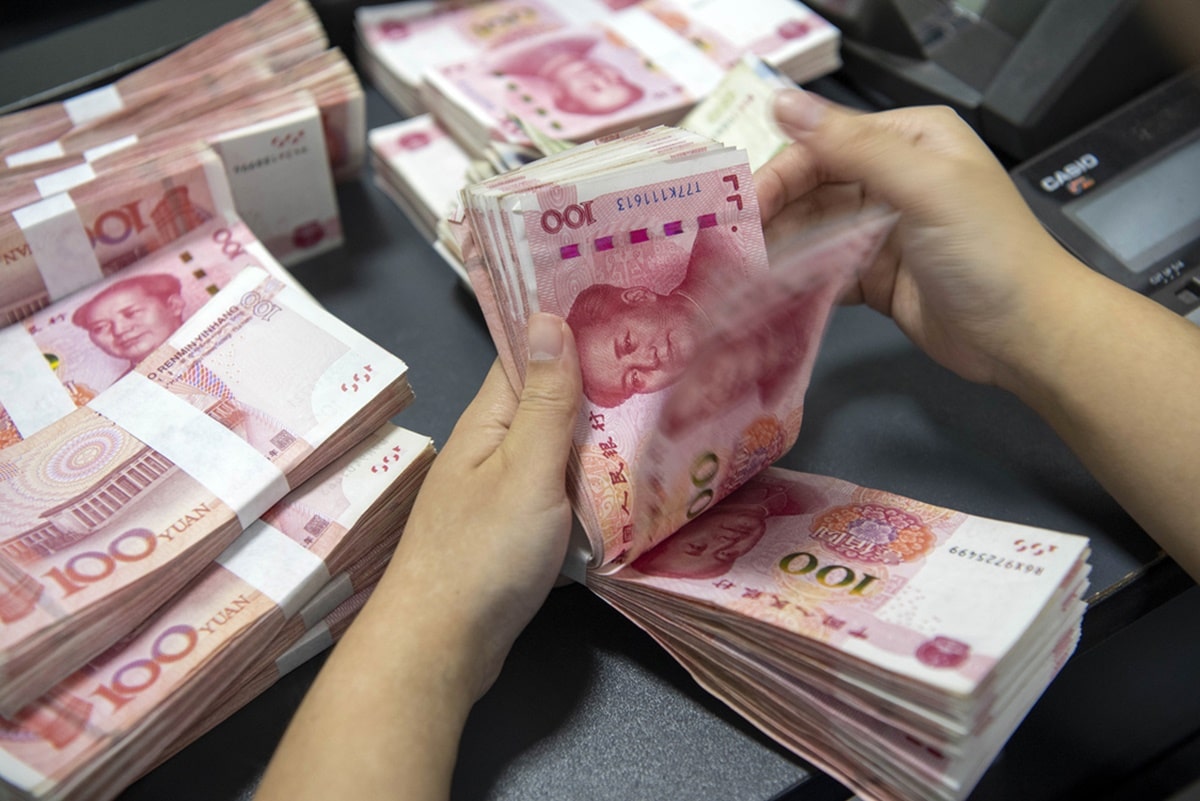
China reduced its key interest rates for ten base points, as stronger Juan and mitigation of trade tensions offer space for monetary loosen focused on encouraging the economy.
The National Bank of China reduced one-year main interest rate for loans from 3.1% to 3.0%, and the five-year LPR from 3.6% to 3.5%.
This is the first reduction of interest rates from reductions for 25 base points in October, while Beijing intensifies efforts to strengthen your economy.
Reference interest rates for loans – commonly charged to banks’ best customers – are calculated per month based on the proposed interest rates of certain commercial banks submitted to PBOC.
One year old LPR affects the corporate and most household loans in China, while five-year LPR serves as a reference value for mortgage interest rates.
The reduction in interest rates occurred after the state commercial lonname decreased its deposit interest rates for as many as 25 base points in an effort to protect their net interest margin, opening the path of key interest rates on loans, seebiz.
The PBOC will probably resume politics, Zichun Huang, the main economist in Capital Economics, instruction, predicting that the interest rates on loans will be reduced by an additional 40 base points by the end of the year.
The package reduction package came as part of the package of incentive measures, which Beijing announced earlier this month, including reducing interest rates on loans and the amounts of cash that banks must keep in reserves. Interest rates on mortgages within the National Fund for Housing Savings, the State Housing Lender, are also reduced by 25 basis points.
The Chinese Offshore Juan was released from the depreciation pressure and remained relatively stable, largely due to the weakening of the US dollar. The currency strengthened by more than 2.8% compared to US currency since last month reached a record low level of 7.4287, according to LSEG data.
Allan Von Mehren, Chinese Economist in Denska Bank, revised the 12-month goal for Offshore Juan from 7.35 to 7.15 due to the deesculation of trade and Peking’s “Clear Preferences for Currency Stability.
Only a moderate reduction of interest rates may not “significantly” to promote the loans and revive the wider economy, said Huang, noting that “demand support is generally lying in fiscal policy.”
However, policy makers may be less prone to expanding fiscal support outside of what has been announced in this year’s budget after the recent tariff’s deescalation, Huang added.
Fears from the trade war decreased after the meeting of U.S. and Chinese trade representatives in Switzerland earlier this month led to a lower gathering between the two largest world economies. Beijing and Washington agreed to abolish most tariffs in 90 days, leaving space for further negotiations to achieve a more lasting deal.
This encouraged a series of global investment banks to raise their forecasts for Chinese economic growth this year, and simultaneously reduce expectations for proactive incentives while Beijing strives to achieve its growth target of about 5%.