Bosnia and Herzegovina – a country of constant blockades and occasional progress. Without a state budget, a clogged European road, and an accelerated NATO road. Who softened attitudes cemented over the years overnight and why? Can cooperation finally translate into membership? Is BiH the last step forward in Brussels? the road to the largest military alliance in the world? The guests of the Plenum show on Federalna – Josip Brkić and Mirsad Ahmić – spoke about this.
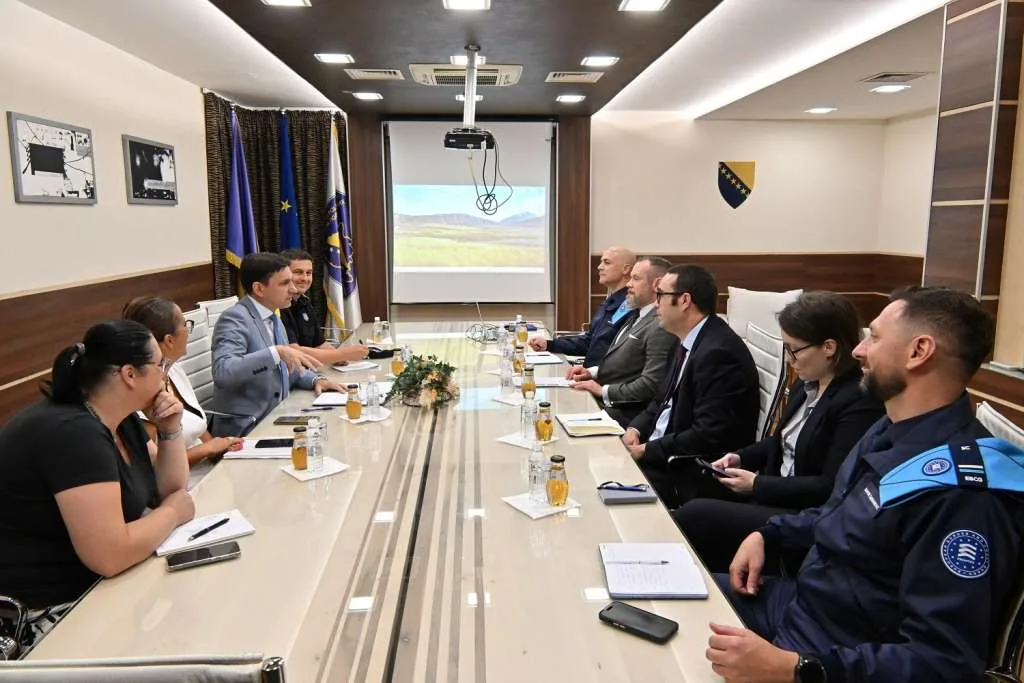
The document of the adapted partnership program of BiH and NATO was recently adopted in Brussels, which, according to Josip Brkić, Deputy Minister of Foreign Affairs of BiH, is truly a great step forward.
He clarifies that the document defines the time period from 2025 to 2028 and in a strategic way, comprehensively, through the approach, one partner, one plan that NATO has already worked out in 2021, defines BiH as a partner for the Nordic Alliance, he writes Federal.
Brkić also described the 36 partnership goals that the document sets.
“A large part of them falls on the activities of the Ministry of Defense and a part on the activities of the Ministry of Security and the Ministry of Foreign Affairs of Bosnia and Herzegovina.”
Speaking about the implementation of this plan, Brkić said that this is the approximate deadline in which this document will be implemented.
“It will have its intermediate stages, where the degree of fulfillment of the set goals will be checked.”
Regarding the Ministry of Foreign Affairs, he explains: “It is the continuation of the political dialogue and consultations with the NATO alliance in this time frame. When you translate it to our internal political space, it guarantees that in the next period at the highest levels we will have what we had in the past two years.”
Brkić recalls significant visits and events that strengthened cooperation.
“In the past two years, Bosnia and Herzegovina was visited by the former Secretary General of NATO, the current Secretary General of NATO, who brought the North Atlantic Council, the Council of NATO Member States, for two days where they stayed in Bosnia and Herzegovina. Also, exactly two years ago, Bosnia and Herzegovina hosted the largest gathering organized together with NATO after the NATO summit, which is a partnership symposium where we hosted 55 countries and organizations with somewhere close to 300 participants in Sarajevo.”
He also emphasizes the value aspect of NATO: “NATO is not only a military and political alliance. NATO is also an alliance of values, because we want to root these values deeper in Bosnia and Herzegovina through political representation.”
When asked about the attitude of political representatives from the RS towards cooperation with NATO, Brkić points out that in 11 years such challenges exist.
“I have been working as the head of the committee, first for integration, now for cooperation with NATO, for 11 years. Not a single year has been without such a challenge, but every year we make a step forward, a step in a positive direction, we never take a step back.”
He also adds the importance of the implementation of reforms in BiH: “We in BiH today are discussing documents, what is more important, documents are adopted and implemented in the institutions of BiH, regardless of who heads them, because we have a defined framework, which is the framework of current cooperation with NATO. The armed forces participated and are participating in all exercises and interoperability and preparation of the armed forces for joint action with NATO.”
Brkić also reminds of the contribution of the Armed Forces of Bosnia and Herzegovina in international missions.
“The Armed Forces of Bosnia and Herzegovina, for me, the best reform was carried out after Dayton here, side by side with NATO forces, we were in Afghanistan for 20 years, we assumed that we are more part of the solution than the problem in the context of consuming global security.”
In the end, Brkić points out that the issue of eventual membership in NATO will be resolved when all institutions are ready for it.
“There will come a time when we will also discuss the issue of membership, it is important that all institutions work and fulfill what is agreed upon through the reform program or through the adapted program.”