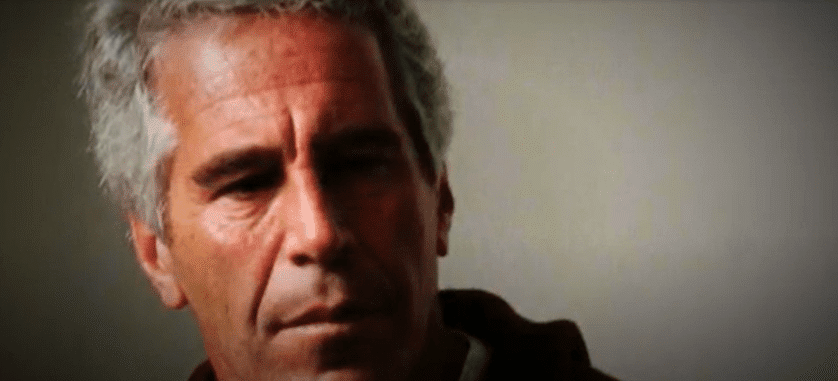
Documents released last week by the House Oversight Committee of the US Congress shed light again on how Jeffrey Epstein, despite being convicted of a sex crime against a minor in 2008, maintained contacts with some of the most influential people in the world for years. The new correspondence, which spans a period of ten years – from 2009 to his arrest in 2019 – shows not only the extent of his connections, but also the way in which he remained deeply rooted in elite social, political and academic circles even after his harsh conviction.
Epstein, who was arrested on charges of trafficking minors in July 2019 and was found dead in a prison cell a month later, has long been the centerpiece of numerous conspiracy theories. However, the content of the new e-mails does not point to a hidden, organized world “cabal”, but to a much more banal, but also dangerous truth: access to power and wealth allows individuals, regardless of their criminal past, to continue to be treated as legitimate actors in high society.
The elite did not reject him – on the contrary, they sought his advice
Epstein’s short, often grammatically incorrect e-mails do not reveal the direct involvement of his contacts in criminal activities. But they reveal something else: Many people reached out to him for advice, connections or support, even while he was at the center of major sex scandals.
Among those who exchanged messages with him are political advisers, journalists, businessmen, academics – and even people from the circles of the American and British state leadership.
In 2018, Epstein exchanged messages with Steve Bannon, one of Donald Trump’s most influential political strategists. The e-mails show he provided advice on Bannon’s European tour and how he could get in touch with political leaders. “There are many leaders of countries we can arrange for one-on-one meetings,” Epstein wrote to him. Bannon replied: “I agree 100%. How do I pull this off?”
This correspondence indicates that Epstein saw himself as someone who could mediate between the highest political figures in Europe.
Krauss, Summers and academia
The emails also reveal Epstein’s contact with renowned physicist Lawrence Krauss, who reached out to him when he faced allegations of sexual harassment. Epstein advised him not to respond to the reporter who contacted him about the allegations.
There is also Larry Summers, former US Treasury Secretary and Harvard President. In one message, Epstein advises him about communicating with a certain woman, commenting on his “strength” and behavior. Summers, in another message, sends him a dangerously cynical attitude about the double standards within the American elite, with the note “DO NOT DO THIS AGAIN”.
One person who maintained regular contact with Epstein was Kathryn Ruemmler, a former adviser in the Obama administration. In the messages exchanged with Epstein, she expressed her opinion about Trump and shared personal impressions about trips and social events. Epstein, on the other hand, wrote regularly about everyone he met – ambassadors, businessmen, famous directors.
In one e-mail, Ruemmler writes about the planned trip and makes an elitist comment about visiting a vacation spot in New Jersey, thereby further revealing the character of the society in which Epstein moved.
British Royal Family: Emails tear down Prince Andrew’s defence
Of particular importance are messages involving Prince Andrew. Although Andrew claimed to have cut off contact with Epstein in 2010, an email from March 2011 suggests otherwise. Prince writes to Epstein and Maxwell: “I can’t take this anymore on my end.”
Another message supports the authenticity of a photo of Andrew with Virginia Giuffre – a photo the prince has previously disputed. Epstein: “Yes, she was on my plane and yes, she took a picture with Andrew, as did many of my employees.”
Journalist Michael Wolff appears in the correspondence as an intermediary and commentator for Trump and Epstein. In the e-mails, he advises Epstein on how to politically exploit Trump’s recklessness, and even suggests that Epstein consider a public appearance that could “finish Trump” just before the 2016 election.
Attempts to influence international politics
In a particularly startling series of emails, Epstein suggests taking his insights about Trump to Sergey Lavrov and Vladimir Putin. In messages to Thorbjørn Jagland, he claims that he has already given advice to Russian ambassador Vitaly Churkin: “His comments about Trump are not complex – he just needs to be given the feeling that he is getting something in return.”
While at the World Economic Forum, investor Boris Nikolic told Epstein about meetings with Bill Clinton, Nicolas Sarkozy and Prince Andrew. In the message, he describes a flirtation with a 22-year-old girl, jokingly adding to Epstein’s famous maxim about relationships: “As we concluded – everything is well rented.”
Epstein regularly communicated with Peter Thiel, one of the most famous Silicon Valley investors, and repeated invitations to visit him in the Caribbean.
How power protected the criminal
Although the e-mails do not reveal a conspiracy, they completely expose the way in which the world’s most powerful people operate within closed circles. In that world, Epstein was more than a rich man – he was an adviser, a mediator, a confidant and a man who, despite his crimes, was not rejected. Democratic Congressman Jamie Raskin said: “Documents like these show how big donors and well-connected individuals are buying access and influence. The question is how many of them knew the extent of Epstein’s crimes — and how much they wanted to know.”
The final picture that emerges from the published e-mails is that of a man who, thanks to his enormous wealth and network of acquaintances, maintained a status equal to the most powerful for years – even as a convicted sex offender. If, as is often said, “silence is complicity,” then Epstein’s silence was doubly audible: ignored, tolerated, and normalized, until the system that protected him began to collapse under the weight of its own negligence.
(TIP/Source: federalna.ba/The Guardian/Photo: nbcnews.com)