On the world stock exchanges last year, stock prices rose on average by more than 20 percent, the price of gold recorded the largest annual jump in 46 years, while the value of the dollar against a basket of currencies fell by more than nine percent, and oil prices by about 20 percent.
Although the growth of the world’s largest economies was not particularly impressive and although Washington introduced tariffs on all imports into the US, stock prices rose strongly on world stock exchanges last year.
The MSCI index of all world stock markets, which includes shares of more than 2,500 companies, rose 21 percent last year and reached a record level of 1,024 points at the end of the year.
At the same time, on Wall Street, the Dow Jones index rose by around 13 percent, the S&P 500 by around 16.4 percent, and the Nasdaq by 20.4 percent.
Trump’s tariffs shook the stock market
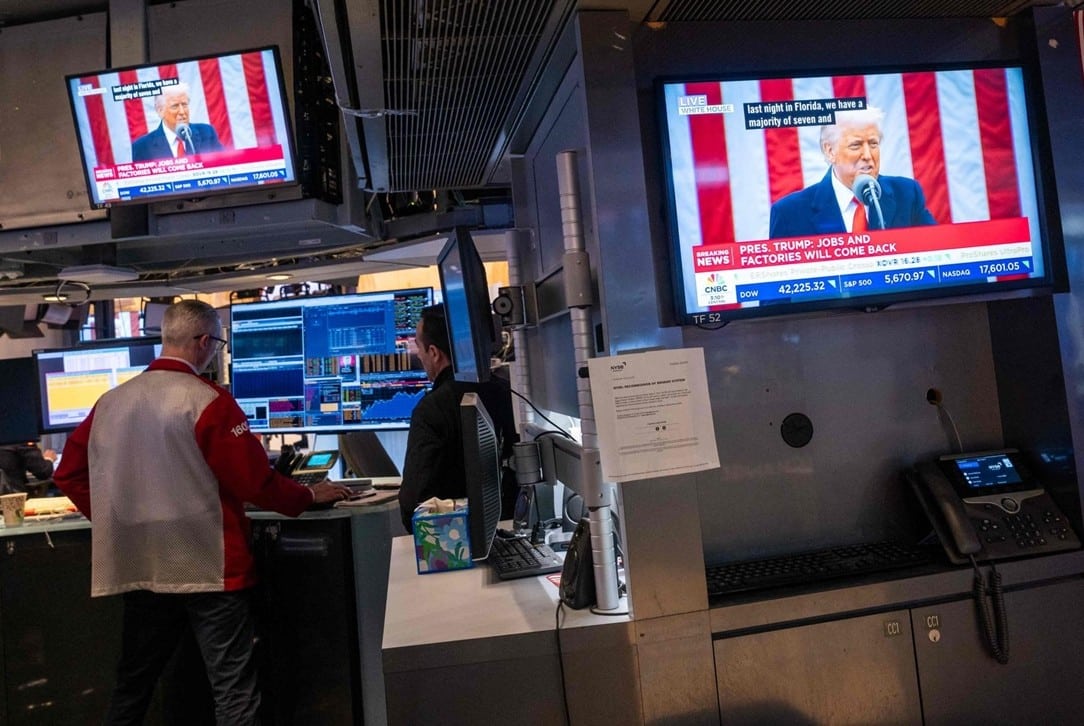
But not everything went smoothly. In April, the S&P 500 index was on the verge of a bear market as it fell nearly 20 percent below its record high, after US President Donald Trump imposed tariffs on almost all US imports.
This shook the world stock markets because investors were afraid of a trade war between the USA and China, but also the European Union.
The situation gradually calmed down, Washington signed trade agreements with some countries, with others it did not, and that topic fell into the background over time.
From May to the end of the year, the stock market indices rose strongly, mostly thanks to the continuation of the euphoria surrounding the development of artificial intelligence, so the share prices of technology companies rose the most.
In recent months, the technology sector has been very volatile because investors fear that share prices are too high after a long period of growth, and companies’ debts are too high, reports SEEbiz.
The world’s largest stock market was also supported by the reduction of interest rates by the American central bank.
Due to the weakness of the labor market, the Fed reduced interest rates three times from September to December, each time by 0.25 percentage points.
Thanks to this, the reign of the bulls on the market, which began in October 2022, continued.
Records on European stock markets as well
European stock markets also rose strongly last year. The STOXX 600 index of leading European shares strengthened by 16.6 percent and reached record levels, above 590 points.
Madrid’s IBEX index led the way in terms of growth, with a jump of almost 50 percent.
It was followed by the Italian FTSE MIB index with a growth of 31.5 percent, which is its biggest jump since 1998.
Germany’s DAX index rose about 23 percent, thanks to government stimulus measures ranging from fiscal stimulus to infrastructure investment.
The London FTSE index strengthened by around 22 percent, while the lowest growth was recorded by the Paris CAC index, around 10.5 percent, due to the political crisis and the growth of the budget deficit and public debt.
On the European stock markets, the biggest winner last year was the financial sector, with a growth of 67 percent, thanks to the relatively stable growth of economies, a greater number of mergers and acquisitions, and the reduction of interest rates by the European Central Bank.
The defense sector also grew strongly, by 56.5 percent, because the members of the European Union announced increased investments in armaments due to threats from Russia.
“I think the drop in the dollar, uncertainty about White House policies and uncertainty about AI stocks has led investors to look for safety in some other areas, which has benefited European stocks,” said Danni Hewson, an analyst at investment platform AJ Bell.
Asian markets rose strongly
MSCI’s index of Asia-Pacific shares rose 27 percent last year, the most since 2017, thanks in large part to rising share prices in chipmakers and other technology companies developing artificial intelligence.
South Korea’s Kospi index jumped as much as 76 percent, while share prices in Shanghai rose 18 percent, and in Hong Kong 28 percent.
Japan’s Nikkei index gained 26 percent.
The dollar weakened significantly
On currency markets, the value of the dollar against a basket of currencies fell by 9.4 percent last year, the most since 2017.
This is a consequence of the Fed’s interest rate cuts, the narrowing of the difference between interest rates on the dollar and other major currencies, political uncertainty, investor concerns about the fiscal deficit, as well as the Fed’s independence issue given US President Donald Trump’s constant pressure on the central bank.