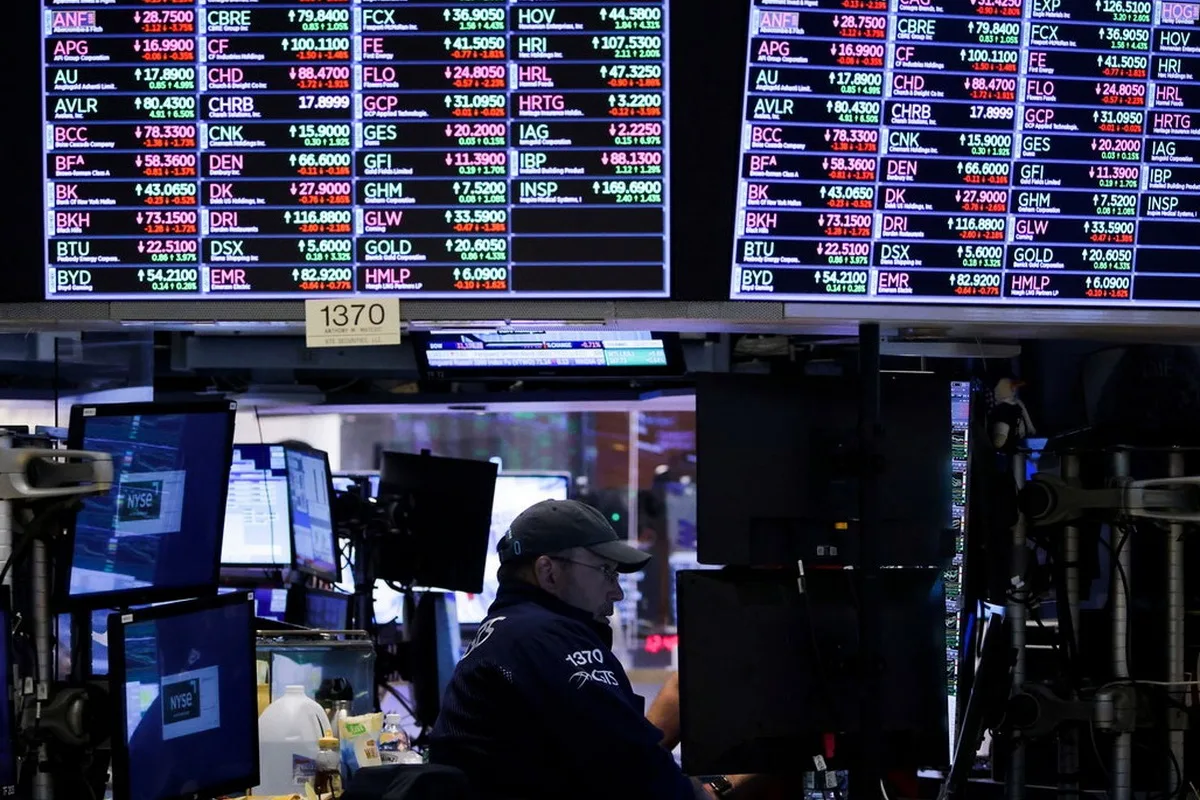
The S&P 500 fell on Monday as a drop in chip stocks reversed earlier gains fueled by a drop in global oil prices.
The broad market index was little changed last time, while the Nasdaq Composite fell 0.1%. The Dow Jones Industrial Average traded 221 points higher, or roughly 0.4%.
Semiconductor stocks were mostly down. The VanEck Semiconductor ETF ( SMH ) traded roughly 3% lower, adding to its losses on Friday. AMD and Teradyne fell 7% and 5%, respectively, leading the decline. Micron Technology fell about 3%.
China’s chip push
Chipmakers rallied earlier in the day after Chinese chipmaker CXMT completed a successful initial public offering on the Shanghai Stock Exchange on Monday. But, “There’s a lot of uncertainty about what’s going on with Chinese firms,” Thomas Martin, senior portfolio manager and partner at Globalt Investments, told CNBC.
“You have a lot of competition and technological advances … in product markets that are very tight.”
Shares are also under pressure after The Information reported, citing sources familiar with the matter, that China has begun developing deep-ultraviolet lithography machines, which are used to make semiconductors, further pushing shares lower.
Shares of US-listed ASML, a dominant player in the area, fell more than 7% after the report, SEEbiz reports.
Additionally, traders are refocusing their investments amid signs of the AI bubble “letting air out,” particularly as stocks remain below record levels reached in late June, according to Martin.
“There is tremendous uncertainty in the tech world,” Martin added. “There is a lot of uncertainty among investors about where this is going to go and whether they want to divert some of their money.”
Falling oil prices
Easing tensions in the Middle East sent international benchmark Brent crude futures for September delivery down 6.8% to around $90.25 a barrel. U.S. West Texas Intermediate crude futures fell 6.1% to $83.83 a barrel.
There will be no shortage of challenges for the major indexes this week. A series of quarterly reports from Amazon, Apple, Meta Platforms and Microsoft will either assuage investors’ fears of out-of-control spending on artificial intelligence or add to them after Alphabet’s disappointing results last week. The results could have a direct impact on semiconductor firms, which are the main beneficiaries of the surge in artificial intelligence spending.
The Fed will make its latest decision on interest rates on Wednesday. The central bank is widely expected to raise interest rates in September, but markets are pricing in a significant possibility that the Fed will raise its benchmark interest rate by a quarter of a percentage point as early as this week, according to the CME FedWatch Tool.