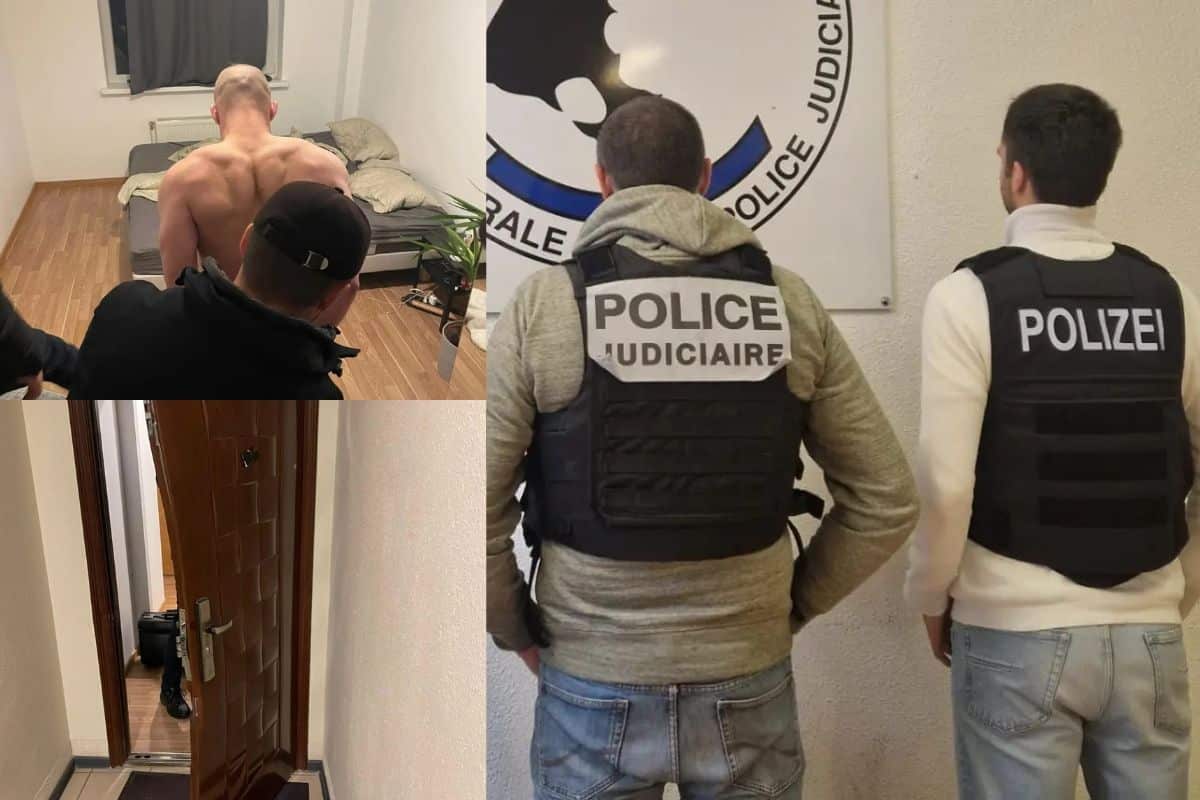
In an international action led by Germany on November 12, with the support of Europol, six people suspected of planning the kidnapping of the leader of the Albanian drug trafficking network were arrested. Police services from Denmark, France, Latvia and the United Kingdom participated in the investigation.
The operation targeted a group of mercenaries, mostly citizens of Latvia, including individuals with a past in the French Foreign Legion. These highly trained individuals, equipped with professional military equipment, acted at the behest of an organized crime group. Their task was to kidnap the leader of a rival Albanian drug group, who is suspected of being behind the theft of several tons of cannabis, worth several million euros.
During the operation, four people were arrested in Denmark, France, Latvia and Great Britain, while two others previously arrested in Germany – in October 2014 – have already been sentenced. Europol played a key role in the coordination of the investigation, exchange of information and analytical support, and its expert was deployed in the French city of Nice for direct exchange of operational data and monitoring of activities on the ground.
Mercenaries for criminal tasks
This investigation is related to the phenomenon known as “Violence-as-a-Service” (Violence-as-a-Service) – a phenomenon in which criminal networks hire professional soldiers or mercenaries to carry out violent tasks on their behalf. In the specific case, the criminal group hired former members of special units to carry out the kidnapping.
Several suspects in this case are former legionnaires of the French Foreign Legion, which investigators consider a worrying trend that has been observed more and more frequently since the start of the war in Ukraine. Namely, individuals who have undergone military training – either in American programs, legions or Russian mercenary formations – after returning to Europe increasingly use their fighting skills for the needs of organized crime.
Experts warn that, with the continuation and possible intensification of the war in Ukraine, Europe could be faced with a greater number of such cases, which represents a serious security challenge for EU countries.
The following participated in the action:
Denmark: Copenhagen Police (Københavns Vestegns Politi)
Germany: State Criminal Police North Rhine-Westphalia (Landeskriminalamt NRW)
France: National Police (Police Nationale), OCLO and police services of Nîmes and Alpes-Maritimes
Latvia: State Police of Latvia (Latvijas Valsts policija)
United Kingdom: Metropolitan Police
(TYPE/Source: bhrt.ba/Photo: Europol)