A mass grave has been discovered in western Kenya that has shocked the public and sparked a wide-ranging police investigation, after investigators in the city of Kericho exhumed a total of 32 bodies, most of them children, including infants and fetuses. The discovery, which initially began as a limited operation, soon grew into a case with many unknowns and potentially serious criminal implications, reports the BBC.
The exhumation revealed shocking proportions
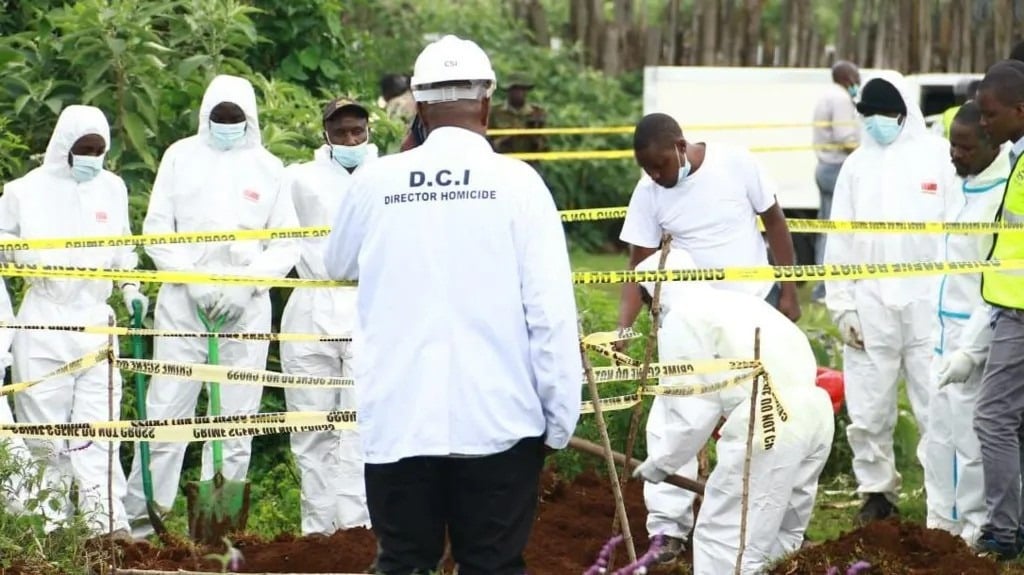
Police initially obtained a court order to exhume 14 bodies believed to be buried at the site. However, during the day-long operation, which was further complicated by heavy rainfall, the investigators came across a significantly larger number of remains.
Government pathologist Richard Njoroge described the scene as “extremely unusual”, noting that the bodies were stacked in sacks, adding to suspicions of irregularities and possible wrongdoing. According to him, seven adults and as many as 25 children were among those found.
Doubts about the origin of the body
Njoroge stated that preliminary findings indicate that some bodies could come from hospitals or morgues, but the exact circumstances will be known only after detailed autopsies, which are scheduled for the next few days. It was also noted that the bodies of adults were in a significantly advanced stage of decomposition, while the bodies of children were more preserved, suggesting that the deaths occurred at different time periods.
In addition to whole bodies, fragments and parts of remains were also found, which further complicates the process of identification and elucidation of the case.
Intensive investigation and first arrests
Investigators from the Department of Criminal Investigation worked on the ground, together with forensic teams, who documented every step of the exhumation under strict security measures. The bodies were carefully collected and stored in evidence bags, while the area was cordoned off with police tape.
According to the information so far, the case was initiated after a whistleblower’s tip, and the first findings indicate that 13 unidentified bodies were earlier taken from a hospital in the neighboring area of Nyamira and transported to Kericho for burial. However, it remains unclear how a significantly larger number of bodies were found in the same location, as well as why they were buried in such a way.
Two people have already been arrested in connection with the case – a health officer from Nyamira and a cemetery worker – while police are investigating others potentially involved.
Dispute over the location of the burial
Adding to the controversy is the fact that the tomb is located on land belonging to the National Council of Churches of Kenya, an organization that has denied any connection to the clandestine burials. Their representatives claim that the burial was carried out without their knowledge or approval, which further deepens the mystery.
Human rights organizations reacted strongly to this discovery. Vocal Africa described the case as a “frightening escalation” that points to possible violence and grave human rights violations.
“Reports of mutilation and dismembered bodies indicate a level of brutality that requires an immediate and transparent investigation,” the organization said.
Faith Odhiambo, the outgoing president of the Law Chamber of Kenya, made a similar appeal, stressing that identifying the victims must be a priority for the families to get answers.
The memory of earlier tragedies
The discovery reminded the public of one of the worst cases in Kenya’s recent history – the cult-related mass deaths in Shakahola Forest, near the town of Malindi. More than 400 bodies were then exhumed, and self-proclaimed pastor Paul Mackenzie was accused of encouraging his followers to starve themselves to death, which he denied.
While autopsies and forensic analyzes are just beginning, many questions remain unanswered: who are the victims, how did they end up in the mass grave, and whether it was organized crime, systemic failures, or something even more serious.
One thing is certain – the Kericho case has grown into a national scandal that requires full transparency and accountability of the relevant institutions.
(TIP/Source: federalna.ba/Photo BBC)