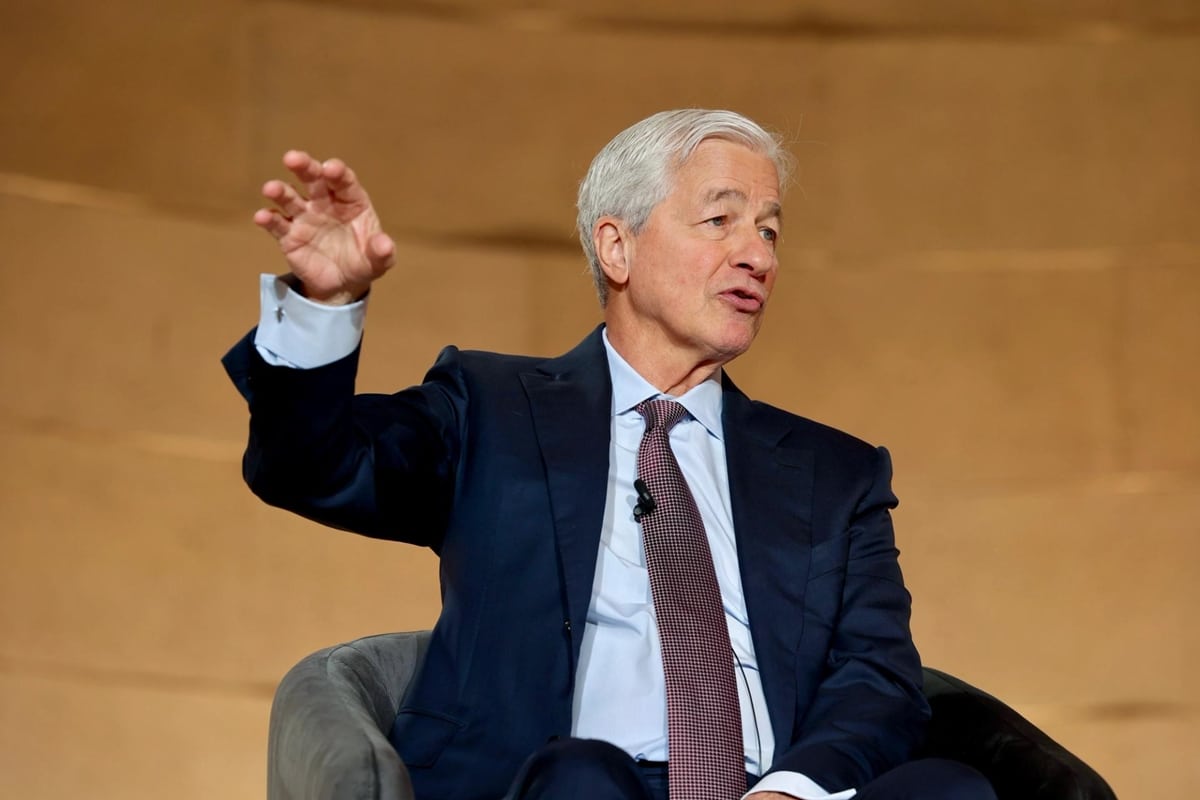
JPMorgan Chase CEO Jamie Dimon called for a renewed commitment to American values at a time when the bank faces geopolitical uncertainty, volatile economic trends and the powerful influence of artificial intelligence.
In his annual letter to shareholders, published Monday, Dimon highlighted the 250th anniversary of the United States of America as “the perfect time to rededicate ourselves to the values that made this country great — freedom, independence and opportunity.”
“The challenges we all face are significant. The list is long, but at the top are the war in Ukraine, conflicts in the Middle East, terrorist activity and rising geopolitical tensions, particularly with China,” Dimon said.
He added that, despite the difficult circumstances, he believes that America will continue to act in accordance with the values that, he says, have shaped its global standing.
Dimon, the longtime head of one of the largest banking groups in the world, is known for his public comments on the global economy and politics. His annual letter, in addition to JPMorgan’s business results, regularly contains a broader view of world trends.
In the latest letter, he warned of a range of obstacles, including global conflicts, persistent inflation, disruptions in the private credit market and what he called “inadequate banking regulation”.
According to him, certain regulatory frameworks after the financial crisis of 2008 brought positive effects, but at the same time they created a complex system with overlapping and expensive rules, which, he claims, makes lending to the real economy difficult.
In particular, he criticized capital and liquidity requirements, stress tests conducted by the Federal Reserve, and the work of the Federal Deposit Insurance Corporation (FDIC), which he deemed ineffective.
Dimon said JPMorgan’s response to new proposals under Basel 3 reforms and additional requirements for systemically important banks was “mixed.”
“While it’s good that the proposals have been partially softened in relation to 2023, there are still elements that are, frankly, nonsensical,” Dimon said.
He claims that, under the new rules, banks would have to hold significantly more capital for loans to American companies and consumers compared to banks that are not systemically important, which he considers unfair.
Geopolitics and global economy
Dimon singled out geopolitical tensions as a key risk, including wars and conflicts that affect global markets, especially energy and raw materials.
“The outcome of current geopolitical events could determine the future global economic order,” he said.
He also warned of changes in global trade and an increasingly pronounced reorientation of economic relations, including the trade policies of the United States and the introduction of tariffs.
Private loan market
Speaking about private loans, Dimon warned about the lack of transparency and difficult risk assessment in that sector.
According to him, this can lead to sudden reactions of investors and withdrawal of capital, even when the actual losses have not changed significantly.
He added that regulators may require stricter valuation rules in the future, which could increase the need for additional capital.
Artificial intelligence
Dimon pointed out that the pace of development and application of artificial intelligence is unprecedented and that its effects will be profound and long-term.
“Investing in artificial intelligence is not a speculative bubble, but a technology that will deliver significant benefits,” he said.
However, he emphasized that it is currently impossible to precisely determine who will be the winners and who will be the losers in the industries that will develop around AI technologies.
JPMorgan already makes extensive use of artificial intelligence in its operations, and Dimon has previously stated that the technology will significantly change the structure of the bank’s workforce.